True0001802156FYfalsehttp://fasb.org/us-gaap/2025#UsefulLifeTermOfLeaseMemberhttp://fasb.org/us-gaap/2025#AssetImpairmentChargeshttp://fasb.org/us-gaap/2025#CostsAndExpenseshttp://fasb.org/us-gaap/2025#CostsAndExpenseshttp://fasb.org/us-gaap/2025#CostsAndExpensesOne YearOne YearOne YearOne YearOne YearOne YearOne YearOne YearOne YearOne YearOne YearOne YearOne YearOne YearOne YearZero YearZero YearZero Yearhttp://fasb.org/us-gaap/2025#AssetImpairmentChargeshttp://fasb.org/us-gaap/2025#AssetImpairmentChargeshttp://fasb.org/us-gaap/2025#AssetImpairmentChargeshttp://fasb.org/us-gaap/2025#AssetImpairmentChargeshttp://fasb.org/us-gaap/2025#AssetImpairmentChargeshttp://fasb.org/us-gaap/2025#AssetImpairmentChargeshttp://fasb.org/us-gaap/2025#AssetImpairmentChargeshttp://fasb.org/us-gaap/2025#AssetImpairmentChargeshttp://fasb.org/us-gaap/2025#OtherLiabilitiesCurrenthttp://fasb.org/us-gaap/2025#OtherLiabilitiesCurrentOne yearDecember 31, 2029December 31, 2030http://fasb.org/us-gaap/2025#CostOfRevenuehttp://fasb.org/us-gaap/2025#CostOfRevenuehttp://fasb.org/us-gaap/2025#CostOfRevenuehttp://fasb.org/us-gaap/2025#SellingGeneralAndAdministrativeExpensehttp://fasb.org/us-gaap/2025#SellingGeneralAndAdministrativeExpensehttp://fasb.org/us-gaap/2025#SellingGeneralAndAdministrativeExpensehttp://fasb.org/us-gaap/2025#AssetImpairmentChargeshttp://fasb.org/us-gaap/2025#AssetImpairmentChargeshttp://fasb.org/us-gaap/2025#AssetImpairmentChargeshttp://fasb.org/srt/2025#ChiefExecutiveOfficerMember0001802156xpof:AcceleratedShareRepurchaseProgramMember2023-08-092023-08-090001802156xpof:RumbleHoldingsLLCMember2023-01-012023-12-310001802156xpof:FranchiseAndServiceRevenueMember2024-01-012024-12-310001802156xpof:BFTAcquisitionMemberxpof:AccruedExpensesMember2024-12-310001802156us-gaap:TradeAccountsReceivableMember2025-01-012025-12-310001802156xpof:DivestitureOfRowHouseBrandMember2024-05-202024-05-200001802156xpof:BFTMembersrt:MaximumMember2025-06-300001802156us-gaap:GoodwillMember2023-01-012023-12-310001802156us-gaap:TradeAccountsReceivableMember2023-12-310001802156xpof:TermLoanMember2025-12-310001802156xpof:FranchiseMarketingFundRevenueMember2024-01-012024-12-310001802156us-gaap:AdditionalPaidInCapitalMember2025-12-310001802156us-gaap:NotesReceivableMember2023-01-012023-12-3100018021562026-01-012025-12-310001802156xpof:NoncontrollingInterestsMember2025-01-012025-12-310001802156us-gaap:FranchiseMember2023-01-012023-12-310001802156us-gaap:TradeAccountsReceivableMember2023-01-012023-12-310001802156xpof:LindoraBrandMemberus-gaap:InterestIncomeMember2025-01-012025-12-310001802156us-gaap:AccountsReceivableMember2025-12-310001802156stpr:NJ2023-01-012023-12-310001802156us-gaap:TreasuryStockCommonMember2024-12-310001802156xpof:CycleBarAndRumbleBrandsMember2025-09-300001802156xpof:CycleBarHoldcoLLCMember2024-04-012024-06-300001802156us-gaap:CommonClassAMemberus-gaap:IPOMember2023-01-012023-12-310001802156xpof:FranchiseAgreementsMembersrt:MaximumMember2025-12-310001802156us-gaap:RestrictedStockUnitsRSUMembersrt:MinimumMember2025-01-012025-12-310001802156xpof:AccruedExpensesMemberxpof:LindoraFranchiseLlcMember2025-12-310001802156srt:MinimumMemberxpof:LoansForEstablishmentOfNewOrTransferredFranchiseStudiosMember2025-12-310001802156us-gaap:ConvertiblePreferredStockMember2025-12-310001802156us-gaap:ConstructionInProgressMember2025-12-310001802156us-gaap:CommonClassBMember2025-01-012025-12-310001802156xpof:SpartanFitnessMember2023-01-012023-12-310001802156xpof:CycleBarHoldcoLLCMembersrt:MaximumMember2024-06-3000018021562025-07-032025-07-030001802156us-gaap:FurnitureAndFixturesMember2024-12-310001802156xpof:ComputersAndSoftwareMembersrt:MaximumMember2025-12-310001802156xpof:WindDownOfAktBrandFranchiseOperationsMember2024-01-012024-12-310001802156xpof:LindoraFranchiseLlcMember2024-01-012024-12-310001802156us-gaap:NotesReceivableMember2024-12-310001802156xpof:UndesignatedPreferredStockMember2024-12-310001802156us-gaap:FairValueInputsLevel3Member2023-01-012023-12-310001802156stpr:CA2025-01-012025-12-310001802156stpr:PA2025-01-012025-12-310001802156us-gaap:ConstructionInProgressMember2024-12-310001802156xpof:RumbleContingentSharesMember2024-01-012024-12-310001802156us-gaap:NoncontrollingInterestMember2024-12-310001802156xpof:StrideAndRowHouseMemberxpof:FranchiseAgreementsMember2023-07-012023-09-300001802156stpr:NY2024-01-012024-12-310001802156xpof:StrideAndRowHouseMemberus-gaap:TrademarksMember2023-07-012023-09-300001802156xpof:FranchiseDevelopmentFeesMember2023-12-310001802156xpof:MerchandiseRevenueMember2023-01-012023-12-310001802156xpof:BrandFeesMember2025-01-012025-12-310001802156xpof:BFTMember2024-10-012024-12-310001802156us-gaap:AcquisitionRelatedCostsMemberxpof:LindoraFranchiseLlcMember2025-12-310001802156xpof:DeferredVideoProductionCostsMember2024-12-310001802156us-gaap:NoncontrollingInterestMember2023-12-310001802156xpof:BrandFeesMember2030-01-012025-12-310001802156us-gaap:ConvertiblePreferredStockMemberus-gaap:PrivatePlacementMember2024-06-300001802156us-gaap:ServiceOtherMember2023-01-012023-12-310001802156xpof:BFTMember2024-12-310001802156xpof:StrideBrandMember2024-02-130001802156us-gaap:NoncontrollingInterestMember2025-01-012025-12-310001802156us-gaap:FurnitureAndFixturesMember2025-12-310001802156xpof:FranchiseDevelopmentFeesMember2029-01-012025-12-310001802156us-gaap:ContractTerminationMember2025-01-012025-12-3100018021562029-01-012025-12-310001802156us-gaap:ForeignTaxJurisdictionOtherMember2024-01-012024-12-310001802156xpof:AcceleratedShareRepurchaseProgramMemberus-gaap:CommonClassAMemberus-gaap:AdditionalPaidInCapitalMember2023-08-092023-08-090001802156us-gaap:SalesRevenueNetMemberus-gaap:FranchiseMemberus-gaap:CustomerConcentrationRiskMember2024-01-012024-12-310001802156us-gaap:ServiceOtherMember2025-01-012025-12-310001802156us-gaap:CommonClassAMemberus-gaap:IPOMember2024-01-012024-12-310001802156xpof:MasterFranchiseAgreementMemberxpof:AccruedExpensesMember2024-12-310001802156xpof:StrideBrandMember2024-02-132024-02-130001802156xpof:FranchiseAgreementsMember2024-12-310001802156us-gaap:CommonClassBMember2024-01-012024-12-310001802156xpof:MultiTrancheTermLoanMember2022-01-012022-12-310001802156xpof:FranchiseAndServiceRevenueMember2025-01-012025-12-310001802156xpof:FranchiseRevenueMarketingFundRevenueAndMerchandiseRevenueMember2024-12-310001802156xpof:RowHouseMember2022-12-3100018021562027-01-012025-12-310001802156xpof:LindoraFranchiseLlcMember2025-01-012025-12-310001802156xpof:AccruedExpensesMemberxpof:LindoraFranchiseLlcMember2024-12-310001802156us-gaap:RedeemableConvertiblePreferredStockMember2024-12-310001802156xpof:RumbleMember2024-12-310001802156xpof:ReceivableFromMemberMember2025-01-012025-12-310001802156xpof:FranchiseDevelopmentFeesMember2028-01-012025-12-310001802156xpof:XponentialProcurementServicesAcquisitionMember2023-12-290001802156xpof:XponentialProcurementServicesAcquisitionMemberus-gaap:NotesPayableOtherPayablesMember2023-12-2900018021562025-12-292025-12-290001802156xpof:SecondaryPublicOfferingMemberus-gaap:CommonClassAMember2023-02-012023-02-2800018021562025-01-012025-12-3100018021562027-01-01xpof:FranchiseDevelopmentFeesMember2025-12-310001802156xpof:ConversionCommonStockMember2025-01-012025-12-310001802156xpof:FranchiseDevelopmentFeesMember2025-01-012025-12-310001802156us-gaap:LeaseholdImprovementsMemberus-gaap:PropertyPlantAndEquipmentMember2023-01-012023-12-310001802156us-gaap:CommonClassAMember2024-12-310001802156xpof:BFTMember2025-07-012025-09-300001802156xpof:FranchiseDevelopmentFeesMembersrt:MinimumMember2025-03-310001802156xpof:CycleBarHoldcoLLCMember2024-10-012024-12-310001802156srt:MinimumMemberxpof:FranchiseAgreementsMember2025-12-3100018021562025-10-012025-12-310001802156xpof:LindoraBrandMemberus-gaap:OtherAssetsMember2025-12-310001802156xpof:MasterFranchiseAgreementsMember2025-01-012025-12-310001802156xpof:CycleBarHoldcoLLCMember2024-12-310001802156us-gaap:AccountsPayableAndAccruedLiabilitiesMember2024-12-310001802156us-gaap:NotesReceivableMember2025-01-012025-12-310001802156xpof:StretchLabMember2025-12-3100018021562024-01-012024-12-310001802156xpof:EquipmentAndOtherMember2025-12-310001802156xpof:StrideAndRowHouseMemberxpof:VideoProductionIntangiblesAssetsMember2023-07-012023-09-3000018021562025-12-010001802156stpr:CA2023-01-012023-12-310001802156us-gaap:CommonClassAMember2026-02-230001802156us-gaap:ConvertiblePreferredStockMemberus-gaap:PrivatePlacementMember2021-07-232021-07-230001802156us-gaap:RestrictedStockUnitsRSUMember2025-01-012025-12-310001802156xpof:BrandFeesMember2024-12-310001802156xpof:AcceleratedShareRepurchaseProgramMemberus-gaap:CommonClassAMember2023-08-012023-08-010001802156stpr:NJ2024-01-012024-12-310001802156xpof:FranchiseAgreementsMember2023-12-310001802156xpof:XPOLLCMemberxpof:NoncontrollingInterestsMember2025-01-012025-12-310001802156xpof:BFTAndRumbleMember2024-10-012024-12-310001802156xpof:ReceivableFromMemberMember2024-01-012024-12-310001802156us-gaap:RestrictedStockUnitsRSUMember2025-12-310001802156xpof:AcceleratedShareRepurchaseProgramMemberus-gaap:AdditionalPaidInCapitalMember2023-08-092023-08-090001802156us-gaap:CommonStockMemberus-gaap:CommonClassBMember2025-12-310001802156xpof:WebDesignAndDomainMembersrt:MaximumMember2025-12-310001802156us-gaap:CommonClassBMember2024-12-310001802156us-gaap:RestrictedStockUnitsRSUMember2024-01-012024-12-310001802156us-gaap:PropertyPlantAndEquipmentMember2025-01-012025-12-310001802156xpof:TermLoanFacilityMemberus-gaap:InterestExpenseMemberxpof:FifthAmendmentMember2023-01-012023-12-310001802156us-gaap:CommonClassBMember2022-12-310001802156xpof:FourZeroOneKPlanMember2023-01-012023-12-310001802156xpof:EquipmentRevenueMember2025-01-012025-12-310001802156xpof:ComputersAndSoftwareMember2024-12-310001802156xpof:RumbleHoldingsLLCMember2025-01-012025-12-310001802156xpof:TreasuryShareOptionsMember2024-01-012024-12-310001802156xpof:RumbleHoldingsLLCMember2025-12-310001802156xpof:RowHouseMember2023-07-012023-09-300001802156xpof:TermLoanFacilityMemberus-gaap:SecuredOvernightFinancingRateSofrOvernightIndexSwapRateMember2021-04-190001802156stpr:NY2023-01-012023-12-310001802156xpof:ConversionCommonStockMember2024-01-012024-12-310001802156xpof:EquipmentAndOtherMember2024-12-310001802156us-gaap:IntellectualPropertyMember2025-12-3100018021562030-01-012025-12-310001802156us-gaap:TrademarksMember2023-01-012023-12-310001802156xpof:ComputersAndSoftwareMember2025-12-310001802156xpof:BFTAcquisitionMember2021-10-130001802156xpof:TimeBasedProfitInterestUnitsMember2025-01-012025-12-310001802156xpof:AcceleratedShareRepurchaseProgramMember2023-10-022023-10-0200018021562028-01-012025-12-310001802156us-gaap:PropertyPlantAndEquipmentMemberus-gaap:SoftwareDevelopmentMember2025-01-012025-12-310001802156us-gaap:IndefinitelivedIntangibleAssetsMember2025-01-012025-12-310001802156xpof:BFTAcquisitionMemberxpof:AcquisitionAndTransactionExpenseMember2024-01-012024-12-310001802156xpof:SixthAmendmentIncrementalTermLoansMemberxpof:TermLoanFacilityMemberus-gaap:InterestExpenseMember2024-01-012024-12-310001802156xpof:DeferredVideoProductionCostsMember2025-12-310001802156us-gaap:OtherIntangibleAssetsMember2025-12-310001802156xpof:ReceivableFromMemberMember2025-12-310001802156us-gaap:TreasuryStockCommonMember2025-12-3100018021562025-06-300001802156us-gaap:FranchiseRightsMember2023-12-012023-12-010001802156xpof:FormerChiefExecutiveOfficerMember2024-05-012024-05-310001802156xpof:FranchiseMarketingFundRevenueMember2023-01-012023-12-310001802156xpof:LindoraFranchiseLlcMember2023-01-012023-12-310001802156xpof:RowHouseMember2022-01-012022-12-310001802156xpof:PerformanceBasedRestrictedStockUnitsMember2025-12-310001802156xpof:CycleBarAndRumbleBrandsMember2025-07-012025-09-300001802156us-gaap:ReceivablesFromStockholderMemberxpof:RumbleHoldingsLLCMember2021-07-230001802156xpof:BrandFeesMember2023-01-012023-12-310001802156xpof:RumbleHoldingsLLCMember2021-07-230001802156xpof:FranchiseDevelopmentFeesMember2023-01-012023-12-310001802156us-gaap:TrademarksMember2024-01-012024-12-310001802156xpof:RumbleMember2024-10-012024-12-310001802156xpof:TermLoanFacilityMemberxpof:ReferenceRateMember2021-04-190001802156xpof:RumbleContingentSharesMember2025-01-012025-12-310001802156xpof:RightOfUseAssetMember2025-01-012025-12-310001802156us-gaap:TreasuryStockCommonMember2023-12-310001802156xpof:CycleBarHoldcoLLCMember2025-04-012025-06-300001802156xpof:LindoraFranchiseLlcMember2023-12-012023-12-010001802156srt:MinimumMembersrt:ScenarioForecastMember2026-01-012026-12-310001802156xpof:FranchiseDevelopmentFeesMember2030-01-012025-12-310001802156xpof:MerchandiseRevenueMember2024-01-012024-12-310001802156us-gaap:PropertyPlantAndEquipmentMemberus-gaap:SoftwareDevelopmentMember2024-01-012024-12-310001802156us-gaap:RestrictedStockUnitsRSUMembersrt:MaximumMember2025-01-012025-12-310001802156xpof:FranchiseesMember2023-01-012023-12-310001802156us-gaap:TradeAccountsReceivableMember2024-01-012024-12-3100018021562026-01-01xpof:FranchiseDevelopmentFeesMember2025-12-3100018021562023-03-012023-03-310001802156xpof:EightAmendmentIncrementalTermLoansMember2025-03-140001802156xpof:XPOLLCMember2025-01-012025-12-310001802156xpof:StudiosMember2023-01-012023-12-310001802156xpof:TermLoanFacilityMember2025-01-012025-12-310001802156us-gaap:TradeAccountsReceivableMember2025-12-310001802156us-gaap:TrademarksMember2025-12-310001802156us-gaap:InterestExpenseMemberxpof:LindoraFranchiseLlcMember2024-01-012024-12-310001802156xpof:ComputersAndSoftwareMembersrt:MinimumMember2025-12-310001802156us-gaap:CommonStockMemberus-gaap:CommonClassAMember2025-01-012025-12-310001802156xpof:LindoraFranchiseLlcMembersrt:MaximumMember2025-06-300001802156us-gaap:RestrictedStockUnitsRSUMember2024-12-310001802156xpof:BFTAcquisitionMemberus-gaap:InterestExpenseMember2025-01-012025-12-310001802156xpof:AcquisitionAndTransactionExpenseMemberxpof:LindoraFranchiseLlcMember2024-01-012024-12-310001802156xpof:LindoraBrandMember2025-09-190001802156us-gaap:PrepaidExpensesAndOtherCurrentAssetsMemberxpof:LindoraBrandMember2025-12-310001802156stpr:TX2024-01-012024-12-310001802156xpof:TermLoanFacilityMembersrt:MaximumMember2021-04-182021-04-190001802156xpof:LindoraFranchiseLlcMember2024-01-310001802156us-gaap:GoodwillMember2024-01-012024-12-310001802156us-gaap:FiniteLivedIntangibleAssetsMember2024-01-012024-12-310001802156us-gaap:ParentMember2025-01-012025-12-310001802156xpof:BFTAcquisitionMember2024-01-012024-12-310001802156xpof:XponentialProcurementServicesAcquisitionMember2025-01-012025-12-310001802156us-gaap:CommonClassAMemberxpof:TwoThousandTwentyOneOmnibusIncentivePlanMember2021-06-300001802156xpof:ReceivableFromMemberMember2024-12-310001802156us-gaap:FairValueInputsLevel3Memberxpof:StudiosMember2025-01-012025-12-310001802156xpof:TreasuryShareOptionsMember2023-01-012023-12-310001802156xpof:StrideAndRowHouseMember2023-09-3000018021562025-12-310001802156us-gaap:CommonStockMemberus-gaap:CommonClassAMember2024-01-012024-12-310001802156us-gaap:CommonClassAMemberxpof:TwoThousandTwentyOneOmnibusIncentivePlanMembersrt:MaximumMember2021-06-300001802156xpof:SpartanFitnessMember2025-01-012025-12-310001802156stpr:TX2023-01-012023-12-310001802156us-gaap:SellingGeneralAndAdministrativeExpensesMember2024-01-012024-12-310001802156xpof:BFTAcquisitionMemberxpof:AcquisitionAndTransactionExpenseMember2025-01-012025-12-310001802156xpof:TreasuryShareOptionsMember2025-01-012025-12-310001802156xpof:UndesignatedPreferredStockMember2025-12-310001802156xpof:AntidilutiveConvertiblePreferredStockMember2023-01-012023-12-3100018021562023-01-012023-12-310001802156xpof:FranchiseDevelopmentFeesMembersrt:MinimumMember2025-06-300001802156xpof:BFTAcquisitionMemberus-gaap:InterestExpenseMember2024-01-012024-12-310001802156srt:MinimumMemberxpof:BFTMember2025-06-300001802156xpof:BrandFeesMember2031-01-012025-12-310001802156srt:MinimumMemberxpof:WebDesignAndDomainMember2025-12-310001802156xpof:FranchiseAndAreaDevelopmentFeesMember2024-12-310001802156xpof:FranchiseDevelopmentFeesMembersrt:MaximumMember2025-03-3100018021562031-01-01xpof:FranchiseDevelopmentFeesMember2025-12-3100018021562023-08-092023-08-090001802156us-gaap:AccountsPayableAndAccruedLiabilitiesMember2025-12-310001802156xpof:LindoraBrandMember2025-09-192025-09-190001802156us-gaap:PropertyPlantAndEquipmentMember2024-01-012024-12-310001802156xpof:AntidilutiveConvertiblePreferredStockMember2024-01-012024-12-310001802156xpof:RumbleHoldingsLLCMember2025-12-310001802156xpof:LoansForEstablishmentOfNewOrTransferredFranchiseStudiosMembersrt:MaximumMember2025-12-310001802156xpof:EquipmentRevenueMember2024-01-012024-12-310001802156us-gaap:CostOfSalesMember2023-01-012023-12-310001802156xpof:CycleBarAndRumbleBrandsMember2025-07-242025-07-240001802156xpof:LindoraBrandMember2025-12-310001802156us-gaap:AdditionalPaidInCapitalMember2023-12-310001802156us-gaap:SubsequentEventMemberxpof:LindoraFranchiseLlcMember2026-01-012026-01-310001802156us-gaap:RetainedEarningsMember2024-12-310001802156us-gaap:ProductMember2023-01-012023-12-310001802156us-gaap:FairValueInputsLevel3Member2024-01-012024-12-310001802156xpof:FranchiseAgreementsMember2025-12-310001802156srt:MinimumMemberxpof:BFTMember2024-12-310001802156xpof:ConversionCommonStockMember2023-01-012023-12-310001802156us-gaap:TradeAccountsReceivableMember2022-12-310001802156xpof:RumbleMembersrt:MaximumMember2024-12-3100018021562022-12-310001802156xpof:WebDesignAndDomainMember2024-12-310001802156stpr:TX2025-01-012025-12-310001802156us-gaap:TrademarksMember2025-01-012025-12-310001802156xpof:FranchiseDevelopmentFeesMember2024-12-310001802156us-gaap:RedeemableConvertiblePreferredStockMember2025-12-310001802156us-gaap:LetterOfCreditMember2022-07-310001802156us-gaap:ConvertiblePreferredStockMember2023-01-092023-01-090001802156us-gaap:FranchiseMemberus-gaap:AccountsReceivableMemberus-gaap:CustomerConcentrationRiskMember2024-01-012024-12-310001802156xpof:LindoraFranchiseLlcMember2023-12-010001802156xpof:StrideMember2023-07-012023-09-300001802156us-gaap:SellingGeneralAndAdministrativeExpensesMember2025-12-310001802156us-gaap:CommonStockMemberus-gaap:CommonClassAMember2025-12-310001802156us-gaap:RestrictedStockUnitsRSUMember2024-01-012024-12-310001802156xpof:LeaseGuaranteesMember2024-12-3100018021562025-07-012025-09-3000018021562023-12-310001802156us-gaap:RetainedEarningsMember2023-12-310001802156us-gaap:ServiceOtherMember2024-01-012024-12-310001802156xpof:RumbleHoldingsLLCMember2024-01-012024-12-310001802156xpof:BrandFeesMember2023-12-310001802156us-gaap:CommonClassAMemberxpof:TwoThousandTwentyOneOmnibusIncentivePlanMember2021-06-012021-06-300001802156xpof:ImpairmentOfGoodwillAndOtherAssetsMember2023-01-012023-12-310001802156us-gaap:FairValueInputsLevel3Member2025-01-012025-12-310001802156xpof:SpartanFitnessMember2024-01-012024-12-3100018021562025-07-030001802156us-gaap:CommonClassBMember2023-02-012023-02-280001802156us-gaap:NotesReceivableMember2023-12-310001802156us-gaap:RetainedEarningsMember2025-01-012025-12-310001802156xpof:BFTMember2025-04-012025-06-3000018021562031-01-012025-12-310001802156srt:MinimumMemberxpof:CycleBarHoldcoLLCMember2024-06-300001802156xpof:LindoraMember2024-01-012024-12-310001802156us-gaap:PrepaidExpensesAndOtherCurrentAssetsMemberxpof:LindoraBrandMember2025-09-190001802156us-gaap:IntellectualPropertyMember2024-12-310001802156us-gaap:CommonClassAMemberus-gaap:IPOMemberus-gaap:SubsequentEventMember2026-02-012026-02-280001802156xpof:BFTAcquisitionMemberxpof:AccruedExpensesMember2025-12-310001802156xpof:RightOfUseAssetMember2024-01-012024-12-310001802156us-gaap:SellingGeneralAndAdministrativeExpensesMember2024-12-310001802156xpof:StudiosMember2025-01-012025-12-310001802156us-gaap:FiniteLivedIntangibleAssetsMember2023-01-012023-12-3100018021562023-09-3000018021562025-12-122025-12-120001802156us-gaap:ProductMember2025-01-012025-12-310001802156xpof:BrandFeesMember2025-12-310001802156us-gaap:PrivatePlacementMemberxpof:SixPointFiveZeroSeriesAConvertiblePreferredStockMember2021-07-230001802156xpof:RumbleHoldingsLLCMember2024-01-012024-12-310001802156us-gaap:RestrictedStockUnitsRSUMember2023-01-012023-12-310001802156srt:MinimumMember2023-09-300001802156xpof:LindoraBrandMembersrt:MaximumMember2025-09-192025-09-190001802156xpof:SixPointFiveZeroSeriesAOneConvertiblePreferredStockMemberus-gaap:PrivatePlacementMember2021-07-230001802156xpof:AcquisitionAndTransactionExpenseMemberxpof:LindoraFranchiseLlcMember2025-01-012025-12-310001802156xpof:BFTAcquisitionMemberxpof:AssetPurchaseAgreementMember2021-10-132021-10-130001802156xpof:TwoThousandTwentyOneOmnibusIncentivePlanMember2025-12-310001802156xpof:FranchiseAgreementsMember2024-12-310001802156xpof:SecondaryPublicOfferingMemberus-gaap:CommonClassBMember2023-02-012023-02-280001802156us-gaap:PrivatePlacementMemberxpof:SixPointFiveZeroSeriesAConvertiblePreferredStockMember2021-07-232021-07-230001802156xpof:RumbleHoldingsLLCMember2024-05-012024-05-310001802156us-gaap:NotesReceivableMember2022-12-310001802156us-gaap:RevolvingCreditFacilityMember2025-12-080001802156stpr:PA2024-01-012024-12-310001802156xpof:RumbleHoldingsLLCMember2022-07-012022-07-310001802156us-gaap:CommonClassBMember2025-12-310001802156xpof:ProfitInterestUnitsTimeVestingMember2023-01-012023-12-310001802156us-gaap:SalesRevenueNetMemberus-gaap:FranchiseMemberus-gaap:CustomerConcentrationRiskMember2025-01-012025-12-310001802156xpof:PerformanceBasedRestrictedStockUnitsMember2025-01-012025-12-310001802156stpr:IL2023-01-012023-12-310001802156us-gaap:RestrictedStockUnitsRSUMember2023-01-012023-12-310001802156us-gaap:FranchiseMember2025-01-012025-12-310001802156us-gaap:TradeNamesMember2023-12-012023-12-010001802156xpof:ReceivableFromMemberMember2023-12-310001802156xpof:StudiosMember2023-12-310001802156us-gaap:InterestExpenseMemberxpof:LindoraFranchiseLlcMember2025-01-012025-12-310001802156xpof:FourZeroOneKPlanMember2024-01-012024-12-310001802156us-gaap:ForeignTaxJurisdictionOtherMember2025-01-012025-12-3100018021562025-04-012025-06-300001802156us-gaap:CommonStockMemberus-gaap:CommonClassBMember2023-12-310001802156us-gaap:SellingGeneralAndAdministrativeExpensesMember2025-01-012025-12-310001802156xpof:RumbleHoldingsLLCMembersrt:MinimumMember2022-07-012022-07-310001802156us-gaap:LeaseholdImprovementsMember2025-12-310001802156xpof:RightOfUseAssetMember2023-01-012023-12-310001802156xpof:RumbleHoldingsLLCMembersrt:MaximumMember2022-07-012022-07-310001802156us-gaap:AcquisitionRelatedCostsMemberxpof:LindoraFranchiseLlcMember2024-12-310001802156us-gaap:ParentMemberxpof:XPOLLCMember2025-01-012025-12-310001802156us-gaap:ConvertiblePreferredStockMemberus-gaap:PrivatePlacementMember2021-07-230001802156xpof:LindoraBrandMemberus-gaap:OtherAssetsMember2025-09-190001802156xpof:RumbleHoldingsLLCMemberus-gaap:ReceivablesFromStockholderMember2021-07-230001802156us-gaap:ConvertiblePreferredStockMember2024-12-310001802156xpof:RumbleHoldingsLLCMember2025-01-012025-12-310001802156xpof:RumbleHoldingsLLCMember2023-12-310001802156xpof:ImpairmentOfGoodwillAndOtherAssetsMember2025-01-012025-12-310001802156xpof:RumbleContingentSharesMember2023-01-012023-12-310001802156xpof:BFTMember2025-06-300001802156us-gaap:RetainedEarningsMember2025-12-310001802156us-gaap:OtherIntangibleAssetsMember2024-12-310001802156xpof:MerchandiseRevenueMember2025-01-012025-12-310001802156xpof:FranchiseDevelopmentFeesMember2024-01-012024-12-310001802156us-gaap:CostOfSalesMember2025-01-012025-12-310001802156stpr:CA2024-01-012024-12-310001802156us-gaap:IndefinitelivedIntangibleAssetsMember2024-01-012024-12-310001802156xpof:XponentialProcurementServicesAcquisitionMemberus-gaap:NotesPayableOtherPayablesMember2023-12-292023-12-290001802156us-gaap:TrademarksMember2024-12-310001802156xpof:FranchiseDevelopmentFeesMembersrt:MaximumMember2025-06-300001802156xpof:WebDesignAndDomainMember2025-12-310001802156us-gaap:CommonStockMemberus-gaap:CommonClassBMember2025-01-012025-12-3100018021562027-01-01xpof:BrandFeesMember2025-12-310001802156us-gaap:FairValueInputsLevel3Memberxpof:StudiosMember2023-01-012023-12-310001802156us-gaap:CommonClassBMember2023-01-012023-12-310001802156xpof:MasterFranchiseFeesMember2025-01-012025-12-310001802156srt:MinimumMember2025-01-012025-12-310001802156xpof:XpoHoldingsMember2025-01-012025-12-310001802156stpr:IL2024-01-012024-12-310001802156srt:MaximumMember2025-01-012025-12-310001802156xpof:FranchiseRevenueMarketingFundRevenueAndMerchandiseRevenueMember2023-01-012023-12-310001802156stpr:PA2023-01-012023-12-310001802156stpr:IL2025-01-012025-12-310001802156xpof:SeventhAmendmentIncrementalTermLoansMember2024-08-230001802156us-gaap:ConvertiblePreferredStockMember2025-12-082025-12-080001802156us-gaap:CommonClassAMemberus-gaap:OverAllotmentOptionMember2023-02-152023-02-150001802156xpof:FranchiseAndAreaDevelopmentFeesMember2025-12-310001802156xpof:RumbleHoldingsLLCMember2021-03-012021-03-310001802156xpof:ImpairmentOfGoodwillAndOtherAssetsMember2024-01-012024-12-310001802156xpof:TermLoanFacilityMembersrt:MinimumMember2021-04-182021-04-190001802156srt:ScenarioForecastMembersrt:MaximumMember2026-01-012026-12-310001802156xpof:LindoraFranchiseLlcMember2025-04-012025-06-300001802156xpof:StudiosMember2024-01-012024-12-310001802156us-gaap:StateAndLocalJurisdictionMember2025-01-012025-12-310001802156xpof:YogaSixMember2025-12-310001802156us-gaap:LeaseholdImprovementsMember2024-12-310001802156us-gaap:AdditionalPaidInCapitalMember2024-12-3100018021562025-06-242025-06-240001802156xpof:BFTMembersrt:MaximumMember2024-12-310001802156xpof:FranchiseAndServiceRevenueMember2023-01-012023-12-310001802156srt:MaximumMember2023-09-300001802156us-gaap:ContractTerminationMember2024-01-012024-12-310001802156us-gaap:ContractTerminationMember2023-01-012023-12-310001802156stpr:NJ2025-01-012025-12-310001802156xpof:RumbleMembersrt:MinimumMember2024-12-310001802156xpof:EightAmendmentIncrementalTermLoansMember2025-03-142025-03-140001802156xpof:LoansForEstablishmentOfNewOrTransferredFranchiseStudiosMember2025-01-012025-12-310001802156us-gaap:CommonClassAMemberus-gaap:IPOMember2025-01-012025-12-310001802156us-gaap:AdditionalPaidInCapitalMember2025-01-012025-12-310001802156us-gaap:FranchiseMemberus-gaap:AccountsReceivableMemberus-gaap:CustomerConcentrationRiskMember2025-01-012025-12-310001802156srt:ScenarioForecastMember2026-03-310001802156us-gaap:NotesReceivableMember2025-12-310001802156xpof:SixPointFiveZeroSeriesAOneConvertiblePreferredStockMemberus-gaap:PrivatePlacementMember2021-07-232021-07-230001802156xpof:XponentialProcurementServicesAcquisitionMember2023-12-292023-12-290001802156xpof:BrandFeesMember2024-01-012024-12-310001802156xpof:BFTAcquisitionMemberxpof:AcquisitionAndTransactionExpenseMember2023-01-012023-12-310001802156xpof:AKTBrandMember2024-07-012024-09-300001802156us-gaap:SalesRevenueNetMemberus-gaap:FranchiseMemberus-gaap:CustomerConcentrationRiskMember2023-01-012023-12-310001802156xpof:RumbleHoldingsLLCMember2022-12-310001802156xpof:RowHouseMember2025-12-310001802156us-gaap:CommonClassAMember2023-02-012023-02-280001802156xpof:BrandFeesMember2028-01-012025-12-310001802156us-gaap:VehiclesMember2024-12-310001802156us-gaap:FranchiseMember2024-01-012024-12-310001802156us-gaap:IndefinitelivedIntangibleAssetsMember2023-01-012023-12-310001802156us-gaap:SellingGeneralAndAdministrativeExpensesMember2023-01-012023-12-310001802156xpof:SeventhAmendmentIncrementalTermLoansMember2024-08-232024-08-230001802156xpof:BrandFeesMember2026-01-012025-12-310001802156us-gaap:PropertyPlantAndEquipmentMember2023-01-012023-12-310001802156xpof:FourZeroOneKPlanMember2025-01-012025-12-310001802156xpof:BFTAcquisitionMember2025-01-012025-12-310001802156us-gaap:CreditConcentrationRiskMember2025-12-310001802156xpof:LeaseGuaranteesMember2025-12-310001802156xpof:FranchiseesMember2024-01-012024-12-310001802156xpof:SixthAmendmentIncrementalTermLoansMemberxpof:TermLoanFacilityMemberus-gaap:InterestExpenseMember2025-01-012025-12-310001802156us-gaap:CommonClassAMember2023-02-280001802156us-gaap:VehiclesMember2025-12-310001802156xpof:FranchiseRevenueMarketingFundRevenueAndMerchandiseRevenueMember2024-01-012024-12-310001802156us-gaap:RestrictedStockUnitsRSUMember2025-01-012025-12-310001802156xpof:EquipmentRevenueMember2023-01-012023-12-310001802156xpof:SixthAmendmentIncrementalTermLoansMember2024-02-132024-02-130001802156xpof:FranchiseMarketingFundRevenueMember2025-01-012025-12-310001802156us-gaap:CommonStockMemberus-gaap:CommonClassBMember2024-12-310001802156us-gaap:CommonClassAMember2025-12-310001802156xpof:LindoraBrandMemberus-gaap:SellingGeneralAndAdministrativeExpensesMember2025-09-192025-09-190001802156xpof:TermLoanFacilityMemberus-gaap:InterestExpenseMember2023-01-012023-12-310001802156xpof:RumbleHoldingsLLCMember2024-12-310001802156us-gaap:NoncontrollingInterestMember2024-01-012024-12-310001802156xpof:CycleBarAndRumbleBrandsMember2025-10-012025-12-310001802156us-gaap:RetainedEarningsMember2024-01-012024-12-310001802156us-gaap:ProductMember2024-01-012024-12-310001802156xpof:FranchiseDevelopmentFeesMember2022-12-310001802156srt:MinimumMemberxpof:LindoraFranchiseLlcMember2025-06-300001802156xpof:FranchiseAgreementsMember2025-12-310001802156xpof:SixthAmendmentIncrementalTermLoansMember2024-02-130001802156us-gaap:ForeignTaxJurisdictionOtherMember2023-01-012023-12-310001802156xpof:BrandFeesMember2022-12-310001802156srt:ScenarioForecastMember2027-03-310001802156xpof:BFTAcquisitionMemberus-gaap:InterestExpenseMember2023-01-012023-12-310001802156xpof:LindoraBrandMemberus-gaap:SellingGeneralAndAdministrativeExpensesMember2025-01-012025-12-310001802156us-gaap:GoodwillMember2025-01-012025-12-310001802156xpof:XpoHoldingsMember2025-12-310001802156us-gaap:CostOfSalesMember2024-01-012024-12-310001802156xpof:TrainingFeesMember2025-01-012025-12-310001802156us-gaap:CreditConcentrationRiskMember2024-12-310001802156us-gaap:RestrictedStockUnitsRSUMemberxpof:RowHouseMember2022-12-310001802156us-gaap:RestrictedStockUnitsRSUMemberxpof:MultiTrancheTermLoanMember2022-12-310001802156us-gaap:NoncontrollingInterestMember2025-12-310001802156us-gaap:NotesReceivableMember2024-01-012024-12-310001802156us-gaap:FairValueInputsLevel3Memberxpof:StudiosMember2024-01-012024-12-310001802156xpof:LindoraFranchiseLlcMember2025-06-300001802156us-gaap:TradeAccountsReceivableMember2024-12-310001802156us-gaap:CommonStockMemberus-gaap:CommonClassAMember2023-12-310001802156us-gaap:AccountsReceivableMember2024-12-310001802156xpof:MembershipInterestPurchaseAgreementMember2023-12-292023-12-290001802156xpof:BrandFeesMember2029-01-012025-12-310001802156srt:ScenarioForecastMember2028-03-310001802156us-gaap:CommonClassAMember2025-01-012025-12-310001802156xpof:CycleBarHoldcoLLCMember2024-06-300001802156us-gaap:CommonStockMemberus-gaap:CommonClassAMember2024-12-310001802156xpof:TermLoanFacilityMember2021-04-190001802156us-gaap:AdditionalPaidInCapitalMember2024-01-012024-12-310001802156xpof:PureBarreMember2025-12-3100018021562024-12-310001802156stpr:NY2025-01-012025-12-310001802156xpof:FranchiseDevelopmentFeesMember2025-12-310001802156xpof:TermLoanMember2025-12-080001802156us-gaap:CommonStockMemberus-gaap:CommonClassBMember2024-01-012024-12-310001802156us-gaap:CommonClassBMember2026-02-230001802156xpof:SpartanFitnessMember2023-03-012023-03-310001802156us-gaap:FiniteLivedIntangibleAssetsMember2025-01-012025-12-31iso4217:AUDxbrli:purexpof:Brandxpof:Clinicsxbrli:sharesxpof:Segmentiso4217:USDxpof:Franchisexpof:Studio
UNITED STATES
SECURITIES AND EXCHANGE COMMISSION
Washington, D.C. 20549
FORM 10-K
(Mark One)
|
|
☒ |
ANNUAL REPORT PURSUANT TO SECTION 13 OR 15(d) OF THE SECURITIES EXCHANGE ACT OF 1934 |
For the fiscal year ended December 31, 2025
OR
|
|
☐ |
TRANSITION REPORT PURSUANT TO SECTION 13 OR 15(d) OF THE SECURITIES EXCHANGE ACT OF 1934 FOR THE TRANSITION PERIOD FROM TO |
Commission File Number 001-40638
Xponential Fitness, Inc.
(Exact name of Registrant as specified in its Charter)
|
|
Delaware |
84-4395129 |
(State or other jurisdiction of incorporation or organization) |
(I.R.S. Employer Identification No.) |
17877 Von Karman Ave., Suite 100 Irvine, CA |
92614 |
(Address of principal executive offices) |
(Zip Code) |
Registrant’s telephone number, including area code: (949) 346-3000
Securities registered pursuant to Section 12(b) of the Act:
|
|
|
|
|
Title of each class |
|
Trading Symbol(s) |
|
Name of each exchange on which registered |
Class A common stock, par value $0.0001 per share |
|
XPOF |
|
New York Stock Exchange |
Securities registered pursuant to Section 12(g) of the Act: None
Indicate by check mark if the Registrant is a well-known seasoned issuer, as defined in Rule 405 of the Securities Act. YES ☐ No ☒
Indicate by check mark if the Registrant is not required to file reports pursuant to Section 13 or 15(d) of the Act. Yes ☐ No ☒
Indicate by check mark whether the Registrant: (1) has filed all reports required to be filed by Section 13 or 15(d) of the Securities Exchange Act of 1934 during the preceding 12 months (or for such shorter period that the Registrant was required to file such reports), and (2) has been subject to such filing requirements for the past 90 days. Yes ☒ NO ☐
Indicate by check mark whether the Registrant has submitted electronically every Interactive Data File required to be submitted pursuant to Rule 405 of Regulation S-T (§232.405 of this chapter) during the preceding 12 months (or for such shorter period that the Registrant was required to submit such files). Yes ☒ NO ☐
Indicate by check mark whether the registrant is a large accelerated filer, an accelerated filer, a non-accelerated filer, smaller reporting company, or an emerging growth company. See the definitions of “large accelerated filer,” “accelerated filer,” “smaller reporting company,” and “emerging growth company” in Rule 12b-2 of the Exchange Act.
|
|
|
|
|
|
|
Large accelerated filer |
|
☐ |
|
Accelerated filer |
|
☒ |
|
|
|
|
Non-accelerated filer |
|
☐ |
|
Smaller reporting company |
|
☐ |
|
|
|
|
|
|
|
Emerging growth company |
|
☒ |
|
|
|
|
If an emerging growth company, indicate by check mark if the registrant has elected not to use the extended transition period for complying with any new or revised financial accounting standards provided pursuant to Section 13(a) of the Exchange Act. ☐
Indicate by check mark whether the registrant has filed a report on and attestation to its management’s assessment of the effectiveness of its internal control over financial reporting under Section 404(b) of the Sarbanes-Oxley Act (15 U.S.C. 7262(b)) by the registered public accounting firm that prepared or issued its audit report. ☐
If securities are registered pursuant to Section 12(b) of the Act, indicate by check mark whether the financial statements of the registrant included in the filing reflect the correction of an error to previously issued financial statements. ☒
Indicate by check mark whether any of those error corrections are restatements that required a recovery analysis of incentive-based compensation received by any of the registrant’s executive officers during the relevant recovery period pursuant to §240.10D-1(b). ☒
Indicate by check mark whether the Registrant is a shell company (as defined in Rule 12b-2 of the Exchange Act). YES ☐ NO ☒
The aggregate market value of the Registrant’s Class A Common Stock held by non-affiliates, computed by reference to the last reported sale price of the Class A common stock as reported on the New York Stock Exchange on June 30, 2025, the last business day of the Registrant’s most recently completed second fiscal quarter, was approximately $218.4 million.
The number of shares (in thousands) of Registrant’s Class A Common Stock and Class B Common Stock outstanding as of February 23, 2026 was 37,312 and 11,738 shares, respectively.
DOCUMENTS INCORPORATED BY REFERENCE
Portions of the Registrant’s definitive proxy statement relating to its 2025 annual meeting of stockholders, to be filed with the Securities and Exchange Commission within 120 days after the end of the fiscal year to which this report relates, are incorporated by reference into Part III of this Annual Report on Form 10-K where indicated.
CAUTIONARY NOTE REGARDING FORWARD-LOOKING STATEMENTS
This Annual Report on Form 10-K contains forward-looking statements within the meaning of Section 27A of the Securities Act of 1933, as amended (the “Securities Act”), and Section 21E of the Securities Exchange Act of 1934, as amended (the “Exchange Act”). Such forward-looking statements reflect, among other things, our current expectations and anticipated results of operations, all of which are subject to known and unknown risks, uncertainties and other factors that may cause our actual results, performance or achievements, market trends, or industry results to differ materially from those expressed or implied by such forward-looking statements. Therefore, any statements contained herein that are not statements of historical fact may be forward-looking statements and should be evaluated as such. Without limiting the foregoing, the words “anticipates,” “believes,” “estimates,” “expects,” “intends,” “may,” “plans,” “projects,” “should,” “would,” “could,” “will,” “likely” and the negative thereof and similar words and expressions are intended to identify forward-looking statements. These forward-looking statements are subject to a number of risks, uncertainties and assumptions, including those described in “Item 1A. – Risk Factors,” of this report. Unless legally required, we assume no obligation to update any such forward-looking information to reflect actual results or changes in the factors affecting such forward-looking information.
PART I
Item 1. Business.
Overview
Xponential Fitness, Inc. (the “Company” or “XPO Inc.”) through its principal operating subsidiary, Xponential Fitness LLC (“XPO LLC”), and other subsidiaries, is one of the leading global franchisors of boutique health and wellness brands.
We operate a diversified platform of five brands spanning across verticals including Pilates, barre, stretching, functional training, and yoga. In partnership with its franchisees and master franchisees, XPO LLC offers energetic, accessible, and personalized workout experiences led by highly qualified instructors in studio locations throughout North America and internationally, with franchise, master franchise and international expansion agreements in 49 U.S. states, Puerto Rico, and 28 additional countries as of December 31, 2025. The Company's portfolio of brands includes Club Pilates, the largest Pilates brand in the United States; StretchLab, a concept offering one-on-one and group stretching services; YogaSix, the largest franchised yoga brand in the United States; Pure Barre, a total body workout that uses the ballet barre to perform small isometric movements, and the largest barre brand in the United States; and BFT, a functional training and strength-based program. Prior to the divestitures of the CycleBar and Rumble brands in July 2025, through our ownership of the CycleBar and Rumble brands, we franchised boutique fitness studios dedicated to indoor cycling and boxing disciplines, respectively. Additionally, prior to the divestiture of the Lindora brand in September 2025, through our ownership of the Lindora brand, we franchised clinics that provided medically guided wellness and metabolic health solutions to its members.
Key performance metrics in this “Business” section are presented on an adjusted basis to reflect historical information of Lindora prior to the acquisition by the Company in January 2024 and on an adjusted basis to remove historical information of Stride and Row House prior to their divestitures by the Company in February 2024 and May 2024, respectively, CycleBar and Rumble prior to their divestitures by the Company in July 2025, and Lindora prior to its divestiture in September 2025. Historical information has not been adjusted to reflect the wind down of AKT.
All references to these metrics in this “Business” section use this same basis of reporting, unless noted otherwise. Refer to Part II, Item 7 “Management’s Discussion and Analysis of Financial Condition and Results of Operations - Key Performance Indicators”, of this Annual Report on Form 10-K for information regarding our key performance metrics and how they are defined.
Our Mission: Our mission is to deliver the talents, assets, and capabilities that franchise brands need to grow successfully.
Our Vision: Become a world class platform of premium franchise brands, offering curated experiences throughout our members' fitness journeys.
Our Values: Integrity, Excellence, Fun!, Connection
We believe our unique combination of a scaled multi-brand offering, resilient franchise model with the potential for strong unit economics and integrated platform has enabled us to build our leading market position in the large and growing U.S. boutique fitness industry. The following five key pillars are what currently guide our company strategy:
•Become franchisor of choice in health and wellness category. Through a franchisee first mindset we will provide franchisees with extensive support to help maximize the performance of their studios and enhance their return on investment.
•Deliver a world class member experience. We will use data as a competitive advantage to better understand our members and their preferences from the moment they join. We will continue to focus on attracting and retaining members by providing a best-in-class curated member experience.
•Become a data driven company. We are making appreciable investments in a data warehouse and reporting tools and other initiatives to develop consumer insights and trends.
•Create a culture of innovation. We are building the foundational capabilities to harness data and artificial intelligence for decision-making and establishing a strong culture of innovation, whereby people, processes and technology will evolve to modernize and optimize our franchising business.
•Expand our International Footprint. We continue to pursue selective international opportunities where we believe our brands are well positioned and where sustainable growth opportunities exist. International expansion is a component of our growth strategy, and we will continue to invest and market our brands to qualified operators in focused attractive international markets.
We built the Xponential Fitness brand portfolio through a series of acquisitions, targeting select health and wellness verticals. In curating our portfolio, we identified brands with exceptional programming and a loyal consumer base which we believed would benefit from our operational expertise, franchising experience and scaled platform. With extensive industry experience, our management team and brand leaders are a driving force behind our operational excellence. We have established a consistent operational model (the “Xponential Playbook”) that helps franchisees generate compelling studio economics. The key pillars of our Xponential Playbook include:
•optimizing the studio prototype and investment cost;
•thoroughly vetting franchisee candidates;
•real estate identification, site selection, studio build-out and design assistance;
•comprehensive pre-opening support, including membership sales, marketing support and programming development;
•detailed studio-level operational framework and best practices;
•intensive instructor and studio-level management training;
•our robust digital platform offerings that allow franchisees to generate incremental revenue;
•data-driven analytical tools to support marketing strategies, member acquisition and retention;
•sophisticated technology systems, including uniform point-of-sale and reporting systems, to drive studio-level performance;
•centralized model capable of providing resources to franchisees in the event of exceptional crises; and
•ongoing monitoring and support to promote success.
The Xponential Playbook is designed to help franchisees achieve compelling Average Unit Volumes (“AUVs”), strong operating margins and an attractive return on their invested capital. Studios are generally designed to be between 1,500 and 2,500 square feet in size, depending on the brand. The smaller box format contributed to a weighted average initial franchisee investment of approximately $554,000 in 2025.
We believe our integrated platform, which supports our five brands, is a unique competitive advantage in the boutique health and wellness industry and enables us to accelerate growth and enhance operating margins. Our multi-brand offering results in higher franchisee lead flow and conversion, which lowers franchisee acquisition costs. Existing franchisees also serve as an embedded pipeline for continued expansion across our brands. As a result of our scale, we benefit from greater access to real estate and favorable vendor relationships. Additionally, we leverage shared corporate services across franchise sales, real estate, supply chain, outsourced retail merchandising, information technology, marketing, finance, accounting and legal. As an integrated platform, we utilize technology to provide improved functionality, drive efficiency and access compelling data across our brands. Our robust digital platform, with content spanning all of our fitness brands, is an important example of our ability to utilize our integrated platform to enhance our individual brand offerings and member retention. We also benefit from knowledge sharing and best practices across the portfolio.
As a franchisor business, we benefit from multiple predictable and recurring revenue streams that enable us to scale our franchised studio base in a capital efficient manner. As of December 31, 2025, franchisees were contractually committed to open an additional 832 studios in the United States, Canada and U.S. territories (referred to as the “North America Region”). As of December 31, 2025, we estimate approximately 30% of our licenses contractually obligated to open in these locations are over 12 months behind the applicable development schedule due to various circumstances and are currently inactive.
Recent Developments
Refer to Part II, Item 7 “Management’s Discussion and Analysis of Financial Condition and Results of Operations - Recent Developments”, of this Annual Report on Form 10-K for information regarding significant developments in our business.
Our Industry
We primarily operate in the large and growing boutique fitness segment of the broader health and fitness club industry. Boutique fitness encompasses a social, supportive community of coaches and consumers engaging through class-based programming in small studio spaces (typically 1,500-2,500 square feet). A boutique fitness workout typically offers more customized programming and a more intensive experience complemented by increased levels of personal attention and guidance relative to a traditional health and fitness club.
We had gross studio openings globally of 341 and 429 during the years ended December 31, 2025 and 2024, respectively. Our member base as of December 31, 2025 is approximately 5% larger than it was as of December 31, 2024.
Our Competitive Strengths
Diversified portfolio of leading boutique health and wellness brands.
Our portfolio of five diversified brands spans a variety of popular fitness, health, and wellness verticals including Pilates, barre, stretching, yoga, and functional training. We believe that our diversification represents a significant competitive advantage in a fragmented market comprised primarily of single-brand companies focused on an individual fitness, health or wellness vertical. The complementary nature of our brands allows our franchised studios to be located in close proximity to one another, providing variety and convenience to both consumers and franchisees. Our brands appeal to a broad range of consumers across ages, fitness levels and demographics and are positioned at an accessible price point. The strength of our brands is highlighted by the numerous accolades they have received, with five brands (Club Pilates, StretchLab, Pure Barre, BFT, and YogaSix) being listed among Entrepreneur’s 2026 Franchise 500 rankings. We believe that our diversified brand offering expands our total addressable market and translates into increased use occasions for consumers, driving increased share of wallet and enhancing consumer lifetime value across our portfolio.
Market leading position with significant nationwide scale.
We are one of the leading boutique health and wellness franchisors in the United States with 2,529 studios operating across five brands in the United States. We believe that our Pilates and barre brands have leading market share positions within their respective verticals. As the leaders in these verticals, and as one of the few players of scale, we believe that we occupy an advantageous position in an otherwise highly fragmented boutique fitness market.
We are able to leverage the popularity and reputation of existing Xponential studios to support both new studio sales to franchisees and to support franchisees’ ability to attract new customers to their studios. We believe that the continued expansion of the Xponential platform creates a network effect that reinforces our competitive position, making us increasingly attractive to potential franchisees and making studios increasingly popular with boutique fitness consumers. In conjunction with our scale, we have been able to achieve broad geographic diversification across the United States with franchise agreements in 49 states, Puerto Rico and the District of Columbia as of December 31, 2025. Our geographic reach represents a material competitive advantage, as we have demonstrated success across various markets, and we are able to remain competitive nationally even when extraordinary events heavily impact specific markets.
Passionate, growing and loyal consumer base.
Our franchised studios provide differentiated and accessible boutique fitness experiences that are fun, energetic and deliver a strong sense of community, engendering loyalty and engagement with consumers. Across our system, we had a total of 59.2 million in-studio and live stream visits in 2025, an increase of 12% over the prior year. The loyalty of our consumer base is evidenced by our franchisees’ ability to grow actively paying members by 5% from December 31, 2024 to December 31, 2025, and membership visits for the quarter ended December 31, 2025 increased 6% compared to the quarter ended December 31, 2024. For the quarter ended December 31, 2025, run-rate AUVs decreased -2% compared to the quarter ended December 31, 2024. We were able to deepen our consumer loyalty over the past few years through our robust digital platform offering, as well as the personal efforts of exceptional franchisees to strengthen their studio communities. As of December 31, 2025, studios had approximately 774,000 members, of which approximately 704,000 were actively paying members on recurring membership packages. Our franchised studios foster consumer engagement, personal accountability to achieve fitness goals and a strong sense of community, which drive repeat visits and maximize consumer lifetime value.
Xponential Playbook supports system-wide operational excellence.
We strategically partner with franchisees who have been vetted by a thorough selection process. Through the Xponential Playbook, we provide franchisees with significant support from the outset, focused on delivering a superior experience and maximizing studio-level productivity and profitability. Franchisees also benefit from the significant investments we have made in our corporate platform, through which we leverage integrated systems and shared services. While marketing, wellness and fitness programming are specific to each brand, nearly all other franchisee support functions are integrated across brands at the corporate level, and franchisees are guided through the key pillars of successful studio operations.
We believe the relationships we maintain with franchisees drive tangible results for consumers: well-managed boutique health and wellness studios; access to technological capabilities; retention of highly qualified instructors; and a consistent, community-based experience across brands and geographies. We believe the extensive level of support we provide to franchisees is a key driver of system-wide operational excellence.
Asset-light franchise model and predictable revenue streams.
We believe our asset-light franchise model drives faster system-wide unit growth, compared to a similarly capitalized corporate-owned model. As a franchisor, we have multiple highly predictable revenue streams and low ongoing capital requirements. Upon the granting of access to a license, we receive a one-time, non-refundable upfront payment from franchisees for the right to open a studio in a specific territory. This is followed by a series of contractual payments once a studio is open (or in the case of the execution of a multi-unit agreement, upon the signing of the second and each subsequent franchise agreement pursuant to such multi-unit agreement), many of which are recurring, including royalty fees, technology fees and merchandise sales, marketing fees and instructor and management training revenues. Approximately 78% of our revenue in 2025 and 74% of our revenue in 2024 was considered recurring, and we believe this percentage will increase as franchise royalty fees are expected to account for a greater percentage of our revenue over time.
Reliable studio‑level economics that support sustainable performance.
The Xponential Playbook is designed to help franchisees achieve compelling AUVs, strong operating margins and an attractive return on their invested capital. Studios are generally designed to be between 1,500 and 2,500 square feet in size, depending on the brand. We believe our strong studio-level economics have contributed to our growth. Our open studios in the North America Region increased 7% from December 31, 2024 to December 31, 2025.
Large and expanding franchisee base with visible organic growth.
Our large number of existing licenses sold represents an embedded pipeline to support the continued growth of our business. As of December 31, 2025, on a cumulative basis since inception, we had 5,371 franchise licenses sold globally, compared to 5,192 franchise licenses sold as of December 31, 2024. Franchisees are contractually obligated to open studios in their territories after purchasing a franchise license. In the event that franchisees are unable to meet their contractual obligations, we have the ability to resell or reassign their territory license(s) to another franchisee in the system or our franchisee pipeline. The number of licenses contractually obligated to open is a useful indicator of the number of studios that may open in the future, although it is not certain that these studios will open. Accordingly, we have the potential to substantially increase our studio base through our existing licenses sold, providing us with highly visible unit growth and further increasing our already significant scale within the boutique health and wellness industry.
Proven and experienced management team
We are led by an experienced senior leadership team with extensive industry experience. Our strategic vision is driven by our highly experienced management team, led by Michael Nuzzo who was appointed as our Chief Executive Officer on August 2025. Mr. Nuzzo has proven experience in developing transformative business models, building brands, and driving sustained growth. Our brand leaders also act as a driving force behind their respective brands. Collectively, our management team fosters an entrepreneurial culture and mentality that resonates with franchisees. Our leadership team has significant experience scaling franchised brands and has created a culture designed to enable our future success.
Our Growth Strategies
We believe we are well-positioned to capitalize on multiple opportunities to drive the long-term growth of our business:
Grow our franchised studio base across all brands in the North America Region.
We have the opportunity to meaningfully expand our franchised studio footprint in the North America Region by leveraging our multiple brands and verticals, as well as our portability across regions and demographics.
We have grown our franchised studio footprint in the North America Region from 2,529 open studios across the U.S. and Canada as of December 31, 2019 to 2,606 open studios in the North America Region as of December 31, 2025, representing a Compound Annual Growth Rate (“CAGR”) of 14%. As of December 31, 2025, we had 1,269 franchisees and licenses for 832 studios contractually obligated to be opened under existing franchise agreements in North America. We sold 67 licenses in 2025 compared to 166 licenses in 2024 and 593 licenses in 2023. Our track-record of successful expansion demonstrates that the experience and value offered by our brands resonate with consumers across geographies, including urban and suburban markets, ages and income levels. Our small box format and multi-brand model have enabled us to scale rapidly, as franchisees have the ability to open studios from multiple brands adjacent or in close proximity to each other, creating cross-selling opportunities and providing consumers with greater optionality. As we scale, we expect to attract multi-studio franchisees to help us accelerate our pace of growth. Franchisees provide the capital to open each studio location and we provide ongoing support.
Drive system-wide same store sales and grow AUV.
We believe we can help franchisees grow same store sales and AUVs by acquiring new consumers, increasing membership penetration, driving increased spend from consumers and expanding ancillary revenue streams through our franchised studios.
•Acquiring new consumers: We expect to grow our consumer reach through a variety of targeted marketing campaigns at both the brand and franchisee levels to increase brand awareness and drive studio traffic.
•Increasing membership penetration: We expect franchisees to convert new and occasional consumers into committed, long-term members by delivering consistent, effective workout experiences across our franchised studios. We intend to continue to utilize insights from our consumer management dashboard to refine our sales strategy and offer a variety of flexible membership options to attract consumers at different engagement levels and price points, including our existing four, eight and unlimited classes per month recurring membership options.
•Driving increased spend from consumers: We expect to increase spend from consumers by utilizing dynamic pricing tiers across markets and brands, up-tiering memberships, cross-selling memberships across our brands, driving further digital penetration and enhancing our membership engagement. We work closely with franchisees to optimize membership offerings based on local consumer demand, demographics and other market factors in order to maximize our share of wallet.
•Expanding additional revenue streams within our franchised studios: We believe we have the opportunity to increase consumer spending at our franchised studios by expanding our offering of branded and third-party retail products across apparel and other health and wellness categories. Franchisees are able to generate revenue in part through retail sales, including the sale of at-home fitness equipment such as exercise balls and weights. We expect that franchisees will be able to continue to leverage this revenue stream in the future as some consumers may continue to make at-home fitness a complementary component of their health and wellness regimens.
•Attract and retain consumers through our digital platform: Our digital offering is designed primarily to support member engagement and retention, and extend access to our brands beyond the studio environment. We continue to evaluate and refresh our digital content offerings to support member engagement. We believe our digital offerings contribute to brand awareness, while remaining complementary to our core in-studio business model.
Expand operating margins.
We have built our franchised boutique health and wellness platform across verticals through a series of acquisitions, investments in our brands, corporate infrastructure and leadership team. We expect to realize improved operating leverage and increase operating margins over time as we continue to expand our franchised studio base and leverage our shared services and platform. Our business model provides us with highly predictable and recurring revenue streams, attractive margins and minimal capital requirements, resulting in the ability to invest in future growth initiatives.
Grow our brands and studio footprint internationally.
We believe there is opportunity for further international growth, underscored by our track-record of successful expansion across a diverse array of North American markets and our expansion into multiple international markets.
We are focused on expanding into territories with attractive demographics, including household income, level of education and fitness participation. We have developed strong relationships and executed master franchise agreements with master franchisees to propel our international growth. These master franchise agreements contractually obligate master franchisees to arrange the sale of licenses to franchisees in one or more countries outside of the North America Region. As of December 31, 2025, there were 491 studios open internationally across Australia, New Zealand, Japan, Singapore, Spain, United Kingdom, Dominican Republic, Germany, Mexico, Portugal, Kuwait, Saudi Arabia, Malaysia, Indonesia, France and Hong Kong. Master franchisees were contractually obligated to sell licenses to franchisees to open an additional 767 studios, of which master franchisees have sold 192 licenses for studios not yet opened as of December 31, 2025.
Our Brands
We have a curated a portfolio of five brands that span a variety of popular fitness, wellness, and health verticals, including Pilates, barre, stretching, yoga and functional training. Collectively, our fitness brands offer consumers specialized and personalized workout experiences that appeal to a broad range of ages, fitness levels and demographics. Under our suggested operating model, consumers may purchase recurring monthly memberships, single classes or private one-on-one training services for each brand. We have created a robust digital platform of recorded workouts that can be easily accessed at-home or on-the-go.
Franchisees have the opportunity to purchase merchandise for resale in studios and online. To ensure consistency across the studio base, we require franchisees to order merchandise directly from our outsourced retail merchandising partner or approved vendors. Examples of merchandise include at-home fitness equipment such as weights, exercise mats, balls and exercise bands, fitness apparel, such as leggings and t-shirts, and accessories, such as water bottles and towels. Merchandise is offered from popular athletic retailers, as well as fitness apparel and accessories featuring our brands’ logos and slogans.
Club Pilates
Club Pilates, founded in 2007, is the largest Pilates brand by number of studios as of December 31, 2025. The programming tracks Joseph Pilates’ original Reformer-based Contrology method and is modernized with group practice and sophisticated equipment. Club Pilates, our first acquisition in 2017, is fueled by the vision of making Pilates more accessible, approachable and welcoming to everyone. Our Club Pilates franchises offer consistent, high-quality Reformer-based Pilates workouts in an uplifting and supportive atmosphere. As of December 31, 2025, there were 1,414 operational studios and 1,996 licenses sold globally.
There are nine signature Club Pilates class formats, including introductory, cardio, strength training, stretching and suspension options, among others. Club Pilates offers an extensive training certification. Its 500-hour teacher training program includes comprehensive Pilates education including: Mat, Reformer, Jumpboard, Springboard, Cadillac, Chair, Ladder Barrel, Spine Corrector, and Magic Circle. Our training provides opportunities for technical advancement and increased earnings potential for instructors, which we believe enables the brand to attract and retain high quality instructors.
Under our suggested operating model, customers may purchase recurring monthly memberships for four, eight or unlimited monthly classes. There is also the option to purchase single walk-in classes, as well as one-on-one private training classes. The typical studio is approximately 1,500 square feet and is designed to allow usually up to 12 people to work out together.
Pure Barre
We believe Pure Barre, founded in 2001 and acquired in 2018, is the largest barre brand by number of studios as of December 31, 2025. Pure Barre offers a range of effective, low-impact, full-body workouts for a broad range of ages and fitness levels designed to improve strength, muscle tone, agility, flexibility and balance. Pure Barre has cultivated a large and passionate consumer base through the combination of effective programing, an energetic in-studio experience and a supportive and community-oriented culture. As of December 31, 2025, there were 625 operational studios and 806 licenses sold globally.
There are five signature Pure Barre class formats: introductory, strength and power, balance and flexibility, classic barre, and interval training. Pure Barre offers a specialized multi-tiered teacher training program, which includes both classroom and on-the-job training. Our training provides opportunities for technical advancement and increased earnings potential, which we believe enables the brand to attract and retain high quality instructors. The choreography for each class format is refreshed on a quarterly basis. Under our suggested operating model, customers may purchase recurring monthly memberships for four, eight or unlimited monthly classes. There is also the option to purchase single walk-in classes. The typical studio is approximately 1,500 to 1,800 square feet and is designed to allow up to 26 people to work out together.
StretchLab
StretchLab, founded in 2015 and acquired in 2017, is a leading assisted stretching brand. StretchLab was created to help people improve their health and wellness through customized flexibility services. It appeals to customers across a broad range of ages and fitness levels and is highly complementary to our broader brand portfolio. As of December 31, 2025, there were 531 operational studios and 1,012 licenses sold globally.
StretchLab offers one-on-one and group assisted stretching sessions. Most of StretchLab’s customers purchase one-on-one sessions. StretchLab offers an extensive training program for “Flexologist” instructors. The teacher training program includes both classroom and on-the-job training. Our training provides opportunities for technical advancement and increased earnings potential for instructors, which we believe enables the brand to attract and retain high quality instructors. Under our suggested operating model, customers may purchase monthly memberships for four, eight and unlimited group sessions per month. There is also the option to purchase single group sessions. One-on-one assisted stretching sessions can be purchased in recurring packages of four, eight or 12 classes per month, as well as in single one-on-one sessions. The typical studio is designed to be between 1,100 and 1,500 square feet and is equipped with approximately ten stretch benches.
YogaSix
We believe YogaSix, founded in 2011 and acquired in 2018, is the largest franchised yoga brand by number of studios as of December 31, 2025. Classes at YogaSix eliminate the intimidation factor that many people feel when trying yoga for the first time, offering a fresh perspective on one of the world’s oldest fitness practices. With modern-day yoga instruction, our diverse yoga and fitness programming includes movement and intensity to help customers achieve their fitness goals. As of December 31, 2025, there were 194 operational studios and 637 licenses sold globally.
There are six signature YogaSix class formats: introductory, slow flow, stretching, hot yoga, cardio and strength training. YogaSix offers an extensive accredited teacher training program for Registered Yoga Trainers. The 200-hour program includes both classroom and on-the-job training. Our training provides opportunities for technical advancement and increased earnings potential for instructors, which we believe enables the brand to attract and retain high quality instructors. Under our suggested operating model, customers may purchase recurring monthly memberships in packages of four, eight or unlimited monthly classes. There is also the option to purchase single classes. The typical studio is approximately 1,500 to 1,800 square feet and is designed to allow up to 40 people to work out together.
BFT
BFT, founded in 2017 and acquired in 2021, offers community-based 50-minute functional, high-energy strength, cardio and conditioning-based classes across multiple workout programs, each designed to achieve the unique health goals of its members. Training sessions are overseen by highly qualified coaches in a dynamic group environment. As of December 31, 2025, there were 333 operational studios and 790 licenses sold globally.
There are fourteen signature BFT class formats, consisting of cardio, high intensity interval training and strength, which are programmed in specific layouts to progress members through a strength training program. BFT offers a specialized training program for BFT coaches, which includes online training, classroom and on-the-job training. Under our suggested operating model, customers may purchase monthly memberships for eight, 12 and unlimited monthly classes. There is also the option to purchase single walk-in classes. The typical studio is approximately 2,500 square feet and is designed to allow 36 people to work out together.
Our Franchise Model
Franchising Strategy
We rely on our franchising strategy to grow our brands’ global footprint in a capital efficient manner. Our franchise model leverages the local market expertise of highly motivated owners, our consistent Xponential Playbook and our corporate platform. The model has enabled us to scale our system-wide studio footprint globally at a CAGR of 9% from 2023 to 2025.
As of December 31, 2025, we had sold a total of 4,443 franchise licenses on a cumulative basis since inception in the North America Region, with approximately 18% of licenses, net, owned by single-unit franchisees and approximately 82% of licenses, net, owned by multi-unit franchisees. As of December 31, 2025, 52% of franchisees owned more than one license and about 48% of franchisees owned a single brand of licenses. The largest franchisee in the North America Region owned 225 licenses, representing approximately 5% of our total franchise licenses sold in North America as of December 31, 2025. Our franchise system includes both traditional individual franchisees and larger institutional or corporate operators that generally own and operate multiple studios.
When considering potential franchisees, we evaluate their prior experience in relationship-oriented businesses, level of hands-on involvement in their communities, financial history and available capital and financing.
Franchisee Selection Process
We created a disciplined and highly effective franchisee development program for our portfolio of brands and franchisees. The franchisee network in the North America Region has grown from 1,219 franchisees as of December 31, 2019 to 1,269 franchisees as of December 31, 2025, representing a CAGR of 1%.
When evaluating new potential franchisees in the North America Region, we typically look for the following characteristics:
•financially qualified individuals;
•relationship-oriented business background;
•motivated leaders who are driven by success;
•passion to help people meet their health and fitness goals; and
•willingness to implement our model and strategies.
The potential franchisees must also meet the following eligibility criteria:
•minimum liquidity of $250,000 and 30% debt to asset ratio;
•minimum net worth of $500,000; and
•financial means to invest between $270,000 to $1,200,000 to build out their studio, depending on the brand.
We divide the franchisee selection process into five distinct stages:
•Inquiry stage: Potential new franchisees complete and submit a confidential questionnaire form to our franchise development team for consideration.
•Preliminary screening stage: Our franchise development team conducts a call with potential franchisees to determine their level of financial, cultural and geographical fit.
•Introduction stage: If preliminarily approved, potential franchisees schedule a call with our brand managers to discuss next steps and take part in a number of foundation calls to learn more about the brand.
•Approval stage: Following validation calls and potential franchisees’ personal due diligence, potential franchisees are invited to a discovery day, either virtually or at our headquarters in Irvine, California, to meet with the corporate team as a final step in the approval process.
•Contract sold stage: Following the completion of the above steps and once internally approved, potential franchisees sign a franchise agreement.
Franchise Agreements
For each of our brands’ franchised studios, we enter into a franchise agreement covering standard terms and conditions. Under our franchise agreement, we grant franchisees the right to access our brands in a designated protected area or territory after taking into account population density and demographics based on our internal and third-party analyses. The proposed location must be approved by us, and each franchisee is responsible for the selection, acquisition and development of the site from which to build the studio. Our franchise agreement requires that the franchisee operates within its designated market areas.
Our franchise agreements have an initial ten-year term. We can terminate the franchise agreement if a franchisee is in default thereunder, has failed to meet our minimum monthly gross revenue quotas or has failed to select a site for the studio that meets our approval within an indicated time period. From December 31, 2024 to December 31, 2025, 284 licenses were terminated in the North America Region and 65 were terminated in other international locations. We expect franchisees to meet and maintain minimum monthly gross revenue quotas by the first and second anniversary of their studio opening. Failure to meet these quotas for 36 consecutive months at any time during the term of the franchise agreement can result in the institution of a mandatory corrective training program or termination of the franchise agreement. We require franchisees to open their studio for regular, continuous business within a specified timeline. Within six months of the expiration of the initial ten-year term, franchisees will have the opportunity to renew for one or two additional five-year terms, subject to the terms and conditions prevailing at the time of renewal.
Our franchise agreements require franchisees to comply with our standard operating methods that govern the provision of services, use of vendors and sale of merchandise. These provisions require that franchisees purchase equipment only from an approved list of vendors, and may generally provide products, classes and services only from us or an approved list of suppliers. We reserve the right to charge a penalty fee for each day that a franchisee offers or sells unauthorized products or services from the studio.
Our franchise agreements require franchisees to pay an initial, nonrefundable franchise fee per studio.
Beginning on the day that a studio starts generating revenue from its business operations, franchisees are required to pay us a monthly royalty fee based on gross sales.
Attractive Franchisee Return Profile
The Xponential Playbook is designed to help franchisees achieve compelling AUVs, strong operating margins and an attractive return on their invested capital. Studios are generally designed to be between 1,500 and 2,500 square feet in size, depending on the brand, which we believe contributed to a relatively low average initial franchisee investment. We believe that our scale and vendor relationships enable us to offer equipment and merchandise to franchisees at a significantly lower cost than if they were to acquire it on their own.
New Studio Development
Our small-box format studios have the flexibility to be located in a variety of retail buildings and shopping centers, and we consider locations in both high- and low-density markets. We seek out locations with (i) our target customer demographics, (ii) high visibility and accessibility and (iii) favorable traffic counts and patterns. We use internal and third-party analytic tools to access demographic data that we use to analyze potential new and existing sites and markets for franchisees. We assess population density, current tenant mix, layout and potential competition, among other factors. As a result of boutique fitness consumers’ affinity for trying multiple workout types, we have the ability to place our different brands within close proximity to each other. Our team follows a detailed approval process to review potential sites and seek to ensure that each site aligns with our strategic growth objectives and the Xponential Playbook.
We guide franchisees through the site selection, build-out and design processes during the development of their studios, ensuring that the studios conform to the physical specifications for their respective brands. Prior to opening, we offer franchisees a list of designated territories in which they may open a new studio. Each franchisee is responsible for selecting, acquiring and leasing a site, but they must obtain site approval from Xponential.
Franchise Development Team
We have a dedicated sales team to help promote and coordinate sales and resales of franchises at the corporate level. We have created a scalable and sustainable model through which we identify potential franchisees. In addition, we have a team dedicated to training and supporting franchisees in lead generation, sales conversion and customer retention support.
Studios
As of December 31, 2025, franchisees operated 2,606 studios in the North America Region and 491 studios in other international locations. In 2025, franchisees opened 252 studios across the North America Region as well as 89 studios internationally.
Operating company-owned studios is not a component of our business model. Following the significant disruption to the global fitness industry caused by the COVID-19 pandemic, however, we took ownership of a greater number of studios than we would expect to hold in the normal course of our business. In the third quarter of 2023, we began a restructuring plan that involves exiting company-owned transition studios and other measures designed to reduce costs to achieve our long-term margin goals and focus on pure franchise operations. As of December 31, 2025, we had one company-owned transition studio.
The map below shows open studios in the North America Region as of December 31, 2025:
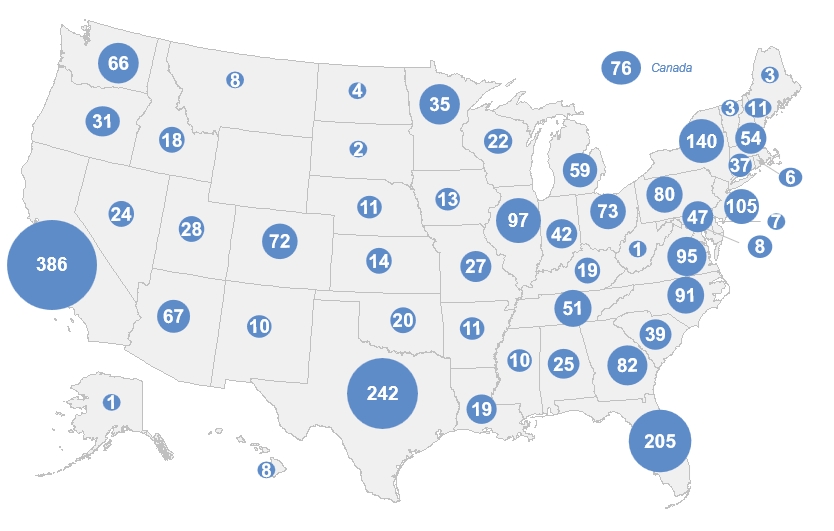
|
|
|
|
|
|
|
|
|
|
|
|
|
|
|
|
Brand |
Club
Pilates |
|
Pure
Barre |
|
Stretch
Lab |
|
YogaSix |
|
BFT |
|
Number of U.S. states |
|
47 |
|
|
48 |
|
|
43 |
|
|
31 |
|
|
18 |
|
We continue to drive the international expansion of our studio base. We currently have in place master franchise and international expansion agreements that grant master franchisees the right to sell licenses to potential franchisees in 28 countries that we have targeted for near-term expansion. As of December 31, 2025, there were 491 studios open internationally outside the North America Region, and the master franchisees were contractually obligated to sell licenses to franchisees to open an additional 767 studios, of which master franchisees have sold 192 licenses for studios not yet open as of December 31, 2025. As of December 31, 2025, franchisees were contractually committed to open an additional 832 studios in the North America Region under existing franchise agreements.
As of December 31, 2025, we estimate approximately 30% of our licenses contractually obligated to open in the North America Region are over 12 months behind the applicable development schedule due to various circumstances and are currently inactive.
Fitness Equipment
Our franchised studios contain state-of-the-art fitness equipment from an array of suppliers. We believe that the quality of the equipment enriches the customers’ in-studio experience and thereby enhances their brand loyalty. To ensure consistency across the studio base, we require franchisees to order equipment and supplies directly from us or approved vendors. Franchisees are required to order replacement or upgraded equipment within five to ten years depending on the manufacturers’ guidelines. Franchisees also must use our approved vendors for equipment maintenance, who provide warranties on certain equipment purchased from them. As one of the leading franchisors in the industry, we have significant scale that enables us to negotiate competitive pricing from our suppliers. As a result, we believe that we offer equipment at more attractive pricing than franchisees could otherwise procure on their own, lowering the build-out cost and improving unit economics.
Our Digital Offering
We believe there is an opportunity to capitalize on the growing consumer demand for digital and at-home fitness solutions by providing a digital platform that complements and enhances the attractiveness of our in-studio offerings. In addition to increasing engagement with and retention of our existing in-studio members, our digital platform enables us to reach new consumers in markets without a physical footprint and generate incremental revenue for both us and franchisees with limited incremental cost. As a result, our brands can deliver high-quality fitness content and maintain strong levels of member engagement both in the studio and at home. Our digital offering is available 24 hours a day, 7 days a week and delivers highly engaging live streamed and on-demand fitness classes from all of our brands. We cover the cost of production for our digital content. Pure Barre members who purchase a “LifeStyle” membership, as well as all Stretch Lab and BFT members, receive a subscription at no additional cost. Other members across our brands may purchase a digital subscription from a studio or directly from us. We receive a platform fee from franchisees for each digital subscription that is purchased from a studio.
We offer digital subscriptions on an individual brand basis, as well as an all-access package. Our digital platform offers a great selection of digital workouts with multiple class formats within each brand, and we expect to continue to grow and refresh that content. Our digital platform is attractive for franchisees as it allows them to upsell a better value proposition to their members. It also allows us to market local studios to standalone digital members based on their geographic location. We believe that our digital platform builds significant brand awareness and enhances cross-sell opportunities across our brands and between in-studio memberships and digital subscriptions.
Marketing
Marketing Strategy
Our marketing strategy is designed to highlight our leading brand portfolio, the compelling value proposition of our brands and the unique attributes and benefits of boutique health and wellness. Marketing is provided centrally at the corporate level, with a focus on building brand awareness, generating new customer leads and increasing studio traffic at the national and local level. We leverage our corporate platform and marketing expertise to develop tailored marketing strategies to capitalize on each of our brands’ potential.
Marketing Spending
National advertising. We manage a marketing fund for franchisees, with the goal of building national awareness for our brands. We focus our marketing efforts on national advertising and media partnerships, developing and maintaining creative assets to support local sales throughout the year, and building and supporting the Xponential Fitness community via digital and social media for each of our brands. Our franchise agreements require franchisees to contribute 2% of their monthly gross sales to the marketing fund of their respective brand. Our marketing funds have enabled us to spend approximately $40.5 million, $26.7 million and $22.7 million in 2025, 2024 and 2023, respectively, to increase national awareness of our brands. We believe this is a powerful marketing tool as it allows us to increase brand awareness in new and existing markets.
Local marketing. Our franchise agreements generally require franchisees to spend at least $1,500 per month on approved local marketing to support promotional sale periods throughout the year and continue to build the brand in local markets. All franchised studios are supported by our dedicated franchisee marketing team, which provides guidance, tracking, measurement and advice on best practices. Franchisees spend their marketing dollars in a variety of ways to promote business at their studios on a local level. These methods typically include media vehicles that are effective on a local level, including direct mail, outdoor (including billboards), social media and radio advertisements and local partnerships and sponsorships.
Social media. We have an engaged social media platform for each of our brands, which we believe further raises brand awareness and creates a community among our members. Each brand has a dedicated social media page run by us, and we also maintain a corporate social media page where we seek to engage personally with customers. In addition, franchisees operate social media accounts at the local level. We provide franchisees with social media consulting during the pre-opening phase in order to help them maximize their social impact. We believe that local social media pages are additive to the studio-level community and deepen our brands’ connection with consumers.
Digital. We utilize digital advertising at the corporate level to drive awareness for our digital platform offerings.
Competition
Although we offer boutique health and wellness experiences, we believe we compete with both fitness and non-fitness consumer discretionary spending alternatives for consumers’ time and resources.
Franchisees compete with other health and wellness industry participants, including:
•other national and regional boutique fitness offerings, some of which are franchised and others of which are owned centrally at a corporate level;
•other health and fitness centers, including gyms and other recreational facilities;
•individually owned and operated boutique fitness studios;
•racquet, tennis and other athletic clubs;
•at-home fitness offerings;
•online fitness services and health and wellness apps;
•participants in the home-use fitness equipment industry; and
•businesses offering similar services.
The health and wellness industry is highly competitive and fragmented, and the number, size and strength of competitors vary by region. Some of our competitors may have greater name recognition nationally or locally or an established presence in local markets and some have corporate relationships that facilitate their acquisition of new consumers. These risks are more significant internationally, where we have a limited number of studios and brand recognition. Please also see “Business - Our Competitive Strengths.”
We also compete to sell franchises to potential franchisees who may choose to purchase franchises from other boutique health and wellness operators, but who may also consider purchasing franchises in other industries such as restaurants and personal care. We compete with other franchisors on the basis of the expected return on investment of franchisees and the value propositions that we offer for franchisees.
Our competition continues to increase as we expand into new markets and add studios in existing markets. See “Risk Factors — Risks Related to our Business and Industry — We operate in a highly competitive market and we may be unable to compete successfully against existing and future competitors.”
Suppliers
We require franchisees to make most purchases related to the build out and operation of their studios from us or our approved vendors. This helps us ensure the timelines of build outs and the maintenance of consistent studio quality within each brand. We sell equipment purchased from third-party equipment manufacturers to franchised studios in North America. Franchisees outside North America must purchase equipment from third-party equipment manufacturers approved by us. We also have suppliers of fitness accessories and apparel. Additionally, we have direct sales of display cases, engraved wood signs, point of sale displays, custom acrylic panels, and other products to franchisees in the North America Region.
Vendors arrange for delivery of products and services either directly to our warehouse or to franchisee studios. We continually re-evaluate our supplier relationships to ensure we and our franchisees obtain competitive pricing and high-quality equipment, merchandise and other items.
Human Capital Resources
As of December 31, 2025, we had approximately 340 employees at our corporate headquarters, of which approximately 116 were part-time employees. We also had approximately 18 employees at our one company-owned transition studio as of December 31, 2025, of which approximately 16 were part-time employees. None of our employees are represented by labor unions, and we believe we have a good relationship with our employees.
Our human capital resources objectives include, as applicable, identifying, recruiting, retaining, incentivizing, and integrating our existing and prospective employees. The purpose of our incentive plans are to attract, retain and motivate selected employees, executive officers, and directors through the granting of stock-based compensation awards and cash-based performance bonus awards. In addition, we offer competitive salaries, retirement benefits including 401(k), healthcare and insurance benefits, health savings accounts, paid time off, and paid parental leave. We also offer resources, programs and services to support our employees’ physical, mental, financial and social wellness.
Xponential franchises are independently owned and operated businesses. As such, employees of franchisees are not employees of Xponential Fitness or any of its subsidiaries.
Information Technology and Systems
We recognize the value of enhancing and extending the uses of information technology (“IT”) in virtually every area of our business. Our IT strategy is aligned to support our business strategy and operating plans. We maintain an ongoing program to monitor, replace or upgrade key IT services and infrastructure.
The studios use a uniform third-party hosted studio management system for enrolling members and managing member database information including personally identifiable information and payment processing. In addition, this management system tracks and analyzes key operating metrics such as membership statistics, cancellations, cross-studio utilization, member tenure and demographics profiles.
We continue to create a more customizable and efficient experience for members through updated digital tools, including enhanced websites and mobile applications. These digital tools enable consumers to search studio locations, browse class schedules and sign up for classes. We continue to enhance the accessibility of our digital tools to increase our online presence and member engagement.
Through our third-party hosted studio management system, we provide franchisees access to an informational management system to receive informational notices, operational resources and updates, training materials and other franchisee communications.
Our back-office computer systems are comprised of a variety of technologies designed to assist the operation of our business. These include a third-party hosted accounting and financial system, a SaaS solutions system to manage franchisees’ leases and franchisee agreements, a third-party hosted payroll system, an inventory and online store management system and a customer relationship management system.
Technological Disruption and Innovation
The rapid evolution of technology continues to reshape the fitness industry, requiring us to build a strong foundation for future innovation and resilience. To address these challenges, we have initiated a strategic shaping of our technology organization, establishing three core pillars:
1. Cybersecurity and operational technology – strengthening our digital and physical infrastructure to enhance security, compliance, and operational resilience.
2.Applications and platforms – laying the groundwork for optimized customer-facing applications, franchisee support platforms, and enterprise solutions.
3.Data, analytics and artificial intelligence – building the foundational capabilities to harness data and artificial intelligence for future innovation and decision-making.
As we advance this transformation, we are focusing on leveraging artificial intelligence and data analytics to enhance customer engagement, optimize franchisee operations, and improve overall business intelligence. While we are still in the early stages, we believe these initiatives will position us to navigate technological disruption effectively, drive innovation, and create long-term competitive advantages.
Intellectual Property
As of December 31, 2025, we owned approximately 43 registered trademarks and service marks in the United States and approximately 347 registered trademarks and service marks in other countries, including “Xponential,” “Pure Barre,” “StretchLab,” “YogaSix,” “Club Pilates” and “BFT.” We believe the Xponential name, and the marks associated with our five brands are of value and are important to our business. Accordingly, as a general policy, we pursue registration of our marks in the United States and select international jurisdictions, monitor the use of our marks in the United States and internationally and oppose any unauthorized use of our marks.
We license the use of our marks to franchisees and third-party vendors through our franchise agreements, vendor agreements, and occasionally through licensing agreements. These agreements restrict third parties’ activities with respect to use of our marks. Our franchise agreements impose brand standards requirements and require franchisees to inform us of any potential infringement of our marks.
We register some of our copyrighted material and otherwise rely on common law protection of our copyrighted works. Such registered copyrighted materials are not material to our business.
We also license some intellectual property from third parties for use in our franchised studios. Such licenses, including our music licenses, are not material to our business. Franchisees also license certain intellectual property for use in their studios, including music in some cases.
Government Regulation
We and our franchisees are subject to various federal, state, provincial and local laws and regulations affecting our business.
We are subject to a trade regulation rule on franchising, known as the FTC Franchise Rule, promulgated by the U.S. Federal Trade Commission (the “FTC”), that regulates the offer and sale of franchises in the United States and requires us to provide to all prospective franchisees certain mandatory disclosure in a Franchise Disclosure Document (“FDD”). In addition, we are subject to state franchise sales laws in approximately 20 U.S. states that regulate the offer and sale of franchises by requiring us to make a business opportunity exemption or franchise filing or obtain franchise registration prior to making any offer or sale of a franchise in those states and to provide a FDD to prospective franchisees.
We are subject to franchise sales laws in seven provinces in Canada that regulate the offer and sale of franchises by requiring us to provide a FDD in a prescribed format to prospective franchisees and that further regulate certain aspects of the franchise relationship. We are also subject to franchise relationship laws in at least 21 U.S. states and territories that regulate many aspects of the franchise relationship, including renewals and terminations of franchise agreements, franchise transfers, the applicable law and venue in which franchise disputes must be resolved, discrimination and franchisees’ right to associate, among others. In addition, we and franchisees may also be subject to laws in other foreign countries where we or they do business.
The Company has been the subject of federal and state inquiries relating to its compliance with franchise disclosure laws, which in some cases have involved pausing the offer and sale of franchises. The Company is cooperating with all relevant authorities and will continue to support the regulatory process.
Our franchising subsidiaries amended the 2025 FDDs on February 19, 2026. As a result, offers and sales of franchises are temporarily paused in the following registration states -- California, Hawaii, Illinois, Minnesota, New York, North Dakota, Rhode Island, Virginia, and Washington — until each state completes its review and registration of the amended FDDs. Pure Barre, however, may continue selling in Illinois and New York because it qualifies for an exemption. Separately, offers in Maryland are paused due to an ongoing regulatory inquiry. In all listed states, sales may proceed where an applicable exemption permits sales to persons who meet specific criteria.
The FDDs will be updated and renewed for 2026. Upon the issuance of the 2026 FDDs, the franchisors will begin offering and selling franchises in states that do not require registration of the FDDs. In the remaining states that require registration of the FDDs, we will continue to pause all sales until registration is obtained from the relevant regulatory agencies, except in cases where an exemption permits sales to persons who meet specific criteria. Sales will resume promptly following such registration, subject to any applicable waiting periods. Any inability to sell franchises for an extended period can result in slowed growth and could result in a reduction in our anticipated royalty or franchise revenue, which in turn could materially and adversely affect our business, results of operations, cash flows and financial condition.
We and franchisees are also subject to the U.S. Fair Labor Standards Act of 1938, as amended, similar state laws in certain jurisdictions, and various other laws in the United States and Canada governing such matters as minimum-wage requirements, overtime and other working conditions. A significant number of our and franchisees’ employees are paid at rates related to the U.S. federal or state minimum wage, and past increases in such minimum wages have increased labor costs, as would future increases.
Our and franchisees’ operations and properties are subject to extensive U.S. and Canadian federal, state, provincial and local laws and regulations, including those relating to environmental, building and zoning requirements. Our and franchisees’ development of properties depends to a significant extent on the selection and acquisition of suitable sites, which are subject to zoning, land use, environmental, traffic and other regulations and requirements.
We (for the single studio we operate) and franchisees are responsible for compliance with state laws that regulate the relationship between health clubs and their members. Nearly all states have consumer protection regulations that limit the collection of monthly membership dues prior to a studio opening, require certain disclosure of pricing information, mandate the maximum length of contracts and “cooling off” periods for members (after the purchase of a membership), set escrow and bond requirements, govern member rights in the event of a member relocation or disability, provide specific member rights when a health club closes or relocates, or preclude automatic membership renewals.
We and franchisees primarily accept payments for our memberships through electronic fund transfers from members’ bank accounts and, therefore, are subject to both federal and state legislation and certification requirements, including the Electronic Funds Transfer Act. Some states have passed or considered legislation requiring gyms and health clubs to offer a prepaid membership option at all times and/or limit the duration for which such memberships can auto-renew through electronic fund transfers, if at all. Our business relies heavily on the fact that our memberships continue on a month-to-month basis after the completion of any initial term requirements, and compliance with these laws, regulations, and similar requirements may be onerous and expensive, and variances and inconsistencies from jurisdiction to jurisdiction may further increase the cost of compliance and doing business. States that have such health club statutes provide harsh penalties for violations, including membership contracts being void or voidable.
Additionally, the collection, maintenance, use, disclosure and disposal of individually identifiable data by us, or franchisees are regulated at the federal, state and provincial levels as well as by certain financial industry groups, such as the Payment Card Industry, Security Standards Council, the National Automated Clearing House Association and the Canadian Payments Association. Federal, state and financial industry groups may also consider from time to time new privacy and security requirements that may apply to us or franchisees and may impose further restrictions on our or their collection, disclosure and use of individually identifiable information that are housed in one or more of our or their databases. These security requirements and further restrictions, including the General Data Protection Regulation (“GDPR”) and the California Consumer Privacy Act (“CCPA”), grant protections and causes of action related to consumer data privacy and the methods in which it is collected, stored, used, and disposed by us, our franchisees, and applicable third parties.
Our Organizational Structure
The Company was formed as a Delaware corporation on January 14, 2020 for the purpose of facilitating an initial public offering (“IPO”) and entered into a series of transactions to implement an internal reorganization. Pursuant to a reorganization into a holding company structure, the Company is a holding company with its principal asset being a 72.0% ownership interest in XPO LLC through its ownership interest in Xponential Intermediate Holdings, LLC (“XPO Holdings”). The Company’s Class A common stock trades on the New York Stock Exchange under the symbol “XPOF”.
Available information
Our website address is www.xponential.com, and our investor relations website is located at http://investor.xponential.com. Information on our website is not incorporated by reference herein. Copies of our annual reports on Form 10-K, quarterly reports on Form 10-Q, current reports on Form 8-K and our Proxy Statements for our annual meetings of stockholders, and any amendments to those reports, as well as Section 16 reports filed by our insiders, are available free of charge on our website as soon as reasonably practicable after we file the reports with, or furnish the reports to, the Securities and Exchange Commission (the “SEC”). We intend to use our website as a means of disclosing material non-public information and for complying with our disclosure obligations under Regulation FD. Accordingly, investors should monitor our website, in addition to following our press releases, SEC filings and public conference calls and webcasts. The SEC maintains an Internet site (http://www.sec.gov) containing reports, proxy and information statements, and other information regarding issuers that file electronically with the SEC.
Item 1A. Risk Factors.
Our business is subject to a number of risks, some of which are discussed below. The risk factors discussed in this section should be considered together with all of the other information contained in this Annual Report on Form 10-K, including the section titled “Management’s Discussion and Analysis of Financial Condition and Results of Operations” and our consolidated financial statements and related notes included elsewhere in this Annual Report on Form 10-K. If any of the following risks actually occurs, our business, prospects, results of operations, cash flows and financial condition could suffer materially, the trading price of our Class A common stock could decline and you could lose all or part of your investment. We provide these disclosures to convey our views on risks or circumstances that could significantly and adversely influence the Company and its securities going forward. Any references to prior events are included solely as illustrative examples and should not be taken as an exhaustive list, nor as an indication of whether such events have occurred in the past or how likely they are to occur in the future. This Annual Report on Form 10-K also contains forward-looking statements and estimates that involve risks and uncertainties. Our actual results could differ materially from those anticipated in the forward-looking statements as a result of specific factors, including the risks and uncertainties described in this section. The principal risk factors are:
The following is a summary of the principal risks that could adversely affect our business, operations and financial results:
Risks Related to Our Business and Industry:
•Our financial results are affected by the financial results of our franchisees and master franchisees.
•We may not be able to successfully implement our growth strategy.
•The number of new studios that actually open in the future may differ materially from the number of studio licenses sold to potential, existing and new franchisees.
•We may not be able to anticipate and satisfy consumer preferences and shifting views of health and fitness.
•Our success depends substantially on our ability to maintain the value and reputation of our brands.
•Our performance may be negatively impacted by our recent changes in executive leadership.
•Our future success depends on key employees and our ability to attract and retain highly skilled personnel.
•Our expansion into international markets exposes us to a number of risks.
•We have incurred operating losses in the past and may not achieve or maintain profitability in the future.
•Macroeconomic conditions or economic downturn could adversely affect demand for our services.
•Disruptions in the availability of financing for current or prospective franchisees.
•Franchisees may incur rising costs related to the construction of new studios.
•Franchisees may not be able to identify and secure suitable sites for new studios.
•We rely heavily on information systems provided by a single provider.
•Franchisees have and could in the future take actions that harm our business.
•Franchisees may not successfully execute our suggested best practices, which could harm our business.
•We may not be able to fully realize the cost savings and benefits initially anticipated from the restructuring plan or the charges may be greater than expected, any of which could negatively impact our business.
•We operate in a highly competitive market.
•Franchisees may be unable to attract and retain customers.
•New brands or services that we launch in the future may not be as successful as we anticipate.
•Our growth strategy could place strains on our management, employees, information systems and internal controls, which may adversely impact our business.
•Our business is subject to various laws and regulations and changes in such laws and regulations.
•Our ability to sell franchise licenses may be impacted due to government investigation regarding compliance with applicable federal and state franchise disclosure laws.
•We are subject to government investigations which could have a material adverse impact on our business, financial condition, results of operation, cash flows and reputation.
•We, franchisees and master franchisees could be subject to claims related to health and safety risks to customers that arise while at our and franchisees’ studios.
•We, franchisees, master franchisees or our third-party service providers may fail to properly maintain the confidentiality and integrity of our customer personal data.
•Failure by us, franchisees, master franchisees or third-party service providers to comply with existing or future data privacy laws and regulations could have a material adverse effect on our business.
•Changes in legislation or requirements related to electronic funds transfer may adversely impact our business operations.
•We and franchisees are subject to risks related to Automated Clearing House (“ACH”), credit card, debit card and gift card payments we accept.
•We depend on a limited number of suppliers for certain equipment, services and products.
•Changes in trade policies, including tariffs, could adversely affect our business.
•Our intellectual property rights, including trademarks and trade names, may be infringed, misappropriated or challenged by others.
•We and our franchisees are dependent on certain music licenses to permit franchisees to use music in their studios.
•Our quarterly results of operations and other operating metrics may fluctuate from quarter to quarter.
•Use of social media may adversely impact our reputation or subject us to fines or other penalties.
•We may require additional capital to support business growth and objectives.
•We may engage in merger and acquisition activities, which could require significant management attention, disrupt our business, dilute stockholder value and adversely affect our results of operations.
•Our reliance on a single third-party supplier for most retail products exposes us to operational and financial risk.
•Goodwill and indefinite-lived intangible assets are a material component of our balance sheet and impairments of these assets could have a significant impact on our results.
•Our substantial indebtedness could adversely affect our financial condition and limit our ability to pursue our growth strategy.
•Our failure to satisfy the covenants in our credit agreement may result in events of default.
•Restrictions imposed by our outstanding indebtedness and any future indebtedness may limit our ability to operate our business and to finance our future operations.
•We may not be able to maintain required regulatory licenses and permits.
•Changes in sustainability issues may have an adverse effect on our business.
Risks Related to Our Organizational Structure:
•We are a holding company, and depend upon distributions from our subsidiary, XPO Holdings, to pay dividends, if any, and taxes, make payments under the tax receivable agreement (the “TRA”) and pay other expenses.
•In certain circumstances, XPO Holdings will be required to make substantial distributions to us and the other holders of limited liability company units (the “LLC Units”).
•Continuing Pre-IPO LLC Members hold significant voting power and their interests in our business may be different than yours.
•We will be required to pay the TRA parties for certain tax benefits we may receive, and the amounts we may pay could be significant.
Risks Related to Our Class A Common Stock:
•Delaware law and our certificate of incorporation and bylaws may deter third parties from acquiring us and diminish the value of our Class A common stock.
•Our major stockholders may pursue corporate opportunities that could present conflicts with our and our other stockholders’ interests.
•We are an “emerging growth company” and we cannot be certain if the reduced disclosure requirements applicable to emerging growth companies will make our Class A common stock less attractive to investors.
•The requirements of being a public company may strain our resources and distract our management.
•Failure to maintain effective internal control over financial reporting may have an adverse effect on our financial condition and stock price.
•Material weakness identified in our internal control over financial reporting could, if not remediated, result in material misstatements in our financial statements and cause us to fail to meet our reporting and financial obligations.
•The trading price of our Class A common stock has been and may continue to be volatile, and the value of your investment could decline.
•We have in the past and may in the future be subject to short selling strategies.
•Failure to comply with anti-corruption and anti-money laundering laws or similar laws and regulations could subject us to penalties and other adverse consequences.
•Activist investors could have an adverse effect on our business.
Risks Related to Our Business and Industry
Our financial results are affected by the operating and financial results of, and our relationships with, our franchisees and master franchisees.
Franchisees are an integral part of our business. We would be unable to successfully implement our growth strategy without the participation of franchisees. The failure of franchisees to focus on the fundamentals of studio operations, such as quality, service and studio appearance, would adversely affect our business, results of operations, cash flows and financial condition.
A substantial portion of our revenue comes from royalties generated by franchised studios and studios franchised through master franchisees, other fees and commissions generated from activities associated with franchisees and equipment sales and leases to franchisees. As a result, our financial results are largely dependent upon the operational and financial results of franchisees. As of December 31, 2025, we had 2,606 open studios in the North America Region and master franchisees with 491 studios operating internationally. Negative economic conditions, including inflation, tariffs and the effect of decreased consumer confidence or changes in consumer behavior, or any continued disruptions in franchisees’ operations, could materially harm franchisees’ financial condition, which would cause our royalty and other revenues to decline and, as a result, materially and adversely affect our business, results of operations, cash flows and financial condition. In addition, if franchisees fail to renew their franchise agreements with us, or otherwise cease operating, our royalty and other revenues may decrease, which in turn could materially and adversely affect our business, results of operations, cash flows and financial condition.
If we fail to successfully implement our growth strategy, which includes opening new studios by existing and new franchisees in existing and new markets, our ability to increase our revenue and results of operations could be adversely affected.
Our growth strategy relies in large part upon new studio development by existing and new franchisees. Franchisees face many challenges in opening new studios, including:
•availability and cost of financing;
•selection and availability of suitable studio locations;
•competition for studio sites;
•negotiation of acceptable lease and financing terms;
•construction and development cost management;
•selection and availability of suitable general contractors;
•punctual commencement and progress of construction and development;
•equipment delivery or installation delays;
•health, fitness and wellness trends in new geographic regions and acceptance of our and franchisees’ services and products;
•impact of and responses to public health considerations;
•employment, training and retention of qualified personnel; and
•competition for consumers and qualified instructors.
Our growth strategy also relies on our and master franchisees’ ability to identify, recruit and enter into agreements with a sufficient number of qualified franchisees. In addition, our franchisees’ ability to successfully open and operate studios in new markets may be adversely affected by a lack of awareness or acceptance of our brands and a lack of existing marketing efforts and operational execution in these new markets. To the extent that we and franchisees are unable to implement effective marketing and promotional programs and foster recognition and affinity for our brands in new markets, franchisees’ studios in these new markets may not perform as expected and our growth may be significantly delayed or impaired. In addition, franchisees of new studios may have difficulty securing adequate financing, particularly in new markets, where there may be a lack of adequate operating history and brand familiarity. New studios may not be successful or same store sales may not increase at historical rates, which could materially and adversely affect our business, results of operations, cash flows and financial condition.
In addition, new studios build their sales volume and customer base over time and, as a result, generally yield lower amounts of revenue for us than more mature studios. New studios may not achieve sustained results consistent with more mature studios on a timely basis, or at all, which could have an adverse effect on our financial condition, operating results and growth rate.
To the extent franchisees are unable to open new studios on the timeline we anticipate, we will not realize the revenue growth that we expect. Franchisees’ failure to add a significant number of new studios would adversely affect our ability to increase our revenue and operating income and could materially and adversely affect our business, results of operations, cash flows and financial condition.
The number of new studios that actually open in the future may differ materially from the number of studio licenses sold to potential, existing and new franchisees.
The number of new studios that actually open in the future may differ materially from the number of U.S. licenses sold and international licenses to be sold via master franchise agreements. As of December 31, 2025, we had 832 studios in the North America Region contractually obligated to be opened under existing franchise agreements and 767 licenses to be sold internationally via master franchise agreements in respect of studios that had not yet opened. Historically, a portion of our licenses sold have not ultimately resulted in new studios. From December 31, 2024 to December 31, 2025, 284 licenses were terminated in the North America Region and 65 were terminated internationally. As of December 31, 2025, we estimate approximately 30% of our licenses contractually obligated to open in these locations are over 12 months behind the applicable development schedule due to various circumstances and are currently inactive. We expect that terminations may increase over time, however, the timing and number of such terminations is unknown. The historic conversion rate of signed studio commitments to new studio locations may not be indicative of the conversion rate we will experience in the future, and the total number of new studios that actually open in the future may differ materially from the number of licenses sold at any point in time. In addition, the timing of new studio openings is sometimes delayed for a variety of reasons, and delayed openings would adversely affect our business, results of operations, cash flows and financial condition.
If we are unable to anticipate and satisfy consumer preferences and shifting views of health, fitness, weight loss, and wellness, our business may be adversely affected.
Our success depends on our ability to identify and originate trends, as well as to anticipate and react to changing consumer preferences and demands relating to health, fitness, weight loss, and wellness, in a timely manner. Our business is subject to changing consumer preferences and trends that cannot be predicted with certainty. Developments or shifts in research or public opinion on the types of health, fitness, weight loss, and wellness services our brands provide could negatively impact consumers’ preferences for such services and negatively impact our business. If we are unable to introduce new or enhanced offerings in a timely manner, or if our new or enhanced offerings are not accepted by consumers, our competitors may introduce similar offerings faster than us, which could negatively affect our rate of growth. Moreover, our new offerings may not receive consumer acceptance as preferences could shift rapidly to different types of health, fitness and wellness offerings or away from these types of offerings altogether, and our future success depends in part on our ability to anticipate and respond to these shifts. Failure to anticipate and respond in a timely manner to changing consumer preferences and demands could lead to, among other things, lower revenue at our franchised studios and, therefore, lower revenue from royalties. Even if we are successful in anticipating consumer preferences and demands, our ability to adequately react to and address them will partially depend upon our continued ability to develop and introduce innovative, high-quality offerings. Development of new or enhanced offerings may require significant time and financial investment, which could result in increased costs and a reduction in our operating margins. For example, we have historically incurred higher levels of sales and marketing expenses accompanying the introduction of each brand and service.
Our success depends substantially on our ability to maintain the value and reputation of our brands.
Our success is dependent in large part upon our ability to maintain and enhance the value of our brands and the connection of franchisees’ customers to our brands. Maintaining, protecting and enhancing our brands depends largely on the success of our marketing efforts, ability to provide consistent, high-quality services and our ability to successfully secure, maintain and defend our rights to use trademarks important to our brands. We believe that the importance of our brands will increase as competition within our markets further intensifies and brand promotion activities may require substantial expenditures. Our brands could be harmed if we fail to achieve these objectives or if our public image were to be tarnished by negative publicity, litigation or governmental investigations by regulators. In particular, studios offer services that involve physical interaction, and any claims of inappropriate touching or behavior by franchisees’ employees or independent contractors, even if unsubstantiated, could harm our and our brands’ reputations. Unfavorable publicity about us, including our brands, services, products, customer service, personnel, technology and suppliers, could diminish confidence in, and the use of, our services and products. Such negative publicity also could have an adverse effect on the size, engagement and loyalty of franchisees’ customers and result in decreased revenue, which could have an adverse effect on our business, results of operations, cash flows and financial condition.
Our business and operations could be negatively impacted by the recent changes in executive leadership.
We depend upon our senior management team to direct our strategy and operations. On August 7, 2025, we announced Michael Nuzzo as our Chief Executive Officer to succeed Mark King, who retired from his position as Chief Executive Officer. On November 12, 2025, we announced certain additional leadership changes, including the appointment of Gavin M. O’Connor as our Chief Legal Counsel and Administrative Officer. Key management transitions such as these, involve inherent risk. As with any change in personnel at an executive officer level, there will be a period of transition as our management team assimilates. If we do not successfully manage these transitions, it could be viewed negatively by our franchisees, employees or investors and could have an adverse impact on our business, financial condition, and operating results. With the change in leadership, there is also a risk to retention of other members of senior management, as well as to continuity of business initiatives, plans, and strategies through the transition period and if we are unable to execute an orderly transition, our business may be adversely affected.
Our future success depends on the continuing efforts of our key employees and our ability to attract and retain highly skilled personnel.
Our future success depends, in part, on the services of our senior management team and other key employees at our corporate headquarters, as well as on our ability to recruit, retain and motivate key employees. We have in the recent past experienced turnover of key employees and competition to hire such employees can be intense. The inability to identify, attract, develop, integrate and retain qualified employees required to expand our activities, or the additional loss of current key employees, could adversely affect our operating efficiency and financial condition. We heavily rely on the continued service and performance of our senior management team. Likewise, we have identified the need to add trained accounting staff to address weaknesses in internal controls over financial reporting identified in this report. During 2025 we experienced significant senior management turnover including a change in our Chief Executive Officer and Chief Legal Counsel. If our senior management team, including any new hires that we make in the future, fails to work together effectively and to execute our plans and strategies on a timely basis, our business and future growth prospects could be harmed.
Additionally, the loss of any key personnel could make it more difficult to manage our operations, reduce our employee retention, impair our ability to compete or have other negative effects on our business. Although we have entered into employment offer letters with certain of our key personnel, these letters have no specific duration and constitute at-will employment. We do not maintain key person life insurance policies on any of our employees.
Competition for highly skilled personnel is often intense. We may not be successful in attracting, integrating or retaining qualified personnel to fulfill our or their needs. We have from time to time experienced, and we expect to continue to experience in the future, difficulty in hiring and retaining highly skilled employees with appropriate qualifications.
Our expansion into international markets exposes us to a number of risks that may have a material adverse impact on our financial condition and results of operations.
We have master franchise and international expansion agreements in 49 U.S. states, Puerto Rico, and 28 additional countries as of December 31, 2025, and we plan to continue to grow internationally. However, our international operations are in early stages. Expansion into international markets will be affected by local economic and market conditions. Therefore, as we expand internationally, franchisees may not experience the operating margins we expect, and our results of operations and growth may be materially and adversely affected. Growing our international presence may also increase our risks related to international operations. Our financial condition and results of operations may also be adversely affected if the global markets in which our franchised studios compete are affected by changes in political, economic or other factors. These factors, over which neither we nor franchisees have control, may include:
•changes in inflation rates;
•recessionary or expansive trends in international markets;
•increases in the taxes we or franchisees pay and other changes in applicable tax laws;
•legal and regulatory changes, and the burdens and costs of our and franchisees’ compliance with a variety of foreign laws;
•changes in exchange rates and the imposition of restrictions on currency conversion or the transfer of funds;
•difficulty in protecting our brands, reputation and intellectual property;
•difficulty in collecting royalties;
•difficulties and interruptions in communications and coordination with international franchisees;
•global supply chain disruption and constraints;
•political and economic instability; and
•other external factors, including actual or perceived threats to public health.
Additionally, new markets may have competitive conditions, consumer preferences and discretionary spending patterns that are different from those in our existing markets. As a result, studios in these new markets may be less successful than studios in existing markets. Franchisees may need to build brand awareness in those new markets through greater investments in advertising and promotional activity than franchisees originally planned.
We have incurred operating losses in the past, may incur operating losses in the future and may not achieve or maintain profitability in the future.
We have experienced operating losses in the past and may experience operating losses in the future. For example, we had a net loss of $53.7 million for the year ended December 31, 2025 and a net loss of $98.7 million for the year ended December 31, 2024, and we cannot be certain that we will achieve or maintain profitability and may incur operating losses in the future. We expect our operating expenses to increase in the future as we increase our sales and marketing efforts, expand our operating infrastructure and expand into new geographies. Our revenue growth may slow or our revenue may decline for a number of other reasons, including reduced demand for new franchises, reduced demand for the services and products offered by franchisees, increased competition, reduction in openings of new studios, a decrease in the growth or reduction in the size of our overall market or if we cannot capitalize on growth opportunities. If our revenue does not grow at a greater rate than our operating expenses, we may not be able to maintain profitability and could result in noncompliance with our debt covenants.
Macroeconomic conditions or an economic downturn or uncertainty in our key markets could adversely affect discretionary spending and reduce demand for our and franchisees’ services and products, which could adversely affect our and franchisees’ ability to increase sales at existing studios or to open new studios.
Recessionary economic cycles, low consumer confidence, inflation, higher interest rates, higher levels of unemployment, higher consumer debt levels, higher tax rates and other changes in tax laws or other economic factors that may negatively affect our ability to attract franchisees and a decrease in discretionary consumer spending could reduce demand for health, fitness and wellness services and products, which could adversely affect our revenue and operating margins and make opening new studios more difficult. In recent years, the United States and other significant economic markets have experienced cyclical downturns and worldwide economic conditions remain uncertain. As global economic conditions continue to be volatile or economic uncertainty remains, trends in consumer discretionary spending also remain unpredictable and subject to reductions. Unfavorable economic conditions may decrease demand for our franchises and may also affect our ability to adjust pricing. In addition, unfavorable economic conditions, such as persistent inflation and rising cost of living, may lead consumers to have lower disposable income and reduce the frequency with which they purchase our and franchisees’ services and products. In addition, disasters or outbreaks, such as a pandemic, as well as any resulting recession, depression or other long-term economic impact in our key markets, could negatively impact consumer spending in the impacted regions or depending upon the severity, globally, which could adversely impact our or franchisees’ operating results. This could result in operational disruptions or fewer transactions or limitations on the prices we and franchisees can charge for services and products, either of which could reduce our sales and operating margins. All of these factors could have a material adverse impact on our results of operations and growth strategy.
Disruptions in the availability of financing for current or prospective franchisees could adversely affect our business, results of operations, cash flows and financial condition.
Any decline in the capital markets, increases in financing costs, or limits on credit availability may negatively affect the ability of current or prospective franchisees to access the financial or management resources that they need to open or continue operating the studios contemplated by their agreements with us. Franchisees generally depend upon financing from banks or other financial institutions in order to construct and open new studios and to provide working capital. The U.S. federal government shutdown that took place for 43 days in 2025 affected prospective and current franchisees ability to secure Small Business Administration (SBA) loans, which are a common source of financing for franchisees. If there is a decline in the credit environment, financing may become difficult to obtain for some or all of our current and prospective franchisees. If current or prospective franchisees face difficulty obtaining financing, the number of our franchised studios may decrease, franchise fee revenues and royalty revenues could decline and our growth may slow, which would negatively impact our business, results of operations, cash flows and financial condition.
The majority of new franchisees’ studio development is funded by franchisee investment and, therefore, our growth strategy is dependent on the ability of franchisees or prospective franchisees to access funds to finance such development. If franchisees (or prospective franchisees) are unable to obtain financing at commercially reasonable rates, or at all, they may be unwilling or unable to invest in the development of new studios, and our future growth could be adversely affected. In addition, if we offer financing and franchisees are unable to repay the amounts borrowed, our business, results of operations, cash flows and financial condition could be adversely affected.
Franchisees may incur rising costs related to the construction of new studios and maintenance of existing studios, which could adversely affect the attractiveness of our franchise model.
Franchisees’ studios require significant upfront and ongoing investment, including periodic remodeling and equipment replacement. If franchisees’ costs are greater than expected, franchisees may need to outperform their operational plans to achieve their targeted returns. In addition, increased costs may result in lower profits to franchisees, which may cause them to cease operations or make it harder for us to attract new franchisees, which in turn could materially and adversely affect our business, results of operations, cash flows and financial condition.
In addition, if a franchisee is unwilling or unable to acquire the necessary financing to invest in the maintenance and upkeep of its studios, including periodic remodeling and equipment replacement, the quality of its studios could deteriorate, which may have a negative impact on the image of our brands and franchisees’ ability to attract and retain customers, which in turn may have a negative impact on our business, results of operations, cash flows and financial condition.
If franchisees are unable to identify and secure suitable sites for new studios, our ability to open new studios and increase our revenue could be materially adversely affected.
To successfully expand our business, franchisees must identify and secure sites for new studios that meet our established criteria. Franchisees face significant competition for such sites and, as a result, franchisees may lose or be forced to pay significantly higher prices for such sites. If franchisees are unable to identify and secure sites for new studios that meet our established criteria, our revenue growth rate and results of operations may be negatively impacted. Additionally, if our or franchisees’ analysis of the suitability of a new studio site is incorrect, franchisees may not be able to recover their capital investment in developing and building the new studio.
As we increase our number of franchised studios, franchisees may also open studios in higher-cost markets, which could entail, among other expenses, greater lease payments and construction costs. The higher level of invested capital at these studios may require higher operating margins and higher net income per studio to produce the level of return we, franchisees and our potential franchisees expect. Failure to provide this level of return could adversely affect our business, results of operations, cash flows and financial condition.
Opening new studios in close proximity to existing studios may negatively impact existing studios’ revenue and profitability.
We have studio locations throughout the U.S. and internationally, with franchise, master franchise and international expansion agreements in 49 U.S. states, Puerto Rico, and 28 additional countries as of December 31, 2025, and we plan to continue to seek franchisees to open new studios in the future, some of which will be in existing markets. We intend to continue opening new franchised studios in existing markets as part of our growth strategy, some of which may be located in close proximity to studios already in those markets. Opening new studios in close proximity to existing studios may attract some customers away from those existing studios, which may lead to diminished revenue and profitability for us and franchisees rather than increased market share. In addition, as a result of opening new studios in existing markets, and because older studios will represent an increasing proportion of our studio base over time, same store sales may be lower in future periods than they have been historically.
We, franchisees and master franchisees rely heavily on information systems provided by a single provider, and any material failure, interruption, weakness or termination with such supplier may prevent us from effectively operating our business and damage our reputation.
We and franchisees in the North America Region, rely heavily on information systems provided by ClubReady, LLC (“ClubReady”), including the point-of-sale processing systems in our franchised studios and other information systems managed by ClubReady, to interact with franchisees and customers and to collect and maintain customer information or other personally identifiable information, including for the operation of studios, collection of cash, management of our equipment supply chain, accounting, staffing, payment of obligations, ACH transactions, credit and debit card transactions and other processes and procedures. Our and franchisees’ ability to efficiently and effectively manage studios depends significantly on the reliability and capacity of these systems, and any potential failure of ClubReady to provide quality uninterrupted service is beyond our and franchisees' control. We have previously experienced a dispute with ClubReady and while that dispute has been resolved amicably, there is no guarantee a dispute will not arise in the future.
Franchisees outside of North America also rely on information systems provided by third parties, and any disruption in such information systems could negatively impact such franchisees' operations, including sales at franchised studios.
Our and franchisees’ operations depend upon our and their ability, as well as the ability of third-party service providers to protect our and their computer equipment and systems against damage from physical theft, fire, power loss, telecommunications failure or other catastrophic events, as well as from internal and external security breaches, viruses, denial-of-service attacks and other disruptive problems. The failure of these systems to operate effectively, maintenance problems, upgrading or transitioning to new platforms, expanding our systems as we grow, a breach in security of these systems or other unanticipated problems could result in interruptions to or delays in our business and customer service and reduce efficiency in our operations.
In addition, the implementation of technology changes and upgrades to maintain current and integrate new systems, as well as transitions from one service provider to another, may cause service interruptions, operational delays due to the learning curve associated with using a new system, transaction processing errors and system conversion delays and may cause us to fail to comply with applicable laws. If our, franchisees’ or our third-party service providers’ information systems fail and the back-up or disaster recovery plans are not adequate to address such failures, our revenue could be reduced and the image of our brands and our reputation could be materially adversely affected. If we need to move to a different third-party system, our operations could be interrupted. In addition, remediation of such problems could result in significant, unplanned operating or capital expenditures. As a result, we may not be able to meet the full demands of our franchisees and customers and, in turn, our business, financial condition, and results of operations may be harmed.
Franchisees have and could in the future take actions that harm our business.
Franchisees are contractually obligated to operate their studios in accordance with the operational, safety and health standards set forth in our agreements with them. Franchisees are independent third parties and their actions are outside of our control. In addition, we cannot be certain that franchisees will have the business acumen or financial resources necessary to operate successful franchises, and certain state franchise laws may limit our ability to terminate or modify our franchise agreements with them. Franchisees own, operate and oversee the daily operations of their studios, and their employees and independent contractors are not our employees or independent contractors. As a result, the ultimate success and quality of any studio rests with the franchisee. If franchisees do not operate their studios in a manner consistent with required standards and comply with local laws and regulations, franchise fees and royalties paid to us have and could be in the future adversely affected and the image of our brands and our reputation has been and could be in the future harmed, which in turn could adversely affect our business, results of operations, cash flows and financial condition. Furthermore, we have and could in the future have disputes with franchisees that have and could in the future damage the image of our brands, our reputation and our relationships with franchisees.
Franchisees may not successfully execute our suggested best practices, which could harm our business.
Franchisees may not successfully execute our suggested best practices, which include our recommended plan for operating and managing a studio. We believe our suggested best practices provide key principles designed to help franchisees manage and operate a studio efficiently. If a franchisee is unable to manage or operate their studio efficiently, the performance and quality of service of the studio could be adversely affected, which could reduce customer engagement and negatively affect our royalty revenues and brand image. Further, we expect franchisees to follow our suggested best practices, and if a franchisee does not adopt the principles outlined by us, franchisees may not generate the revenue we expect and our forecasts and projections may be inaccurate, which in turn could adversely affect our business, results of operations, cash flows and financial condition.
We are subject to a variety of additional risks associated with franchisees.
Our franchise model subjects us to a number of risks, any one of which may impact our royalty and other revenues collected from franchisees, harm the goodwill associated with our brands, and materially and adversely impact our business, results of operations, cash flows and financial condition.
Franchisee bankruptcies. A franchisee bankruptcy could have a substantial negative impact on our ability to collect payments due under our agreements with such franchisee. In the event of a franchisee bankruptcy, the bankruptcy trustee may reject its franchise agreement or agreements, area development agreement, multi-unit agreements or any other agreements pursuant to Section 365 of the U.S. Bankruptcy Code, in which case there would be no further royalty payments or any other payments from such franchisee, and we may not ultimately recover those payments in a bankruptcy proceeding of such franchisee in connection with a damage claim resulting from such rejection.
Franchisee changes in control. Franchisees are independent business owners. Although we have the right to approve franchisees, including any transferee franchisees, it can be difficult to predict in advance whether a particular franchisee will be successful. If an individual franchisee is unable to successfully establish, manage and operate its studio, the performance and quality of service of the studio could be adversely affected, which could reduce sales and negatively affect our royalty revenues, the image of our brands and our reputation. In the event of the death or disability of a franchisee (if a natural person) or a principal of a franchisee entity, the executors and representatives of the franchisee are required to transfer the relevant franchise agreements with us to the franchisee’s heirs, trust, personal representative or conservator, as applicable. In any transfer situation, the transferee may not be able to perform the former franchisee’s obligations under such franchise agreements and successfully operate the studio. In such a case, the performance and quality of service of the studio could be adversely affected, which could also reduce sales and negatively affect our royalty revenues, the image of our brands and our reputation.
Franchisee insurance. Franchise agreements require each franchisee to maintain certain insurance types at specified levels. Losses arising from certain extraordinary hazards, however, may not be covered, and insurance may not be available (or may be available only at prohibitively expensive rates) with respect to many other risks. Moreover, any loss incurred could exceed policy limits and policy payments made to franchisees may not be made on a timely basis. Any such loss or delay in payment could have a material adverse effect on a franchisee’s ability to satisfy its obligations under its franchise agreement with us or other contractual obligations, which could negatively affect our operating and financial results.
Franchisees that are operating entities. Franchisees may be natural persons or legal entities. Franchisees that are operating companies (as opposed to limited purpose entities) are subject to business, credit, financial and other risks, which may be unrelated to the operation of their studios. These unrelated risks could materially and adversely affect a franchisee that is an operating company and its ability to service its customers and maintain studio operations while making royalty payments, which in turn may materially and adversely affect our business, results of operations, cash flows and financial condition.
Franchise agreement termination and nonrenewal. Each of our franchise agreements is subject to termination by us as the franchisor in the event of a default. The default provisions under our franchise agreements are drafted broadly and include, among other things, any failure to meet performance standards.
In addition, each of our franchise agreements has a term that expires upon the expiration of term, we or the franchisee may, or may not, elect to enter into a successor franchise agreement. The award of a successor franchise is contingent on, among other requirements, the franchisee’s execution of the then-current form of franchise agreement (which may include increased royalty rates, advertising fees and other fees and costs), the satisfaction of certain conditions (which may include studio renovation and modernization and other requirements) and the payment of a renewal fee. If a franchisee is unable or unwilling to satisfy any of these requirements and applicable notice, cure, and other requirements under state law have been provided, then the franchise agreement will expire at the end of its term.
Franchisee litigation and effects of regulatory efforts. We and franchisees are subject to a variety of litigation risks, including, but not limited to, customer claims, personal injury claims, harassment claims, vicarious liability claims, litigation with or involving our relationship with franchisees, litigation alleging that the franchisees are our employees or that we are the co-employer of franchisees’ employees, landlord/tenant disputes, intellectual property claims, gift card claims, employee allegations of improper termination and discrimination, claims related to violations of the Americans with Disabilities Act of 1990, the Fair Labor Standards Act, the Occupational Safety and Health Act and other employment-related laws. Each of these claims may increase costs, reduce the execution of new franchise agreements and affect the scope and terms of insurance or indemnifications we and franchisees may have. Litigation against a franchisee or its affiliates by third parties or regulatory agencies, whether in the ordinary course of business or otherwise, has in the past and may again in the future also include claims against us by virtue of our relationship with the defendant-franchisee, whether under vicarious liability, joint employer or other theories. In addition to such claims decreasing the ability of a defendant-franchisee to make royalty payments and diverting our management and financial resources, adverse publicity resulting from such allegations may materially and adversely affect us, the image of our brands and our reputation, regardless of whether the allegations are valid or we are liable. Our international operations may be subject to additional risks related to litigation, including difficulties in enforcement of contractual obligations governed by foreign law due to differing interpretations of rights and obligations, compliance with multiple and potentially conflicting laws, new and potentially untested laws and judicial systems, and reduced or diminished protection of intellectual property. A substantial judgment against us or one of our subsidiaries could materially and adversely affect our business, results of operations, cash flows and financial condition.
In addition, we, franchisees, and master franchisees are subject to various regulatory efforts, such as efforts to enforce employment laws, which include efforts to categorize franchisors as the co-employers of their franchisees’ employees, legislation to categorize independent contractors as employees, legislation to categorize individual franchised businesses as large employers for the purposes of various employment benefits, and other legislation or regulations that may have a disproportionate impact on franchisors and/or franchised businesses. These efforts may impose greater costs and regulatory burdens on us and franchisees, and negatively affect our ability to attract and retain franchisees.
We are currently involved in lawsuits related to certain of the above-described matters. In the ordinary course of business, we are also the subject of regulatory actions regarding the enforceability of the non-compete clauses included in our franchise agreements. In particular, certain states have public policies that may call into question the enforceability of non-compete clauses. Regardless, however, of whether any claim brought against us in the future is valid or we are liable, such a claim would be expensive to defend and may divert time, money and other valuable resources away from our operations and, thereby, hurt our business.
Insurance may not be available at all or in sufficient amounts to cover any liabilities with respect to these or other matters. A judgment or other liability in excess of our insurance coverage for any claims, or any adverse publicity resulting from such claims, could adversely affect our business, results of operations, cash flows and financial condition.
Franchise agreements and franchisee relationships. Franchisees develop and operate their studios under terms set forth in our area development, multi-unit and franchise agreements, respectively. These agreements give rise to long-term relationships that involve a complex set of obligations and cooperation. We have a standard set of agreements that we typically use with franchisees. However, we reserve the right to negotiate terms of our franchise agreements with individual franchisees or groups of franchisees (e.g., a franchisee association). We and franchisees may not always maintain a positive relationship or interpret our agreements in the same way. Our failure to have positive relationships with franchisees could individually or in the aggregate cause us to change or modify our business practices, which may make our franchise model less attractive to franchisees or their customers.
While our franchisee revenues are not concentrated among one or a small number of parties, the success of our business does depend in large part on our ability to maintain contractual relationships with franchisees in profitable studios. A typical franchise agreement has a ten-year term. No franchisee accounted for more than 5% of our total revenue. If we fail to maintain or renew our contractual relationships with these significant franchisees on acceptable terms, or if one or more of these significant franchisees were to become unable or otherwise unwilling to pay amounts due to us, our business, results of operations, cash flows and financial condition could be materially adversely affected.
Franchisee turnover. There can be no guarantee of the retention of any, including the top performing, franchisees in the future, or that we will maintain the ability to attract, retain, and motivate sufficient numbers of franchisees of the same caliber. The quality of existing franchisee operations may be diminished by factors beyond our control, including franchisees’ failure or inability to hire or retain qualified managers and other personnel. Training of managers and other personnel may be inadequate. These and other such negative factors could reduce franchise stores’ revenues, impact payments to us from franchisees under the franchise agreements and could have a material adverse effect on our revenues, which in turn may materially and adversely affect our business.
We may not be able to fully realize the cost savings and benefits initially anticipated from the restructuring plan or the expected charges may be greater than expected, any of which could negatively impact our business.
From time to time, we have taken ownership of underperforming studios with a view to improving the operating results of the studio and ultimately re-licensing it to a different franchisee. In the third quarter of 2023, we announced a restructuring plan that involves exiting company-owned transition studios and other measures designed to reduce costs to achieve our long-term margin goals and focus on pure franchise operations. As a result, the number of company-owned transition studios has significantly decreased. As of December 31, 2025 and 2024, we had ownership of only one such studio, compared to 22 studios as of December 31, 2023. While we have no plans to take ownership of underperforming studios going forward, we continue to incur restructuring expenses related to our previous ownership of company-owned transition studios. Additionally, cash outflows related to company-owned transition studio lease terminations are expected to be incurred throughout 2026. Such restructuring activities may also divert management's attention from our core business and lead to potential disputes with the employees, customers or suppliers of the affected studios. Additionally, we may not be able to fully realize the cost savings and benefits initially anticipated from the restructuring plan, the expected charges may be greater than expected, including payments for lease terminations, and we may not be able to reach agreement with contractual counterparties, any of which could negatively impact our business.
We operate in a highly competitive market and we may be unable to compete successfully against existing and future competitors.
We operate in a dynamic and rapidly evolving market, contending with a diverse array of competitors spanning multiple segments of the health and wellness industry. Our competitive environment includes boutique fitness studios, personal trainers, large-scale health and fitness clubs, at-home fitness solutions, digital wellness platforms, and AI-driven fitness applications. Additionally, we compete in the franchise market, where potential franchisees evaluate opportunities across both boutique fitness brands and entirely different industries.
As technology reshapes consumer expectations and engagement models, competition is intensifying, with both emerging and established players innovating rapidly. Market participants are increasingly leveraging artificial intelligence (“AI”), predictive analytics, and immersive digital experiences to personalize engagement, enhance operational efficiency, and scale at unprecedented speeds. The convergence of fitness, health, and technology has also given rise to integrated wellness ecosystems that blend AI-powered coaching, biometric tracking, and connected hardware, further redefining industry standards.
Franchisees within our network face direct competition from:
•National and regional boutique fitness brands, both franchised and others of which are owned centrally at a corporate level.
•Full-service gyms and large-scale fitness centers, including those offering multi-discipline training programs.
•Independent boutique studios catering to niche fitness markets.
•Digital fitness platforms, including AI-driven, subscription-based, and on-demand services.
•At-home fitness ecosystems, integrating connected hardware, smart wearables, and AI-powered coaching.
•Other health and wellness ecosystems, including holistic wellness and recovery-focused businesses.
Technology is becoming a key differentiator in this competitive landscape, with leading players investing heavily in AI-driven personalization, real-time biometric monitoring, and adaptive workout plans designed to enhance user engagement and retention. Additionally, some competitors are integrating machine learning algorithms to optimize pricing, predict consumer behavior, and refine marketing strategies, allowing them to scale efficiently and capture greater market share.
Well-capitalized competitors with substantial financial reserves, proprietary technology, and aggressive market expansion strategies can swiftly disrupt traditional business models, optimize franchise operations through automation, and enhance customer experiences through digital-first approaches. If we do not continuously innovate, leverage data-driven intelligence, and integrate advanced technology across our digital and physical offerings, including rapidly evolving technological developments in AI, we risk losing market position to these technologically advanced competitors. Failure to compete effectively could have an adverse effect on our business, results of operations, cash flows and financial condition.
Franchisees may be unable to attract and retain customers, which would materially and adversely affect our business, results of operations, cash flows and financial condition.
The success of our business depends on our and franchisees’ ability to attract and retain customers. Our and franchisees’ marketing efforts may not be successful in attracting customers to studios, and customer engagement may materially decline over time, especially at studios in operation for an extended period of time. Customers may cancel their memberships at any time after giving proper advance notice, subject to an initial minimum term applicable to certain memberships. Franchisees may also cancel or suspend memberships if a customer fails to provide payment. In addition, franchised studios experience attrition and must continually engage existing customers and attract new customers in order to maintain membership levels. In order to increase membership levels, we may from time to time allow franchisees to offer promotions or lower monthly dues or annual fees. If we and franchisees are not successful in optimizing price or in increasing membership levels in new and existing studios, growth in monthly membership dues or annual fees may suffer. Any decrease in average dues or fees or higher membership costs may adversely impact our business, results of operations, cash flows and financial condition.
New brands or services that we launch in the future may not be as successful as we anticipate, which could have a material adverse effect on our business, results of operations, cash flows and financial condition and we may not be able to successfully integrate acquired brands.
We have in the past and may in the future launch or acquire additional brands, services or products in the future. We cannot assure you that any new brands, services or products we launch or acquire will be accepted by consumers, that we will be able to recover the costs incurred in developing new brands, services or products, or that new brands, services or products will be successful.
If new brands, services or products are not as successful as we anticipate, it could have a material adverse effect on our business, results of operations, cash flows and financial condition. We have divested and may, in the future, divest certain assets or brands that do not meet our strategic objectives or growth targets. With respect to any potential future divestiture, we may encounter difficulty finding potential acquirers or other divestiture options on favorable terms. Any future divestiture could affect our profitability as a result of the gains or losses on such sale of a business or brand and the loss of the revenue resulting from such sale or the costs or liabilities that we retain has in the
past, and may in the future, negatively impact profitability and cash flow subsequent to any divestiture. For example, during the year ended December 31, 2025 we divested the CycleBar, Rumble and Lindora brands. The divesture of Lindora resulted in a loss for us. During the year ended December 31, 2024 we divested the Row House and Stride brands and wound down franchise operations of the AKT brand, all of which resulted in losses for us.
Our growth could place strains on our management, employees, information systems and internal controls, which may adversely impact our business.
Since our founding in 2017, we have experienced significant growth in our business activities and operations. This expansion has placed, and our planned future expansion may place significant demands on our administrative, operational, financial and other resources. Any failure to manage growth effectively could seriously harm our business. To be successful, we will need to continue to implement management information systems and improve our operating, administrative, financial and accounting systems and controls, some of which have deficiencies identified in this report. We will also need to train new employees and maintain close coordination among our executive, accounting, finance, legal, human resources, risk management, marketing, technology, sales and operations functions. These processes are time-consuming and expensive, increase management responsibilities and divert management attention, and we may not realize a return on our investment in these processes. In addition, we believe the culture we and franchisees foster at studios is an important contributor to our success. However, as we expand, we may have difficulty maintaining our culture or adapting it sufficiently to meet the needs of our operations. These risks may be heightened as we continue our growth strategy and any failure to successfully execute on our growth strategy of studios could materially and adversely affect our business, results of operations, cash flows and financial condition.
Our business is subject to various laws and regulations and changes in such laws and regulations, our or franchisees’ failure to comply with existing or future laws and regulations, could adversely affect our business, results of operations, cash flows and financial condition.
We are subject to a trade regulation rule on franchising, known as the FTC Franchise Rule, promulgated by the FTC, which regulates the offer and sale of franchises in the United States and its territories and requires us to provide to all prospective franchisees certain mandatory disclosure in a franchise disclosure document (“FDD”). In addition, we are subject to state franchise sales laws in approximately 20 U.S. states that regulate the offer and sale of franchises by requiring us to make a business opportunity exemption or franchise filing or obtain franchise registration prior to making any offer or sale of a franchise in those states and to provide a FDD to prospective franchisees. We are subject to franchise sales laws in seven provinces in Canada that regulate the offer and sale of franchises by requiring us to provide a FDD in a prescribed format to prospective franchisees and that further regulate certain aspects of the franchise relationship. Our failure to comply with such franchise sales laws may result in a franchisee’s right to rescind its franchise agreement and damages and may result in investigations or actions from federal or state franchise authorities, civil fines or penalties, and stop orders, among other remedies. We are also subject to franchise relationship laws in at least 21 U.S. states and territories that regulate many aspects of the franchise relationship, including renewals and terminations of franchise agreements, franchise transfers, the applicable law and venue in which franchise disputes must be resolved, discrimination and franchisees’ right to associate, among others. Our failure to comply with such franchise relationship laws may result in fines, damages and our inability to enforce franchise agreements where we have violated such laws. In addition, in certain states under certain circumstances, such as allegations of fraud, we may be temporarily prevented from offering or selling franchises until either our annual FDD filing, or any amendment to our FDD filing, is accepted by the relevant regulatory agency.
On April 26, 2024, we received a request for information from the Office of the Attorney General of Maryland related to our compliance with Maryland’s Franchise Registration and Disclosure Law. As a result of the inquiry, we were unable to offer and sell franchises in Maryland, except in cases where an exemption permitted sales to persons who met specific criteria. The Maryland matter is ongoing. Additionally, we previously received notice of investigations from the State of Washington's Department of Financial Institutions (“DFI”), the Virginia Division of Securities and Retail Franchising (“VDSRF”), and the Office of the Attorney General of the State of New York (“NYAG”) related to our compliance with relevant state franchise laws. On August 12, 2025, without admission of wrongdoing, we entered into a consent order with DFI to resolve the matter. Similarly, on February 12, 2026, without admission of wrongdoing, the Company signed a settlement order with VDSRF to resolve the matter, which the VDSRF will be countersigning shortly. The NYAG matter is ongoing.
Due to amendments we make to our Franchise Disclosure Documents (“FDDs”) or due to regulatory inquiries, from time to time we may have to pause the sale of franchises. The periodic inability to sell licenses for an extended period can and has slowed growth and any new required pause could result in a reduction in anticipated royalty or franchise revenue, which in turn may materially and adversely affect our business, results of operations, cash flows and financial condition.
We and franchisees are also subject to the Fair Labor Standards Act of 1938, as amended, and various other laws in the United States and Canada governing such matters as minimum-wage requirements, overtime and other working conditions. A significant number of our franchisees’ employees are paid at rates related to the U.S. federal minimum wage. Increases in the U.S. federal minimum wage would increase our franchisees’ labor costs, which might result in franchisees’ inadequately staffing studios. Such increases in labor costs and other changes in labor laws could affect studio performance and quality of service, decrease royalty revenues and adversely affect our brands.
Our and franchisees’ operations and properties are subject to extensive U.S. and Canadian federal, state, provincial and local laws and regulations, as well laws and regulations in other countries in which we and franchisees have begun operating, or in the future may operate, including those relating to environmental, building and zoning requirements. Franchisees’ development of properties depends to a significant extent on the selection and acquisition of suitable sites, which are subject to zoning, land use, environmental, traffic and other regulations and requirements. Failure to comply with these legal requirements could result in, among other things, revocation of required licenses, administrative enforcement actions, fines and civil and criminal liability, which could adversely affect our business, results of operations, cash flows and financial condition.
Franchisees are responsible at the studios they operate for compliance with state and provincial laws that regulate the relationship between studios and their customers. Many states and provinces have consumer protection regulations that may limit the collection of dues or fees prior to a studio opening, require disclosure of certain pricing information, mandate the maximum length of membership contracts and “cooling off” periods for customers after the purchase of a membership, set escrow and bond requirements for studios, govern customer rights in the event of a customer relocation or disability, provide for specific customer rights when a studio closes or relocates or preclude automatic membership renewals. Franchisees’ failure to comply fully with these rules or requirements may subject franchisees to fines, penalties, damages and civil liability, or result in membership contracts being void or voidable. In addition, states may modify these laws and regulations in the future. Further, changes by the U.S. federal government could result in policy and regulatory shifts that may affect us in ways we cannot foresee. Any additional costs which may arise in the future as a result of changes to the legislation and regulations or in their interpretation could individually or in the aggregate cause us to change or limit our business practices, which may make our business model less attractive to franchisees or their customers.
We currently are, and may in the future be, subject to legal proceedings, regulatory disputes and governmental inquiries that could cause us to incur significant expenses, divert our management’s attention, and materially harm our business, results of operations, cash flows and financial condition.
From time to time, we may be subject to claims, lawsuits, government investigations and other proceedings involving competition and antitrust, intellectual property, privacy, consumer protection, securities, tax, labor and employment, gift cards, commercial disputes and other matters that could adversely affect our business, results of operations, cash flows and financial condition. See Note 16 of Notes to Consolidated Financial Statements. In the ordinary course of business, we are the subject of complaints or litigation, including litigation related to acquisitions, classification of independent contractors, trademark disputes, claims related to misrepresentations in our franchise disclosure documents and claims related to our franchise agreements or employment agreements. For example, in the past we have engaged in legal disputes with brand founders and while resolved, there is no guarantee that we will not have future disputes with them. If any of these lawsuits are decided adversely against us, it may adversely affect our business, results of operations, cash flows and financial condition. Litigation related to laws or regulations, or changes in laws or regulations, governing instructor certifications may also adversely affect our or franchisees’ businesses. If any of these lawsuits are decided adversely against franchisees, or laws or regulations regarding instructor certifications change, franchisees may face increased labor costs, which could adversely affect the franchisee’s business and results of operations, which may adversely affect our business, results of operations, cash flows and financial condition.
Litigation and regulatory proceedings may be protracted and expensive, and the results are difficult to predict. Additionally, our litigation costs could be significant. Adverse outcomes with respect to litigation or any of these legal proceedings may result in significant settlement costs or judgments, penalties and fines, or require us to modify, make temporarily unavailable or stop offering or selling certain services or products, all of which could negatively affect our sales and revenue growth. In particular, any allegations of fraud could temporarily prevent us from offering or selling franchises in certain states for a period of time.
The results of litigation, investigations, claims and regulatory proceedings cannot be predicted with certainty, and determining reserves for pending litigation and other legal and regulatory matters requires significant judgment. There can be no assurance that our expectations will prove correct, and even if these matters are resolved in our favor or without significant cash settlements, these matters, and the time and resources necessary to litigate or resolve them, have been significant and could continue to be substantial which has and could in the future continue to harm our business, results of operations, cash flows and financial condition.
We are and have in the past been the subject of government investigations which could have a material adverse impact on our business, financial condition, results of operation, cash flows and reputation.
We received notice on May 7, 2024 of an investigation by the U.S. Attorney’s Office for the Central District of California (the “USAO”). We intend to cooperate fully with the USAO in this investigation, and we have incurred, and may continue to incur, significant expenses related to legal and other professional services in connection with matters relating to or arising from these investigations. We cannot predict or provide any assurance as to the timing, outcome or consequences of this investigation. If the USAO was to conclude that enforcement action is appropriate, we could be required to pay civil penalties and fines, and it could impose other sanctions against us or against our current and former officers and directors. In addition, our board of directors, management and employees may expend a substantial amount of time on this investigation, diverting resources and attention that would otherwise be directed toward our operations and implementation of our business strategy, all of which could materially adversely affect our business, financial condition and results of operations.
On July 29, 2024, the Company received a civil investigative demand from the United States Federal Trade Commission (the “FTC”) regarding the Company’s compliance with Section 5(a) of the FTC Act, 15 U.S.C. § 45(a), and of the FTC’s Franchise Rule. On December 12, 2025, the Company received a letter from the staff of the FTC (the “FTC Staff”) stating that the FTC Staff was prepared to recommend the filing of a complaint against the Company seeking injunctive and monetary relief and civil penalties. On February 24, 2026, the FTC Staff indicated they will recommend the FTC Commissioners enter into a stipulated consent agreement (the “FTC Consent Order”) to fully resolve all of the FTC's claims. As part of the proposed FTC Consent Order, the Company has agreed, without any admission of liability, to pay $17,000 over the course of twelve months, and to desist and refrain from violating applicable laws. The FTC Consent Order is subject to approval by the FTC Commissioners and the court.
We, franchisees and master franchisees could be subject to claims related to health and safety risks to customers that arise while at our and franchisees’ studios.
The use of our and franchisees’ studios poses some potential health and safety risks to customers through, among other things, physical exertion and the physical nature of the services offered. Claims might be asserted against us and franchisees for a customer’s death or injury sustained while exercising and using the facilities at a studio, for harassment in connection with services offered at a studio, or product liability claims arising from use of equipment in the studio, and we may be named in such a suit even if the products claim relates to the operations or facilities of a franchisee. We may not be able to successfully defend such claims. We also may not be able to maintain our general liability insurance on acceptable terms in the future or maintain a level of insurance that would provide adequate coverage against potential claims. In addition, adverse publicity resulting from such allegations may materially and adversely affect us, the image of our brands and our reputation, regardless of whether such allegations are valid or we are liable. Depending upon the outcome of the inquiries or future related litigation, these matters may have a material adverse effect on our business, results of operations, cash flows and financial condition.
If we, franchisees, master franchisees or our third-party service providers fail to properly maintain the confidentiality and integrity of our data, including customer credit, debit card and bank account information and other personally identifiable information, we could incur significant liability or become subject to costly litigation and our reputation and business could be materially and adversely affected.
In the ordinary course of business, we, franchisees, and master franchisees collect, use, transmit, store and otherwise process customer and employee data, including credit and debit card numbers, bank account information, driver’s license numbers, dates of birth and other highly sensitive personally identifiable information, in information systems that we, franchisees, master franchisees or our third-party service providers, including ClubReady, maintain. Some of this data is sensitive and could be an attractive target of criminal attack by malicious third parties with a wide range of motives and expertise, including organized criminal groups, hackers, activists, disgruntled current or former employees, and others. The integrity and protection of that customer and employee data is critical to us.
Despite the security measures we have in place to comply with applicable laws and rules, our, franchisees’, master franchisees’ and our third-party service providers’ facilities and systems may be vulnerable to both external and internal threats, including security breaches, acts of cyber terrorism or sabotage, vandalism or theft, misuse, unauthorized access, computer viruses, ransomware, denial-of-service attacks, misplaced, corrupted or lost data, programming or human errors or other similar events. A number of retailers and other companies have recently experienced serious cyber security breaches of their information technology systems. Furthermore, the size and complexity of our, franchisees’, master franchisees’ and our third-party service providers’ information systems make such systems potentially vulnerable to security breaches from inadvertent or intentional actions by our employees, franchisees or vendors, or from attacks by malicious third parties. Because such attacks are increasing in sophistication and change frequently in nature, we, franchisees, master franchisees and our third-party service providers may be unable to anticipate these attacks or implement adequate preventative measures, and any compromise of our or their systems may not be discovered promptly.
Under certain laws, regulations and contractual obligations, a cybersecurity breach could also require us to notify customers, employees or other groups of the incident. For example, laws in all 50 U.S. states require businesses to provide notice to clients whose personal information has been disclosed as a result of a data breach. These laws are not consistent, and compliance in the event of a widespread data breach is difficult and may be costly. Moreover, states have been frequently amending existing laws, requiring attention to changing regulatory requirements. The forgoing has and could result in loss of sales and revenue, an increase in fees payable to third parties or adverse publicity. It could also result in significant fines, penalties orders, sanctions and proceedings or actions against us by governmental bodies and other regulatory authorities, clients or third parties or remediation and other costs that could adversely affect our business, results of operations, cash flows and financial condition. Any such proceeding or action could damage our reputation, force us to incur significant expenses in defense of these proceedings, distract our management, increase our costs of doing business or result in the imposition of financial liability.
Furthermore, we may be required to disclose personal data pursuant to demands from individuals, privacy advocates, regulators, and government and law enforcement agencies in various jurisdictions with conflicting privacy and security laws. This disclosure or the refusal to disclose personal data may result in a breach of privacy and data protection policies, notices, laws, rules, court orders and regulations and could result in proceedings or actions against us in the same or other jurisdictions, damage to the image of our brands and our reputation, and our inability to provide our services and products to consumers in certain jurisdictions.
A security breach involving the misappropriation, loss or other unauthorized disclosure of personal, sensitive or confidential information, whether by us, franchisees or our third-party service providers, could have material adverse effects on our and franchisees’ business, operations, brands, reputation and financial condition, including decreased revenue, material fines and penalties, litigation, increased financial processing fees, compensatory, statutory, punitive or other damages, adverse actions against our licenses to do business and injunctive relief by court or consent order. We maintain cyber risk insurance, but do not require franchisees to do so. In the event of a significant data security breach, our insurance may not cover all our losses that we would be likely to suffer and in addition, franchisees may not have any or adequate coverage.
Failure by us, franchisees, master franchisees or third-party service providers to comply with existing or future data privacy laws and regulations could have a material adverse effect on our business.
The collection, maintenance, use, disclosure and disposal of personally identifiable information by us, franchisees and master franchisees is regulated by federal, state and provincial governments and by certain industry groups, including the Payment Card Industry organization and the National Automated Clearing House Association. Federal, state, provincial governments and industry groups may also consider and implement from time to time new privacy and security requirements that apply to us and franchisees. Compliance with evolving privacy and security laws, requirements and regulations may result in cost increases due to necessary systems changes, new limitations or constraints on our business models and the development of new administrative processes. They also may impose further restrictions on our collection, disclosure and use of personally identifiable information that is stored in one or more of our, franchisees’, master franchisees’ or our third-party service providers’ databases.
The U.S. federal government and various state and governmental agencies have adopted or are considering adopting various laws, regulations and standards regarding the collection, use, retention, security, disclosure, transfer and other processing of sensitive and personal information. Certain state laws may be more stringent or broader in scope, or offer greater individual rights, with respect to sensitive and personal information than federal, international or other state laws, and such laws may differ from each other, which may complicate compliance efforts. For example, the California Consumer Privacy Act (the “CCPA”) increased privacy rights for California residents and imposed obligations on companies that process their personal information. Among other things, the CCPA requires covered companies to provide new disclosures to California consumers and provide such consumers new data protection and privacy rights, including the ability to opt-out of certain sales of personal information. The CCPA provides for civil penalties for violations, as well as a private right of action for certain data breaches that result in the loss of personal information. This private right of action may increase the likelihood of, and risks associated with, data breach litigation. The CCPA had been amended multiple times, most recently in September 2025 and it is possible that further amendments will be enacted, but even in its current format, it remains unclear how various provisions of the CCPA will be interpreted and enforced. Additionally, California voters approved another privacy law, the California Privacy Rights Act (the “CPRA”), in the November 2020 election. Effective starting on January 1, 2023, the CPRA significantly modified the CCPA, including by expanding consumers’ rights with respect to certain sensitive personal information. The CPRA also created a new California Privacy Protection Agency that will be vested with authority to implement and enforce the CCPA and the CPRA. There are many other state-based data privacy and security laws and regulations that impact our business. All of these evolving compliance and operational requirements impose significant costs that are likely to increase over time, may require us to modify our data processing practices and policies, divert resources from other initiatives and projects and could restrict the way services involving data are offered, all of which may adversely affect our business, results of operations, cash flows and financial condition. State laws are changing rapidly and there is discussion in Congress of a new federal data protection and privacy law to which we may be subject.
Additionally, laws, regulations, and standards covering marketing, advertising, and other activities conducted by telephone, email, mobile devices, and the internet are or may become applicable to our business, such as the Telephone Consumer Protection Act, the CAN-SPAM Act, and similar federal and state consumer protection and communication privacy laws. We and our franchisees send emails, make telephone calls, and/or send SMS text messages to customers and prospective customers. The perceived or actual improper calling and/or sending of text messages to residential lines or cell phones by us or franchisees may subject us to potential risks, including liabilities or claims relating to consumer protection laws such as the Telephone Consumer Protection Act. Numerous class-action suits under federal and state laws have been filed in recent years against companies who conduct telemarketing and/or SMS texting programs, with many resulting in multi-million-dollar settlements to the plaintiffs. We have faced, and may continue to face in the future, claims related to the Telephone Consumer Protection Act. Claims that we have violated the Telephone Consumer Protection Act could be costly to litigate, whether or not they have merit, and could expose us to substantial statutory damages or costly settlements.
As we expand internationally, we may become subject to additional data privacy laws and regulations, including the European Union’s General Data Protection Regulation (the “EU GDPR”) and the UK General Data Protection Regulation under the United Kingdom's Data Protection Act 2018 (the “UK GDPR”). The UK GDPR is beginning to diverge from the EU GDPR following recent legislative changes. Both frameworks impose strict requirements relating to the collection, processing, retention and sharing of personal data, and requirements to demonstrate compliance with such obligations.
If our, franchisees’, master franchisees’ or service providers’ privacy or data security measures fail to comply with the GDPR requirements, we may be subject to litigation, regulatory investigations, enforcement notices requiring us to change the way we use personal data and/or fines of up to 20 million Euros/17.5 million Pounds or up to 4% of the total worldwide annual turnover of the preceding financial year, whichever is higher, as well as compensation claims by affected individuals, negative publicity, reputational harm and a potential loss of business and goodwill. In addition, we may be subject to evolving European laws on cookies and e-marketing, under which consent is required for the placement of cookies and similar technologies on a customer's device and for direct electronic marketing. Recent European court decisions and regulators' recent guidance are driving increased attention to cookies and tracking technologies and the online behavioral advertising ecosystem. This may lead to costs, require system changes and limit the effectiveness of our marketing activities. Given the EU GDPR and UK GDPR are separate regimes, fines could arise under each in respect of a single incident, to the extent it affects EEA and UK personal data. While we continue to address the implications of the recent changes to European data privacy regulations, data privacy remains an evolving landscape at both the domestic and international level, with new regulations coming into effect and continued legal challenges, and our efforts to comply with the evolving data protection rules may be unsuccessful. It is possible that these laws may be interpreted and applied in a manner that is inconsistent with our practices. Accordingly, we may be required to devote significant resources to understanding and complying with this changing landscape.
Noncompliance with privacy laws, industry group requirements or a security breach involving the misappropriation, loss or other unauthorized disclosure of personal, sensitive or confidential information, whether by us, franchisees or our third-party service providers, could have material adverse effects on our and franchisees’ business, operations, brands, reputation and financial condition, including decreased revenue, material fines and penalties, litigation, increased financial processing fees, compensatory, statutory, punitive or other damages, adverse actions against our licenses to do business and injunctive relief by court or consent order.
Changes in legislation or requirements related to electronic funds transfer, or our or franchisees’ failure to comply with existing or future regulations, may adversely impact our business, results of operations, cash flows and financial condition.
We and franchisees accept payments for our services through electronic funds transfers (“EFTs”) from customers’ bank accounts and, therefore, we are subject to federal, state and provincial legislation and certification requirements governing EFTs, including the Electronic Funds Transfer Act. Some states have passed or considered legislation requiring health and fitness clubs to offer a prepaid membership option at all times and/or limit the duration for which memberships can auto-renew through EFTs, if at all. Our business relies heavily on the fact that franchisees’ customers continue on a month-to-month basis after the completion of any initial term requirements, and compliance with these laws and regulations and similar requirements may be onerous and expensive. In addition, variances and inconsistencies from jurisdiction to jurisdiction may further increase the cost of compliance and doing business. States that have such health and fitness club statutes provide harsh penalties for violations, including membership contracts being void or voidable. Our failure to comply fully with these rules or requirements may subject us to fines, higher transaction fees, penalties, damages and civil liability and may result in the loss of our and franchisees’ ability to accept EFTs, which would have a material adverse effect on our and franchisees’ businesses, results of operations, cash flows and financial condition. In addition, any such costs that may arise in the future as a result of changes to such legislation and regulations or in their interpretation, could individually or in the aggregate cause us to change or limit our business practice, which may make our business model less attractive to franchisees and our and their members.
We and franchisees are subject to a number of risks related to ACH, credit card, debit card and gift card payments we accept.
We and franchisees accept payments through ACH, credit card, debit card and gift card transactions. Acceptance of these payment options subjects us and franchisees to rules, regulations, contractual obligations and compliance requirements, including payment network rules and operating guidelines, data security standards and certification requirements, and rules governing electronic funds transfers. For ACH, credit card and debit card payments, we and franchisees pay interchange and other fees, which may increase over time. An increase in those fees would require us to either increase the prices we or franchisees charge for our services and products, which could cause us to lose franchisees or franchisees to lose customers or suffer an increase in operating expenses, either of which could harm our business, results of operations and financial condition.
If we or any of our processing vendors have problems with our billing software, or the billing software malfunctions, it could have an adverse effect on customer satisfaction and could cause one or more of the major credit card companies to disallow continued use of their payment products. In addition, if our billing software fails to work properly and, as a result, customers’ credit cards, debit cards or bank accounts are not properly charged on a timely basis or at all, we could lose revenue, which would harm our results of operations. In addition, if we or any of our processing vendors experience a cybersecurity breach affecting data related to services provided to us, we could experience reputational damage or incur liability. Further, we and any of our processing vendors must comply with the standards set by the payment card industry (“PCI”). If we or any of our vendors fail to comply with PCI protocols, we could be subject to fines.
If we fail to adequately control fraudulent ACH, credit card and debit card transactions, we may face civil liability, diminished public perception of our security measures and significantly higher ACH, credit card and debit card related costs, each of which could adversely affect our business, results of operations, cash flows and financial condition. The termination of our ability to accept payments through ACH, credit or debit card transactions would significantly impair our and franchisees’ ability to operate our businesses.
In addition, we and franchisees offer gift cards for classes at our and franchisees’ studios. Certain states include gift cards under their abandoned and unclaimed property laws and require companies to remit to the state cash in an amount equal to all or a designated portion of the unredeemed balance on the gift cards based on certain card attributes and the length of time that the cards are inactive. To date we have not remitted any amounts relating to unredeemed gift cards to states based upon our assessment of applicable laws. The analysis of the potential application of the abandoned and unclaimed property laws to our gift cards is complex, involving an analysis of constitutional, statutory provisions and factual issues. In the event that one or more states change their existing abandoned and unclaimed property laws or successfully challenge our or franchisees’ positions on the application of its abandoned and unclaimed property laws to gift cards, our or franchisees’ liabilities with respect to unredeemed gift cards may be material and may negatively affect our and franchisees’ business, results of operations, cash flows and financial condition.
Our dependence on a limited number of suppliers for certain equipment, services and products could result in disruptions to our business and could adversely affect our revenue and results of operation.
Certain equipment, services and products used in franchisees’ studios, including exercise equipment and point-of-sale software and hardware, are sourced from third-party suppliers. The ability of these third-party suppliers to successfully provide reliable and high-quality equipment, services and products is subject to technical and operational uncertainties that are beyond our or franchisees’ control. Any disruption to our third-party suppliers’ operations could impact our supply chain and our ability to service existing studios and open new studios on time or at all and thereby generate revenue. If we lose these third-party suppliers or such suppliers encounter financial hardships unrelated to our or franchisees’ demand for their equipment, services or products, we may be unable to identify or enter into agreements with alternative suppliers on a timely basis on acceptable terms, if at all. Transitioning to new suppliers would be time consuming and expensive and may result in interruptions in our and franchisees’ operations. If we should encounter delays or difficulties in securing the quantity of equipment, services and products that we or franchisees require to service existing studios and open new studios, our third-party suppliers encounter difficulties meeting our and franchisees’ demands for equipment, services or products, our or franchisees’ websites experience delays or become impaired due to errors in the third-party technology or there is a deficiency, lack or poor quality of equipment, services or products provided, our ability to serve franchisees and their customers, as well as to grow our brands, would be interrupted. If any of these events occur, it could have a material adverse effect on our business, results of operations, cash flows and financial condition.
Changes in trade policies, including tariffs, could adversely affect our business.
In first quarter 2025, we observed significant shift in U.S. trade policy, with increased tariffs and the imposition of new tariffs that could impact our supply chain and our business. While certain tariffs have been paused, ultimately trade policy decisions are outside of our control and may have consequences for our and franchisees’ businesses. Changes in trade policies, such as new tariffs or increases in tariffs, or reactionary measures including retaliatory tariffs, legal challenges, or currency manipulation, could adversely impact us and our franchisees.
Certain of our vendors source materials, components, or finished goods from countries, such as China, that have been in the past, are currently, or may in the future be subject to U.S. tariffs or other trade actions. Recent court rulings have created uncertainty regarding the scope and duration of certain existing tariffs, and the U.S. government may impose new or replacement tariffs under other trade statutes. Any such changes could result in vendors increasing their prices, which could in turn increase costs for us and our franchisees. If our franchisees’ costs are greater than expected, franchisees may need to outperform their operational plan to achieve their targeted return. In addition, increased costs may make our business model less attractive to new franchisees. The ultimate impact of tariffs and other trade restrictions will depend on various factors, including how long such trade policies remain in place, the ultimate levels of trade restrictions and how other countries respond to the U.S. trade policies. While we are evaluating the potential impacts of the trade policies, as well as our ability to mitigate their related impacts, changes in laws or policies governing the terms of foreign trade, and in particular increased trade restrictions, could have a material adverse effect on our business, financial condition and results of operations.
Our intellectual property rights, including trademarks and trade names, may be infringed, misappropriated or challenged by others.
Our brands and related intellectual property are important to our continued success. If we were to fail to successfully protect our intellectual property rights for any reason, or if any third party misappropriates, dilutes or infringes our intellectual property, the value of our brands may be harmed, which could have an adverse effect on our business, results of operations, cash flows and financial condition. Any damage to the image of our brands or our reputation could cause sales to decline or make it more difficult to attract new franchisees and customers.
We have been and may in the future be required to initiate litigation to enforce our trademarks, service marks and other intellectual property. Third parties have and may in the future assert that we have infringed, misappropriated or otherwise violated their intellectual property rights, which could lead to litigation against us. Litigation is inherently uncertain and could divert the attention of management, result in substantial costs and diversion of resources and could negatively affect our sales and results of operations regardless of whether we are able to successfully enforce or defend our rights.
We and franchisees are dependent on certain music licenses to permit franchisees to use music in their studios and to supplement workouts. Any failure to secure such licenses or to comply with the terms and conditions of such licenses may lead to third-party claims or lawsuits against us and/or franchisees and could have an adverse effect on our business.
We obtain, and require franchisees to obtain, certain music licenses in connection with our digital platform, for use during classes and for ambiance in our and our franchisees’ studios. In some cases, we require franchisees to license rights to music included on specific playlists that we provide. If we or franchisees fail to comply with any of the obligations under such license agreements, we or franchisees may be required to pay damages and the licensor may have the right to terminate the license. Termination by the licensor would cause us and franchisees to lose valuable rights and could negatively affect our operations. Our business would suffer if any current or future licenses expire or if we or franchisees are unable to enter into necessary licenses on acceptable terms. In addition, the royalties and other fees payable by us and franchisees under these agreements could increase in the future, which could negatively affect our business.
Our quarterly results of operations and other operating metrics may fluctuate from quarter to quarter, which makes these results and metrics difficult to predict.
Our quarterly results of operations and other operating metrics have fluctuated in the past and may continue to fluctuate from quarter to quarter. Additionally, our limited operating history makes it difficult to forecast our future results. As a result, you should not rely on our past quarterly results of operations as indicators of future performance. You should take into account the risks and uncertainties frequently encountered by companies in rapidly evolving markets. Our financial condition and results of operations in any given quarter can be influenced by numerous factors, many of which we are unable to predict or are outside of our control, including:
•franchisees’ ability to maintain and attract new customers and increase their usage of their studios;
•delays in opening new studios;
•the continued market acceptance of, and the growth of the boutique fitness market;
•our ability to maintain and attract new franchisees;
•our development and improvement of the quality of the studio experience, including enhancing existing and creating new services and products;
•announcement of major corporate transaction, strategic actions or mergers and acquisitions by us or competitors;
•changes in business or macroeconomic conditions, including lower consumer confidence, recessionary conditions, increased unemployment rates, or stagnant or declining wages.
•additions or departures of our senior management or other key personnel;
•sales, or anticipated sales, of large blocks of our stock;
•guidance, if any, that we provide to the public, as well as any changes in this guidance or our failure to meet this guidance;
•results of operations that vary from expectations of securities analysis and investors;
•issuance of new or changed securities analysts’ reports or recommendations;
•system failures or breaches of security or privacy;
•constraints on the availability of franchisee financing;
•our ability to maintain operating margins;
•the diversification and growth of our revenue sources;
•our successful expansion into international markets;
•increases in marketing, sales and other operating expenses that we may incur to grow and expand our operations and to remain competitive;
•pricing pressure as a result of competition or otherwise;
•the timing and success of new product, service, feature and content introductions by us or our competitors or any other change in the competitive landscape of our market;
•announcement by us, our competitors or vendors of significant contracts or acquisitions;
•public response to press releases or other public announcements by us or third parties, including our filings with the SEC;
•adverse litigation judgments, settlements or other litigation-related costs;
•any future pause in ability to sell franchise licenses during the pendency of government investigations regarding federal or state franchise disclosure compliance;
•delays by regulators in accepting our annual FDD filing or amendments to our FDD filing;
•changes in the legislative or regulatory environment, including with respect to privacy and advertising, or enforcement by government regulators, including fines, orders or consent decrees;
•fluctuations in currency exchange rates and changes in the proportion of our revenue and expenses denominated in foreign currencies;
•changes in our effective tax rate;
•changes in accounting standards, policies, guidance, interpretations or principles, including changes in fair value measurements or impairment charges;
•global pandemics and natural disasters such as hurricanes, fires and earthquakes; and
•the performance of our digital platform
Any one of the factors above or the cumulative effect of some of the factors above may result in significant fluctuations in our results of operations.
The variability and unpredictability of our quarterly results of operations or other operating metrics could result in our failure to meet our expectations or those of analysts that cover us or investors with respect to revenue or other results of operations for a particular period.
Past increases in same store sales may not be an indication of our future results of operations because such metric may fluctuate significantly.
The level of same store sales is a significant factor affecting our ability to generate revenue. Same store sales reflect the change in period-over-period sales for the North America Region same store base. We define the same store sales base to include monthly sales for any traditional studio location in the North America Region. If the studio has generated at least 13 months of consecutive positive sales and opened at least 13 calendars months ago as of any month within the measurement period, the respective comparable months will be included. We measure same store sales based solely upon monthly sales as derived through the designated point-of-sale system.
A number of factors have historically affected, and will continue to affect, our same store sales, including, among other factors:
•overall economic trends, particularly those related to consumer spending;
•franchisees’ ability to operate studios effectively and efficiently to meet consumer expectations;
•changes in the prices franchisees charge for memberships or classes;
•new studios reaching capacity quickly, limiting their ability to increase sales;
•studio closures due to macro-economic conditions and industry-wide trends; and
•marketing and promotional efforts.
Therefore, the increases in historical same store sales growth should not be considered indicative of our future performance. In particular, certain of our brands have a limited number of studios operating, and the limited operating data makes it difficult to forecast results, and as a result, same store sales may differ materially from our projections.
Use of social media may adversely impact our reputation or subject us to fines or other penalties.
There has been a substantial increase in the use of social media platforms, including blogs, social media websites and other forms of internet-based communication, which allow individuals access to a broad audience of consumers and other interested persons. Negative commentary about us and our brands may be posted on social media platforms or similar media at any time and may harm the image of our brands and our or franchisees’ reputations or businesses. Consumers value readily available information about fitness studios and often act on such information without further investigation or regard to its accuracy. The harm may be immediate without affording us an opportunity for redress or correction.
We also use social media platforms as marketing tools. For example, we maintain Facebook, Instagram and Twitter accounts for us and each of our brands. As laws and regulations rapidly evolve to govern the use of these platforms and media, the failure by us, our employees, franchisees or third parties acting at our direction to abide by applicable laws and regulations in media could adversely impact our and franchisees’ business, results of operations, cash flows and financial condition or subject us to fines or other penalties.
We may require additional capital to support business growth and objectives, and this capital might not be available to us on attractive terms, if at all, and may result in stockholder dilution.
We expect that our existing cash and cash equivalents will be sufficient to meet our anticipated cash needs for at least the next twelve months. In addition, we intend to continue to make investments to support our business growth and may require additional capital to fund our business and to respond to competitive challenges, including the need to promote our services and products, develop new services and products, enhance our existing services, products and operating infrastructure and, potentially, to acquire complementary businesses and technologies. Accordingly, we may need to engage in equity or debt financings to secure additional funds. There can be no assurance that such additional funding will be available on terms attractive to us, or at all. Our inability to obtain additional funding when needed could have an adverse effect on our business, results of operations, cash flows and financial condition. If additional funds are raised through the issuance of equity or convertible debt securities, holders of our Class A common stock could suffer significant dilution, and any new shares we issue could have rights, preferences and privileges superior to those of our Class A common stock. Our outstanding credit facility includes a number of covenants that limit our and our subsidiaries’ ability to, among other things, incur additional debt, grant liens, make investments, make restricted payments and dispose of assets, which may make it more difficult for us to obtain additional capital and to pursue business opportunities, including potential acquisitions. Any debt financing secured by us in the future could include similar or more restrictive covenants, which may likewise limit our ability to obtain additional capital and pursue business opportunities.
We may engage in merger and acquisition activities, which could require significant management attention, disrupt our business, dilute stockholder value and adversely affect our results of operations.
We have made and may in the future make investments in or acquire other companies. An acquisition, investment or business relationship may result in unforeseen operating difficulties and expenditures, including disrupting our ongoing operations, diverting management from their primary responsibilities, subjecting us to additional liabilities, increasing our expenses and adversely impacting our business, results of operations, cash flows and financial condition. In addition, we may be exposed to additional known or unknown liabilities, including legal disputes and litigation that we assumed in connection with an acquisition, and the anticipated benefits of any acquisition, investment or business relationship may not be realized, if, for example, we fail to successfully integrate such acquisitions, or the technologies associated with such acquisitions, into our company.
To pay for any such transactions, we would have to use cash, incur debt or issue equity securities, each of which may affect our financial condition or the value of our capital stock, as well as result in dilution to holders of our Class A common stock. If we incur more debt, it would result in increased fixed obligations and could subject us to covenants or other restrictions that would impede our ability to manage our operations. We may not be able to predict or control the timing or size of a change of control payment, which could adversely impact our results of operations, cash flows and financial condition.
Our reliance on a single third-party supplier for most retail products exposes us to operational and financial risks.
We depend on a single third-party supplier, Fit Commerce (“FC”), to exclusively manufacture, distribute, and manage most retail products sold in our franchised studios and through related online channels under the Retail Supply Agreement effective December 1, 2025 (and, subject to terms and conditions outlined in such agreement). Under this agreement, FC provides a broad range of services, including product design, merchandising, inventory management, logistics, technology infrastructure, and marketing. Under the agreement, FC is to pay us commissions based on sales volumes.
Our reliance on FC as our exclusive supplier creates risks that could adversely affect our business, financial condition, and results of operations. If FC fails to perform its obligations, experiences operational disruptions, supply chain issues, labor shortages, financial distress, or other difficulties, we may be unable to source retail products for our franchisees and customers on a timely basis or at acceptable quality and cost. Any such failure could negatively impact franchisee satisfaction, retail sales, and our ability to earn commissions under the agreement. Additionally, while the agreement provides for minimum commission payments, there is no assurance that FC will achieve sales levels necessary for us to earn additional commissions, and any shortfall in retail performance could reduce anticipated revenue. Furthermore, because FC manages critical functions such as e-commerce platforms and in-studio merchandising, any technology failures, cybersecurity incidents, or compliance lapses on FC’s part could harm our brand reputation and subject us to liability.
If FC were to terminate the agreement, fail to meet its obligations, or if we were unable to renew or replace this arrangement on favorable terms, we could face significant disruption to our retail operations and a material adverse effect on our business.
Goodwill and indefinite-lived intangible assets are a material component of our balance sheet and impairments of these assets could have a significant impact on our results.
We have recorded a significant amount of goodwill and indefinite-lived intangible assets, representing our trademarks, on our balance sheet. We test the carrying values of goodwill and indefinite-lived intangible assets for impairment at least annually and whenever events or circumstances indicate the carrying value may not be recoverable. The estimates and assumptions about future results of operations and cash flows made in connection with impairment testing could differ from future actual results of operations and cash flows. During 2025 we recorded goodwill impairment of $7.5 million. See Note 6 of Notes to Consolidated Financial Statements for additional information. In addition, future events could cause us to conclude that the goodwill associated with a given reporting unit, or one of our indefinite-lived intangible assets, may have become impaired. For example, goodwill for the Pure Barre reporting unit was considered at a heightened risk of future impairments due to approximately 6% of excess fair value over carrying amount as of the 2025 annual impairment test. Any resulting impairment charge, although non-cash, could have a material adverse effect on our business, results of operations, cash flows and financial condition.
We have incurred substantial indebtedness which could adversely affect our financial condition and limit our ability to pursue our growth strategy.
We have a substantial amount of debt, which requires significant interest payments. As of December 31, 2025, we had total indebtedness of $525.0 million, with a revolving credit facility of $25.0 million. The maturity date for our outstanding debt is December 8, 2030.
Our substantial level of indebtedness could adversely affect our financial condition and increase the possibility that we may be unable to generate sufficient cash to pay, when due, the principal of, interest on or other amounts due in respect of our indebtedness. Our substantial indebtedness, combined with our other existing and any future financial obligations and contractual commitments, could have important consequences. For example, it could:
•make it more difficult for us to satisfy our obligations with respect to our indebtedness, and any failure to comply with the obligations under our outstanding credit facility, including restrictive covenants, could result in an event of default under such facility if such obligations are not waived or amended;
•require us to dedicate a substantial portion of our cash flow from operations to payments on our indebtedness, thereby reducing funds available for working capital, capital expenditures, acquisitions, selling and marketing efforts, research and development and other purposes;
•increase our vulnerability to adverse economic and industry conditions, which could place us at a competitive disadvantage compared to our competitors that have proportionately less indebtedness;
•increase our cost of borrowing and cause us to incur substantial fees from time to time in connection with debt amendments or refinancings;
•increase our exposure to rising interest rates because a portion of our borrowings is at variable interest rates;
•limit our flexibility in planning for, or reacting to, changes in our business and the industries in which we operate; and
•limit our ability to borrow additional funds, or to dispose of assets to raise funds, if needed, for working capital, capital expenditures, acquisitions, selling and marketing efforts, research and development and other corporate purposes.
By the nature of their relationship to our enterprise, debt holders may have different points of view on the use of company resources as compared to our management. The financial and contractual obligations related to our debt also represent a natural constraint on any intended use of company resources.
Our failure to satisfy the covenants in our credit agreement may result in events of default.
As of December 31, 2025, we were in compliance with all debt covenants under our credit agreement. In the event that in the future we breach one or more covenants in our credit agreement, or any future credit agreement and such breach is not waived or amended, our lenders may choose to declare an event of default and require that we immediately repay all amounts borrowed, together with accrued interest and other fees, and could also foreclose on the collateral granted to them to secure our indebtedness. In such an event, we could lose access to working capital and be unable to operate our business, which would have a material adverse effect on our business, financial condition and results of operations. In mid-March 2020, franchisees temporarily closed almost all studios system-wide as a result of the COVID-19 pandemic, and many studios remained closed throughout 2020. Due to the decreased revenue resulting from the studio closures, we exceeded the maximum total leverage ratio covenant in our prior credit agreement. In order to avoid breaching the maximum total leverage ratio covenant, we entered into an amendment to that credit agreement to increase the maximum total leverage ratio. We cannot predict future business interruptions that may occur, the nature or scope of any such interruptions or the degree to which, or the period over which, franchisees may need to close or re-close studios in the future, and there can be no assurance that in the future we will be able to satisfy the covenants under our credit agreement as a result of a business interruption or otherwise, or obtain any required waiver or amendment.
Restrictions imposed by our outstanding indebtedness and any future indebtedness may limit our ability to operate our business and to finance our future operations or capital needs or to engage in other business activities.
The terms of our outstanding indebtedness restrict us from engaging in specified types of transactions. These covenants restrict our ability, among other things, to:
•create, incur or assume additional indebtedness;
•encumber or permit additional liens on our assets;
•pay dividends or make other distributions on our equity or repurchase shares;
•sell or transfer assets outside the ordinary course of business;
•enter into mergers, consolidations, or other fundamental changes;
•make certain investments or acquisitions; and
•engage in transactions with affiliates except on arm’s-length terms.
The covenants in our credit facility impose requirements and restrictions on our ability to take certain actions and, in the event that we breach one or more covenants and such breach is not waived, the lenders may choose to declare an event of default and require that we immediately repay all of our borrowings under the credit facility, plus certain prepayment fees, penalties and interest, and foreclose on the collateral granted to them to secure such indebtedness. Such repayment would have a material adverse effect on our business, financial condition and results of operations.
We will require a significant amount of cash to service our indebtedness. The ability to generate cash or refinance our indebtedness as it becomes due depends on many factors, some of which are beyond our control.
We are a holding company and, as such, have no independent operations or material assets other than our ownership of equity interests in our subsidiaries and our subsidiaries’ contractual arrangements with franchisees, and we will depend on our subsidiaries to distribute funds to us so that we may pay our obligations and expenses. Our ability to make scheduled payments on, or to refinance our respective obligations under, our indebtedness and to fund planned capital expenditures and other corporate expenses will depend on the ability of our subsidiaries to make distributions, dividends or advances to us, which in turn will depend on their future operating performance and on economic, financial, competitive, legislative, regulatory and other factors and any legal and regulatory restrictions on the payment of distributions and dividends to which they may be subject. Many of these factors are beyond our control. We can provide no assurance that our business will generate sufficient cash flow from operations or that future borrowings will be available to us in an amount sufficient to enable us to satisfy our respective obligations under our indebtedness or to fund our other needs. In order for us to satisfy our obligations under our indebtedness and fund planned capital expenditures, we must continue to execute our business strategy. If we are unable to do so, we may need to reduce or delay our planned capital expenditures or refinance all or a portion of our indebtedness on or before maturity. Significant delays in our planned capital expenditures may materially and adversely affect our future revenue prospects.
Failure to obtain and maintain required licenses and permits or to comply with health and fitness regulations could lead to delays in opening studios, interruptions in services or the closure of studios, thereby harming our business.
The health and fitness market is subject to various federal, state and local government regulations, including those relating to required domestic or foreign governmental permits and approvals. Such regulations are subject to change from time to time. Our or franchisees’ failure to obtain and maintain any required licenses permits or approvals could adversely affect our or franchisees’ operating results. Difficulties or failure to maintain or obtain the required licenses, permits and approvals could adversely affect existing franchisees and delay or cancel the opening of new studios, which would adversely affect our results of operations.
Sustainability issues may have an adverse effect on our business, financial condition and results of operations and damage our reputation.
Investors, franchisees, employees, regulators, legislators and other stakeholders are increasingly focused on sustainability matters and related disclosures, including with respect to cybersecurity, data privacy and protection, talent and climate. If we are unable to comply with new laws and regulations or changes to legal or regulatory requirements concerning sustainability matters, or fail to meet investor, industry or stakeholder expectations and standards, our reputation may be harmed, franchisees or customers may choose to refrain from using our brands, we may be subject to fines, penalties, regulatory or other enforcement actions, and our business or financial condition may be adversely affected. The uncertainty around regulatory and legal requirements concerning sustainability issues may also lead to increased operational costs. We may also experience additional scrutiny or criticism from investors, franchisees, partners, media, government entities, and other stakeholders if they perceive us to not have acted appropriately with respect to sustainability matters.
Risks Related to Our Organizational Structure
We are a holding company and our principal asset is our 72.0% ownership interest in XPO Holdings, and we are accordingly dependent upon distributions from XPO Holdings to pay dividends, if any, and taxes, make payments under the TRA and pay other expenses.
We are a holding company and our principal asset is our direct and indirect ownership of 72.0% of the outstanding LLC Units. We have no independent means of generating revenue. XPO Holdings is treated as a partnership for U.S. federal income tax purposes and, as such, generally will not be subject to U.S. federal income tax. Instead, the taxable income of XPO Holdings will be allocated to holders of LLC Units, including us. Accordingly, we will incur income taxes on our allocable share of any net taxable income of XPO Holdings. We will also incur expenses related to our operations and will have obligations to make payments under the TRA. As the managing member of XPO Holdings, we intend to cause XPO Holdings to make distributions to the holders of LLC Units and us, or, in amounts sufficient to (i) permit us to pay all applicable taxes payable by us and the holders of LLC Units, (ii) allow us to make any payments required under the TRA we entered into as part of a series of transactions to implement an internal reorganization, (the “Reorganization Transactions”) in connection with the IPO, (iii) fund dividends to our stockholders, in accordance with any future dividend policy and subject to our credit agreement, to the extent that our board of directors declares such dividends and (iv) pay our expenses.
Deterioration in the financial conditions, earnings or cash flow of XPO Holdings and its subsidiaries for any reason could limit or impair their ability to pay such distributions. Additionally, to the extent that we need funds and XPO Holdings is restricted from making such distributions to us under applicable law or regulation, as a result of covenants in its debt agreements or otherwise, we may not be able to obtain such funds on terms acceptable to us, or at all, and, as a result, could suffer a material adverse effect on our liquidity and financial condition.
In certain circumstances, XPO Holdings will be required to make distributions to us and the other holders of LLC Units, and the distributions that XPO Holdings will be required to make may be substantial.
Under the Limited Liability Company Agreement of XPO Holdings, XPO Holdings will generally be required from time to time to make pro rata distributions in cash to us and the other holders of LLC Units at certain assumed tax rates in amounts that are intended to be sufficient to cover the taxes on our and the other LLC Unit holders’ respective allocable shares of the taxable income of XPO Holdings. As a result of (i) potential differences in the amount of net taxable income allocable to us and the other LLC Unit holders, (ii) the lower tax rate applicable to corporations than individuals and (iii) the use of an assumed tax rate, based on the tax rate applicable to individuals, in calculating XPO Holdings’ distribution obligations, we may receive distributions significantly in excess of our tax liabilities and obligations to make payments under the TRA. Our board of directors will determine the appropriate uses for any excess cash so accumulated, which may include, among other uses and subject to our credit agreement, dividends, repurchases of our Class A common stock, the payment of obligations under the TRA and the payment of other expenses. We will have no obligation to distribute such cash (or other available cash other than any declared dividend) to our stockholders. No adjustments to the redemption or exchange ratio of LLC Units for shares of Class A common stock will be made as a result of either (i) any cash distribution by us or (ii) any cash that we retain and do not distribute to our stockholders. To the extent that we do not distribute such excess cash as dividends on our Class A common stock and instead, for example, hold such cash balances or lend them to XPO Holdings, holders of LLC Units would benefit from any value attributable to such cash balances as a result of their ownership of Class A common stock following a redemption or exchange of their LLC Units.
Continuing Pre-IPO LLC Members hold a significant voting power and their interests in our business may be different than yours.
Because the Continuing Pre-IPO LLC Members hold a significant voting and economic interest in our business through XPO Holdings rather than through XPO Inc., they may have conflicting interests with holders of shares of our Class A common stock. For example, the Continuing Pre-IPO LLC Members may have a different tax position from us, which could influence their decisions regarding whether and when we should dispose of assets or incur new or refinance existing indebtedness, especially in light of the existence of the TRA that we entered into in connection with the IPO, and whether and when we should undergo certain changes of control for purposes of the TRA or terminate the TRA. In addition, the structuring of future transactions may take into consideration these tax or other considerations even where no similar benefit would accrue to us. Pursuant to the Bipartisan Budget Act of 2015, for tax years beginning after December 31, 2017, if the Internal Revenue Service, or IRS, makes audit adjustments to XPO Holdings’ federal income tax returns, it may assess and collect any taxes (including any applicable penalties and interest) resulting from such audit adjustment directly from XPO Holdings. If, as a result of any such audit adjustment, XPO Holdings is required to make payments of taxes, penalties and interest, XPO Holdings’ cash available for distributions to us may be substantially reduced. These rules are not applicable to XPO Holdings for tax years beginning on or prior to December 31, 2017. In addition, the Continuing Pre-IPO LLC Members’ significant ownership in us may discourage someone from making a significant equity investment in us, or could discourage transactions involving a change in control, including transactions in which you as a holder of shares of our Class A common stock might otherwise receive a premium for your shares over the then-current market price.
We will be required to pay the TRA parties for certain tax benefits we may receive, and the amounts we may pay could be significant.
In connection with the Reorganization Transactions and IPO, we acquired certain favorable tax attributes from Rumble Holdings LLC and H&W Investco Blocker II, LP (the “Blocker Companies”) in the mergers of the Blocker Companies with and into XPO Inc. (the “Mergers”), and in connection with the contribution of LLC Units by certain equity holders of XPO Holdings to XPO Inc. in exchange for shares of Class A common stock (the “IPO Contribution”), the redemption of Class A-5 Units of XPO Holdings in connection with the IPO (the “Class A-5 Unit Redemption”), and acquisitions by XPO Fitness, Inc. of LLC Units from certain Continuing Pre-IPO LLC Members in connection with the IPO. In addition, future taxable redemptions or exchanges by Continuing Pre-IPO LLC Members of LLC Units for shares of our Class A common stock or cash, and other transactions described herein are expected to result in favorable tax attributes for us. These tax attributes would not be available to us in the absence of those transactions and are expected to reduce the amount of tax that we would otherwise be required to pay in the future.
Upon the completion of the IPO, we entered into a TRA, pursuant to which we are generally required to pay to the Continuing Pre-IPO LLC Members, the owners of the Blocker Companies and any future party to the TRA (the “TRA parties”) in the aggregate 85% of the amount of cash savings, if any, in U.S. federal, state and local income tax or franchise tax that we actually realize as a result of (i) certain favorable tax attributes we acquired from the Blocker Companies in the Mergers (including net operating losses and the Blocker Companies’ allocable share of existing tax basis), (ii) increases in our allocable share of existing tax basis and tax basis adjustments that resulted or may result from (x) the IPO Contribution, the Class A-5 Unit Redemption, and the purchase of LLC Units from Continuing Pre-IPO LLC Members in the IPO, (y) future taxable redemptions and exchanges of LLC Units by Continuing Pre-IPO LLC Members, and (z) certain payments made under the TRA, and (iii) deductions in respect of interest under the TRA. These payment obligations are obligations of XPO Fitness, Inc. and not of XPO Holdings.
The payments we will be required to make in respect of the past and possible future transactions described above under the TRA may be substantial. The actual tax basis adjustments that may result from future taxable redemptions or exchanges of LLC Units, as well as the amount and timing of the payments we are required to make under the TRA will depend on a number of factors, including the market value of our Class A common stock at the time of any such future redemptions or exchanges, the prevailing federal tax rates applicable to us over the life of the TRA (plus the assumed combined state and local tax rate) and the amount and timing of the taxable income that we generate in the future.
Payments under the TRA will be based on the tax reporting positions we determine, and the IRS or another tax authority may challenge all or a part of the existing tax basis, tax basis increases, NOLs or other tax attributes subject to the TRA, and a court could sustain such challenge. The TRA parties will not reimburse us for any payments previously made if such tax basis, NOLs or other tax benefits are subsequently challenged by a tax authority and are ultimately disallowed, except that any excess payments made to a TRA party will be netted against future payments otherwise to be made to such TRA party under the TRA, if any, after our determination of such excess. In addition, the actual state or local tax savings we may realize may be different than the amount of such tax savings we are deemed to realize under the TRA, which will be based on an assumed combined state and local tax rate applied to our reduction in taxable income as determined for U.S. federal income tax purposes as a result of the tax attributes subject to the TRA. In both such circumstances, we could make payments under the TRA that are greater than our actual cash tax savings and we may not be able to recoup those payments, which could negatively impact our liquidity. The TRA provides that (1) in the event that we breach any of our material obligations under the TRA or (2) if, at any time, we elect an early termination of the TRA, our obligations under the TRA (with respect to all LLC Units, whether or not LLC Units have been exchanged or acquired before or after such transaction) would accelerate and become payable in a lump sum amount equal to the present value of the anticipated future tax benefits calculated based on certain assumptions, including that we would have sufficient taxable income to fully utilize the deductions arising from the tax deductions, tax basis and other tax attributes subject to the TRA. The TRA also provides that, upon certain mergers, asset sales or other forms of business combination, or certain other changes of control, our or our successor’s obligations with respect to tax benefits would be based on certain assumptions, including that we or our successor would have sufficient taxable income to fully utilize the increased tax deductions and tax basis and other benefits covered by the TRA. As a result, upon a change of control, we could be required to make payments under the TRA that are greater than the specified percentage of our actual cash tax savings, which could negatively impact our liquidity.
The change of control provisions in the TRA may result in situations where the Pre-IPO LLC Members have interests that differ from or are in addition to those of our other stockholders.
Finally, because we are a holding company with no operations of our own, our ability to make payments under the TRA depends on the ability of XPO Holdings to make distributions to us. To the extent that we are unable to make payments under the TRA for any reason, such payments will be deferred and will accrue interest until paid, which could negatively impact our results of operations and could also affect our liquidity in periods in which such payments are made.
Risks Related to Our Class A Common Stock
Some provisions of Delaware law and our amended and restated certificate of incorporation and amended and restated bylaws may deter third parties from acquiring us and diminish the value of our Class A common stock.
Our amended and restated certificate of incorporation and our amended and restated bylaws provide for, among other things:
•a classified board of directors with staggered three-year terms;
•the ability of our board of directors to issue one or more series of preferred stock with voting or other rights or preferences that could have the effect of impeding the success of an attempt to acquire us or otherwise effect a change in control;
•advance notice for nominations of directors by stockholders and for stockholders to include matters to be considered at stockholder meetings;
•certain limitations on convening special stockholder meetings; and
•certain provisions of our amended and restated certificate of incorporation and our amended and restated bylaws that may be amended only by the affirmative vote of the holders of at least two-thirds in voting power of all outstanding shares of our stock entitled to vote thereon, voting together as a single class.
In addition, while we have opted out of Section 203 of the Delaware General Corporation Law (the “DGCL”), our amended and restated certificate of incorporation contains similar provisions providing that we may not engage in certain “business combinations” with any “interested stockholder” for a three-year period following the time that the stockholder became an interested stockholder, unless:
•prior to such time, our board of directors approved either the business combination or the transaction that resulted in the stockholder becoming an interested stockholder;
•upon consummation of the transaction that resulted in the stockholder becoming an interested stockholder, the interested stockholder owned at least 85% of the votes of our voting stock outstanding at the time the transaction commenced, excluding certain shares; or
•at or subsequent to that time, the business combination is approved by our board of directors and by the affirmative vote of holders of at least two-thirds of the votes of our outstanding voting stock that is not owned by the interested stockholder.
Generally, a “business combination” includes a merger, asset or stock sale or other transaction resulting in a financial benefit to the interested stockholder. Subject to certain exceptions, an “interested stockholder” is a person who, together with that person’s affiliates and associates, owns, or within the previous three years owned, 15% or more of the votes of our outstanding voting stock. For purposes of this provision, “voting stock” means any class or series of stock entitled to vote generally in the election of directors. Our amended and restated certificate of incorporation provides that H&W Franchise Holdings, LLC, their respective affiliates and any of their respective direct or indirect designated transferees (other than in certain market transfers and gifts) and any group of which such persons are a party do not constitute “interested stockholders” for purposes of this provision.
Under certain circumstances, this provision will make it more difficult for a person who would be an “interested stockholder” to effect various business combinations with our company for a three-year period. This provision may encourage companies interested in acquiring us to negotiate in advance with our board of directors because the stockholder approval requirement would be avoided if our board of directors approves either the business combination or the transaction that results in the stockholder becoming an interested stockholder. These provisions also may have the effect of preventing changes in our board of directors and may make it more difficult to accomplish transactions that stockholders may otherwise deem to be in their best interests.
These provisions in our amended and restated certificate of incorporation and our amended and restated bylaws may discourage, delay or prevent a transaction involving a change in control of our company that is in the best interest of our stockholders. Even in the absence of a takeover attempt, the existence of these provisions may adversely affect the prevailing market price of our Class A common stock if they are viewed as discouraging future takeover attempts. These provisions could also make it more difficult for stockholders to nominate directors for election to our board of directors and take other corporate actions.
Our amended and restated certificate of incorporation designates the Court of Chancery of the State of Delaware and, to the extent enforceable, the federal district courts of the United States as the sole and exclusive forums for certain types of actions and proceedings that may be initiated by our stockholders, which could limit our stockholders’ ability to obtain a favorable judicial forum for disputes with us or our directors, officers, employees or agents.
Our amended and restated certificate of incorporation provides that, unless we consent in writing to the selection of an alternative forum, the Court of Chancery of the State of Delaware is, to the fullest extent permitted by applicable law, the sole and exclusive forum for the following types of actions or proceedings under Delaware statutory or common law: (i) any derivative action or proceeding brought on our behalf; (ii) any action asserting a claim of breach of a fiduciary duty owed by any of our directors, officers, employees, agents or trustees to us or our stockholders; (iii) any action asserting a claim against us or any director or officer or other employee of ours arising pursuant to any provision of the DGCL, our amended and restated certificate of incorporation or our amended and restated bylaws; or (iv) any action asserting a claim against us or any director or officer or other employee of ours that is governed by the internal affairs doctrine, in each such case subject to such Court of Chancery having personal jurisdiction over the indispensable parties named as defendants therein. The foregoing provision will not apply to claims arising under the Securities Act of 1933, as amended, the Exchange Act or other federal securities laws for which there is exclusive federal or concurrent federal and state jurisdiction.
These exclusive-forum provisions may limit a stockholder’s ability to bring a claim in a judicial forum that it finds favorable for disputes with us or our directors, officers, employees or agents, which may discourage such lawsuits against us and such persons. If any court of competent jurisdiction were to find either exclusive-forum provision in our amended and restated certificate of incorporation to be inapplicable or unenforceable, we may incur additional costs associated with resolving such matters in other jurisdictions, which could adversely affect our business, results of operations, cash flows and financial condition.
Directors, officers, stockholders and affiliates of Snapdragon Capital Partners may pursue corporate opportunities independent of us that could present conflicts with our and our other stockholders’ interests.
Directors, officers, stockholders and affiliates of Snapdragon Capital Partners, an affiliate of Mr. Grabowski, Chairman of our board of directors, may hold (and may from time to time in the future acquire) interests in or provide advice to businesses that may directly or indirectly compete with our business. They may also pursue acquisitions that may be complementary to our business and, as a result, those acquisition opportunities may not be available to us.
Our amended and restated certificate of incorporation provides that, to the fullest extent permitted by law, the doctrine of “corporate opportunity” will not apply to directors, officers, or stockholders or any of their respective affiliates.
The reduced disclosure requirements applicable to emerging growth companies may make our Class A common stock less attractive to investors.
We are an “emerging growth company” as defined in the JOBS Act, and we take advantage of certain exemptions from various reporting requirements that are applicable to other public companies that are not emerging growth companies including, but not limited to, not being required to comply with the auditor attestation requirements of Section 404 of the Sarbanes-Oxley Act and reduced disclosure obligations regarding executive compensation in our periodic reports and proxy statements. We anticipate that we will continue to be an emerging growth company through December 31, 2026. We may also delay adoption of new or revised accounting pronouncements applicable to public companies until such pronouncements are made applicable to private companies, as permitted by the JOBS Act.
Our independent registered public accounting firm will not be required to formally attest to the effectiveness of our internal control over financial reporting until the later of our second annual report or the first annual report required to be filed with the Commission following the date we are no longer an “emerging growth company” as defined in the JOBS Act.
Our reliance on these exemptions may result in investors finding our Class A common stock less attractive. If some investors find our Class A common stock less attractive as a result, there may be a less active trading market for our Class A common stock and our Class A common stock price may be more volatile.
The requirements of being a public company may strain our resources and distract our management, which could make it difficult to manage our business, particularly after we are no longer an “emerging growth company.”
As a publicly-traded company, we are required to comply with various regulatory and reporting requirements, including those required by the SEC. Complying with these reporting and other regulatory requirements is time-consuming and causes us to incur increased costs and could have a negative effect on our results of operations, financial condition or business.
As a public company, we are subject to the reporting requirements of the Exchange Act, the requirements of the Sarbanes-Oxley Act and the rules of the NYSE. Compliance with these requirements places a strain on our systems and resources. The Exchange Act requires that we file annual, quarterly and current reports with respect to our business and financial condition. The Sarbanes-Oxley Act requires that we implement and maintain effective disclosure controls and procedures and internal controls over financial reporting. To implement, maintain and improve the effectiveness of our disclosure controls and procedures, we have committed significant resources, hired additional staff and provided additional management oversight. Given the material weakness identified in this report, these additional resources will continue to be needed to address these control issues. We have implemented additional procedures and processes for the purpose of addressing the standards and requirements applicable to public companies. Sustaining our growth also requires us to commit additional management, operational and financial resources to identify new professionals to join our firm and to maintain appropriate operational and financial systems to adequately support expansion. These activities may divert management’s attention from other business concerns, which could have a material adverse effect on our results of operations, financial condition or business.
As an “emerging growth company”, we take advantage of certain temporary exemptions from various reporting requirements.
When these exemptions cease to apply, we expect to incur additional expenses and devote increased management effort toward ensuring compliance with them. We cannot predict or estimate the amount of additional costs we may incur as a result of becoming a public company or the timing of such costs.
If we fail to establish and maintain effective internal controls over financial reporting, we may not be able to accurately report our financial condition, results of operations or cash flows, which may adversely affect investor confidence in us and, as a result, could have a material adverse effect on our business and stock price.
As a public company, we are subject to the rules and regulations established from time to time by the SEC and the New York Stock Exchange (“NYSE”). These rules and regulations require, among other things, that we establish and periodically evaluate procedures with respect to our internal controls over financial reporting. In addition, as a public company, we are required to document and test our internal controls over financial reporting pursuant to Section 404 of the Sarbanes-Oxley Act so that our management can certify as to the effectiveness of our internal controls over financial reporting. Section 404(a) of the Sarbanes-Oxley Act (“Section 404(a)”) requires, management to assess and report annually on the effectiveness of our internal controls over financial reporting and identify any material weaknesses in our internal controls over financial reporting. Although Section 404(b) of the Sarbanes-Oxley Act (“Section 404(b)”) requires our independent registered public accounting firm to issue an annual report that addresses the effectiveness of our internal controls over financial reporting, we have opted to rely on the exemptions provided in the JOBS Act, and consequently will not be required to comply with SEC rules that implement Section 404(b) until such time as we are no longer an “emerging growth company.” In order to comply with these rules, we expect to incur additional expenses and devote increased management effort. We are currently in the process of remediating one material weakness in our internal controls over financial reporting. See Item 9A for a description of this material weakness. Additionally, there is no assurance that material weaknesses or significant deficiencies will not occur in the future and that we will be able to remediate such weaknesses or deficiencies in a timely manner. If we fail to remediate this and any future material weaknesses in our internal controls over financial reporting, if we are unable to comply with the requirements of Section 404 of the Sarbanes-Oxley Act in a timely manner, if we are unable to conclude that our internal controls over financial reporting are effective, or if our independent registered public accounting firm is unable to express an opinion as to the effectiveness of our internal controls over financial reporting when we are no longer an emerging growth company, investors may lose confidence in the accuracy and completeness of our financial reports and the market price of our common stock could be negatively affected. As a result of such failures, we could also become subject to investigations by the stock exchange on which our securities are listed, the SEC, or other regulatory authorities, and become subject to litigation from investors and stockholders, many of which have occurred already for other reasons, which could harm our reputation and financial condition or divert financial and management resources from our regular business activities.
We have identified a material weakness in our internal control over financial reporting that could, if not remediated, result in material misstatements in our financial statements and cause us to fail to meet our reporting and financial obligations.
Management is responsible for establishing and maintaining adequate internal control over financial reporting, as defined in Rule 13a-15(f) under the Securities Exchange Act. A material weakness is defined as a deficiency, or combination of deficiencies, in internal control over financial reporting, such that there is a reasonable possibility that a material misstatement of annual or interim financial statements will not be prevented or detected on a timely basis. As more fully disclosed in Item 9A, “Controls and Procedures,” we have identified and are in the process of remediating one material weakness. If remedial measures are insufficient to address the material weakness, our consolidated financial statements may contain material misstatements and we could be required to restate our financial results, which could materially and adversely affect our business and results of operations or financial condition, restrict our ability to access the capital markets, adversely trigger covenants in our credit agreement, require us to expend significant resources to correct the weaknesses or deficiencies, subject us to regulatory investigations and civil or criminal sanctions, fines, penalties or judgments, harm our reputation, subject us to potential delisting from the NYSE, or otherwise cause a decline in investor confidence and the trading price of our stock.
We have in the past and may in the future be subject to short selling strategies that may drive down the market price of our Class A common stock.
Short sellers have in the past and may attempt in the future to drive down the market price of our Class A common stock. Short selling is the practice of selling securities that the seller does not own but may have borrowed with the intention of buying identical securities back at a later date. The short seller hopes to profit from a decline in the value of the securities between the time the securities are borrowed and the time they are replaced. As it is in the short seller’s best interests for the price of the stock to decline, many short sellers (sometimes known as “disclosed shorts”) publish, or arrange for the publication of, negative opinions regarding the relevant issuer and its business prospects to create negative market momentum. Although traditionally these disclosed shorts were limited in their ability to access mainstream business media or to otherwise create negative market rumors, the rise of the Internet and technological advancements regarding document creation, videotaping and publication by weblog (“blogging”) have allowed many disclosed shorts to publicly attack a company’s credibility, strategy and veracity by means of so-called “research reports” that mimic the type of investment analysis performed by large Wall Street firms and independent research analysts.
These short seller attacks have, in the past, led to selling of our shares in the market. For example, in the second quarter of 2023, the trading price of our Class A common stock declined following the release of a short-seller “research report.” Further, these short seller publications are not reviewed by any governmental, self-regulatory organization or other official authority in the U.S. Companies that are subject to unfavorable allegations, even if untrue, may have to expend a significant amount of resources to investigate such allegations and/or defend themselves, including shareholder suits against the company that may be prompted by such allegations. In addition, we may be constrained in the manner in which we can proceed against the relevant short sellers by principles of freedom of speech, applicable state law or issues of commercial confidentiality. Such a situation could be costly and time-consuming and could divert management’s attention from our day-to-day operations. Even if such allegations are ultimately proven to be groundless, allegations against us could negatively impact the market price of our Class A common stock and our business operations.
The trading price of our Class A common stock has been and may continue to be volatile, and the value of your investment could decline.
The trading price of our Class A common stock has historically been and is likely to continue to be volatile and could be subject to wide fluctuations in response to various factors, some of which are beyond our control. These fluctuations could cause you to lose all or part of your investment in our Class A common stock. Factors that could cause fluctuations in the market price of our Class A common stock include, but are not limited to, forward-looking statements related to future revenue, adjusted EBITDA, earnings per share, changes or decreases in our growth rate, studio openings, same stores sales, ratings changes by securities analysts, litigation, actual or anticipated changes or fluctuations in our results of operations, regulatory developments, repurchases of our Class A common stock, departures of key executives, major catastrophic events, macroeconomic factors including inflation and interest rate fluctuations and other broad market and industry fluctuations.
The market price of our Class A common stock might also decline in reaction to events that affect other companies in our industry even if these events do not directly affect us, or where actual financial results do not meet the expectations set by industry analysts or other market participants. In the past, following periods of volatility in the market price of a company’s securities, securities class action litigation has often been brought against that company.
On February 9, 2024, a federal securities class action lawsuit was filed against the Company and certain of the Company’s officers in the United States District Court for the Central District of California. The complaint, as amended, alleged, among other things, violations of Sections 10(b) and 20(a) of the Exchange Act, and Rule 10b-5 promulgated thereunder, regarding misstatements and/or omissions in certain of the Company’s financial statements, press releases, and SEC filings and brought claims under Sections 11, 12(a)(2), and 15 of the Securities Act. It is possible that additional lawsuits will be filed, or allegations received from stockholders, with respect to these same or other matters and also naming us and/or our officers and directors as defendants. We intend to vigorously defend against these lawsuits, but there can be no assurance that we will be successful in any defense. Any existing or future lawsuits and/or any future regulatory investigations or proceedings could be time-consuming, result in significant expense and divert the attention and resources of our management and other key employees, as well as harm our business, financial condition, results of operation, cash flows and reputation. Any unfavorable outcome could have a material adverse impact on our business, financial condition, results of operation, cash flows and reputation. Further, we could be required to pay damages or additional penalties or have other remedies imposed against us, or our current or former directors or officers, which could harm our reputation, business, financial condition, results of operations or cash flows, and the market price of our Class A common stock may decline.
General Risks
We may face exposure to foreign currency exchange rate fluctuations.
While we have historically transacted in U.S. dollars, we have transacted in some foreign currencies, such as the Canadian and Australian Dollar, and may transact in more foreign currencies in the future. Accordingly, changes in the value of foreign currencies relative to the U.S. dollar can affect our revenue and results of operations. As a result of such foreign currency exchange rate fluctuations, it could be more difficult to detect underlying trends in our business and results of operations. In addition, to the extent that fluctuations in currency exchange rates cause our results of operations to differ from our expectations or the expectations of our investors, the trading price of our Class A common stock could be lowered. We do not currently maintain a program to hedge transactional exposures in foreign currencies. However, in the future, we may use derivative instruments, such as foreign currency forward and option contracts, to hedge certain exposures to fluctuations in foreign currency exchange rates. The use of such hedging activities may not offset any or more than a portion of the adverse financial effects of unfavorable movements in foreign exchange rates over the limited time the hedges are in place and may introduce additional risks if we are unable to structure effective hedges with such instruments.
Failure to comply with anti-corruption and anti-money laundering laws, including the U.S. Foreign Corrupt Practices Act and similar laws associated with our activities outside of the United States, could subject us to penalties and other adverse consequences.
We currently have franchised studios in Canada, and under master franchise agreements in Australia, New Zealand, Japan, Singapore, Spain, United Kingdom, Dominican Republic, Germany, Mexico, Portugal, Kuwait, and Hong Kong and have entered into international expansion agreements in Saudi Arabia, Switzerland, Ireland, France, Qatar, Malaysia, Thailand and The Netherlands, and we plan to continue to grow internationally. As we operate and expand globally, we may have direct or indirect interactions with officials and employees of government agencies or state-owned or affiliated entities. We are subject to the U.S. Foreign Corrupt Practices Act (the “FCPA”), the U.S. domestic bribery statute contained in 18 U.S.C. § 201, the U.S. Travel Act, the USA PATRIOT Act, and other applicable anti-bribery and anti-money laundering laws in countries in which we conduct activities. These laws prohibit companies and their employees and third-party intermediaries from corruptly promising, authorizing, offering, or providing, directly or indirectly, improper payments or anything of value to foreign government officials, political parties and private-sector recipients for the purpose of obtaining or retaining business, directing business to any person, or securing any advantage. In addition, U.S. public companies are required to maintain records that accurately and fairly represent their transactions and have an adequate system of internal accounting controls. In many foreign countries, including countries in which we may conduct business, it may be a local custom that businesses engage in practices that are prohibited by the FCPA or other applicable laws and regulations. We face significant risks if we or any of our directors, officers, employees, franchisees, agents or other partners or representatives fail to comply with these laws and governmental authorities in the United States and elsewhere could seek to impose substantial civil and/or criminal fines and penalties which could have a material adverse effect on our business, reputation, results of operations, cash flows and financial condition.
Our employees, contractors, franchisees and agents may take actions in violation of our policies or applicable law. Any such violation could have an adverse effect on our reputation, business, results of operations and prospects.
Any violation of the FCPA, other applicable anti-corruption laws, or anti-money laundering laws could result in whistleblower complaints, adverse media coverage, investigations, loss of export privileges, severe criminal or civil sanctions and, in the case of the FCPA, suspension or debarment from U.S. government contracts, any of which could have a materially adverse effect on our reputation, business, results of operations, cash flows and financial condition. In addition, responding to any enforcement action may result in a significant diversion of management’s attention and resources and significant defense costs and other professional fees.
Our and franchisees’ businesses are subject to the risk of earthquakes, fire, power outages, floods and other catastrophic events, and to interruption by manmade problems such as terrorism.
Our and franchisees’ businesses are vulnerable to damage or interruption from earthquakes, fires, floods, power losses, terrorist attacks, acts of war, break-ins and similar events. The third-party systems and operations and suppliers we rely on are subject to similar risks. For example, a significant natural disaster, such as an earthquake, fire or flood, could have an adverse effect on our and franchisees’ business, results of operations, cash flows and financial condition, and our and franchisees’ insurance coverage may be insufficient to compensate us and franchisees for losses that may occur. Acts of terrorism, which may be targeted at metropolitan areas that have higher population density than rural areas, could also cause disruptions in our, franchisees’ or our suppliers’ businesses or the economy as a whole.
Unanticipated changes in effective tax rates or adverse outcomes resulting from examination of our income or other tax returns could adversely affect our business, results of operations, cash flows and financial condition.
We are subject to income taxes in the United States and Canada, and our domestic and foreign tax liabilities will be subject to the allocation of expenses in differing jurisdictions. Our future effective tax rates could be subject to volatility or adversely affected by a number of factors, including:
•changes in the valuation of our deferred tax assets and liabilities;
•expected timing and amount of the release of any tax valuation allowances;
•tax effects of stock-based compensation;
•costs related to intercompany restructurings;
•changes in tax laws, regulations or interpretations thereof;
•lower than anticipated future earnings in jurisdictions where we have lower statutory tax rates; or
•higher than anticipated future earnings in jurisdictions where we have higher statutory tax rates.
In addition, we may be subject to audits of our income, sales and other transaction taxes by U.S. federal and state and foreign authorities. Outcomes from these audits could have an adverse effect on our financial condition and results of operations.
Activist investors could cause us to incur substantial costs, divert management’s attention, and have an adverse effect on our business.
Publicly-traded companies have increasingly become subject to activist investor campaigns. We have in the past received, and we may in the future be subject to, communications by activist investors urging us to take certain corporate actions. Activist investors may propose changes to our board composition, executive compensation, or other governance practices. Responding to actions of an activist investor may be a significant distraction for our management and staff and could require us to expend significant time and resources, including legal fees and potential proxy solicitation expenses. Any of these conditions could materially adversely affect our business, results of operations, cash flows and financial condition.
Not applicable.
Item 1C. Cybersecurity.
Risk Management and Strategy
We maintain and continue to develop processes designed to assess, identify, and manage material risks from cybersecurity threats as part of our overall enterprise risk management framework. These processes are intended to safeguard the confidentiality, integrity, and availability of our information systems and the information residing therein and are integrated into the Company’s broader risk management activities.
Our cybersecurity risk management processes include, among other things:
•Risk identification and assessment: Periodic evaluations of our information systems to identify cybersecurity threats and vulnerabilities that could adversely affect our operations.
•Security controls and policies: Implementation and maintenance of company-wide cybersecurity policies, standards, and technical controls designed to mitigate identified risks.
•Employee awareness and training: Ongoing cybersecurity training programs intended to promote awareness and preparedness across the organization.
•Incident response planning: Maintenance of a formal incident response plan that defines processes for responding to, mitigating, and remediating cybersecurity incidents.
•Continuous monitoring: Use of monitoring processes designed to detect anomalous activity and potential cybersecurity incidents in a timely manner.
To support these processes and to align with industry practices, we engage third-party consultants and other service providers to conduct periodic assessments and testing of our cybersecurity policies, standards, processes, and controls.
In evaluating cybersecurity risks, we consider the potential impact of such risks on our business, including operational disruption, financial loss, regulatory or legal exposure, and reputational harm. These considerations inform our assessment of whether cybersecurity risks or incidents may be material.
We also maintain processes to oversee and manage cybersecurity risks associated with our suppliers and use of third-party service providers. These processes include evaluating the cybersecurity practices of third parties that may have access to our information systems or sensitive data, including through assessments of their alignment with applicable security standards and contractual requirements. We believe these measures help mitigate the risk of cybersecurity incidents originating from third parties.
To date, we believe that risks from cybersecurity threats, including as a result of any previous cybersecurity incidents, have not materially affected our business, results of operations, cash flows, or financial condition. However, cybersecurity threats continue to evolve, and we can provide no assurance that future incidents will not occur or that such incidents would not have a material effect on the Company.
Governance
The audit committee of our board of directors has primary responsibility for overseeing the Company’s risk management processes relating to cybersecurity, including risks arising from cybersecurity threats. The audit committee receives regular updates regarding cybersecurity risks and any significant incident.
Our cybersecurity department works with executive management to continually develop our cybersecurity strategy and to manage and assess our risk posture in this area. Our cybersecurity department is responsible for establishing and maintaining cybersecurity policies and standards, overseeing key security initiatives, assessing cybersecurity risks, and supporting compliance with applicable laws and regulations.
We maintain a documented incident response process led by senior members of the cybersecurity department. This process is designed to coordinate our response to cybersecurity incidents, including assessing the nature, severity, and potential impact of incidents and determining whether an incident may be material. Matters are escalated to executive management and the audit committee, as appropriate.
Through ongoing communications and reporting processes, our cybersecurity department monitors the prevention, detection, mitigation, and remediation of cybersecurity threats and incidents and provides relevant information to executive management, the board of directors, and the audit committee.
Each member of our cybersecurity department has prior work experience in information technology and cybersecurity functions, including experience managing cybersecurity risks, overseeing security operations, and responding to cybersecurity incidents. Such individuals hold undergraduate and graduate degrees in relevant fields, including a master's degree in Computer Science, and also hold industry-recognized certifications and possess relevant knowledge, skills, or background in cybersecurity.
Item 2. Properties.
Our corporate headquarters are located in Irvine, California, where we lease approximately 40,000 square feet of office space pursuant to a lease agreement which expires in 2032. We lease approximately 6,800 square feet for our digital platform production studio pursuant to a lease agreement which expires in 2027. We also lease two Club Pilates training locations, one in Atlanta, Georgia and one in Costa Mesa, California. These leases expire in October 2027 and November 2028, respectively. In addition, we also lease approximately 55,000 square feet of warehouse space in Tustin, CA, which lease expires in 2027. We believe that our existing facilities are adequate to meet our business requirements for the near-term and that additional space will be available on commercially reasonable terms, if required.
We operated one company-owned transition studio in a leased property as of December 31, 2025. Additionally, we are negotiating lease terminations for operating leases for certain studios for which we have lease liabilities recorded, including for company-owned transition studios that have ceased operations prior to December 31, 2025. See Note 8 of Notes to Consolidated Financial Statements for additional information related to our existing lease obligations as of December 31, 2025.
Our franchisees own studios or directly lease from a third-party. We have not historically owned or entered into leases for franchise studios and generally do not guarantee franchisees’ lease agreements, although, we have done so in certain instances and may do so from time to time.
Item 3. Legal Proceedings.
The information set forth in Note 16 “Contingencies and Litigation” in the Notes to Consolidated Financial Statements included in this Annual Report on Form 10-K is incorporated herein by reference.
Item 4. Mine Safety Disclosures.
Not applicable.
PART II
Item 5. Market for Registrant’s Common Equity, Related Stockholder Matters and Issuer Purchases of Equity Securities.
Market Information for Class A Common Stock
Shares of our Class A common stock trade on the NYSE under the symbol “XPOF.”
Holders of Record
As of February 23, 2026, there were 19 holders of record of our Class A common stock. A substantially greater number of holders of our Class A common stock are held in “street name” and held of record by banks, brokers and other financial institutions. As of February 23, 2026, there were 12 holders of record of our Class B common stock. All shares of Class B common stock are owned by current or former directors and management of the Company or former owners of businesses we acquired, and there is no public market for these shares.
Dividend Policy
We do not currently pay cash dividends on our Class A common stock. The declaration, amount and payment of any future dividends on shares of our Class A common stock will be at the sole discretion of our board of directors, which may take into account general economic conditions, our financial condition and results of operations, our available cash and current and anticipated cash needs, capital requirements, contractual, legal, tax and regulatory restrictions, the implications of the payment of dividends by us to our stockholders or by our subsidiaries to us, and any other factors that our board of directors may deem relevant.
Stock Performance Graph
The following performance graph illustrates a comparison of cumulative total return of our Class A common stock, the Standard & Poor’s 500 Index (“S&P 500”) and the Standard & Poor’s 1500 Consumer Discretionary Index (“S&P 1500 Consumer Discretionary”). The graph assumes that, on July 23, 2021, a person invested $100 each in our Class A stock, the S&P 500, and the S&P 1500 Consumer Discretionary, and assumes the reinvestment of dividends, if any. The performance graph is not intended to be indicative of future performance.
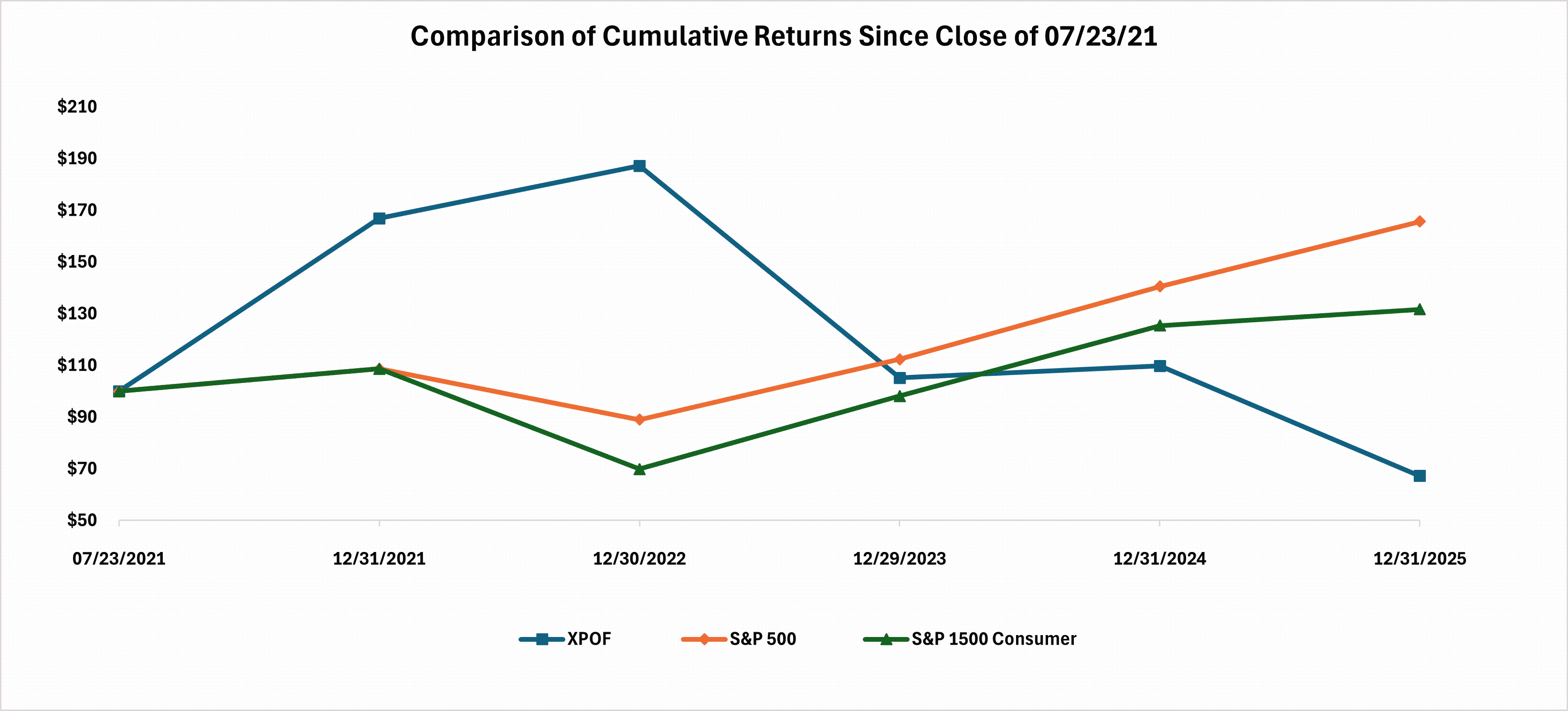
Item 6. [Reserved]
Item 7. Management’s Discussion and Analysis of Financial Condition and Results of Operations.
The following discussion and analysis of our financial condition and results of operations should be read in conjunction with our consolidated financial statements and related notes thereto and the other financial information included elsewhere in this Annual Report on Form 10-K. In addition to historical consolidated financial information, the following discussion and analysis contains forward-looking statements that involve risks, uncertainties and assumptions. Our actual results and timing may differ materially from those anticipated in these forward-looking statements as a result of many factors, including those discussed below and elsewhere in this Annual Report on Form 10-K, particularly in the section titled “Risk Factors.”
Overview
Xponential Fitness LLC (“XPO LLC”), the principal operating subsidiary of Xponential Fitness, Inc. (“XPO Inc.”), and together with its subsidiaries, (the “Company” or “we,” “us,” and “our”), is one of the leading global franchisors of boutique health and wellness brands. Pursuant to a reorganization into a holding company structure, the Company is a holding company with its principal asset being a 72.0% ownership interest in XPO LLC through its ownership interest in Xponential Intermediate Holdings, LLC (“XPO Holdings”).
We operate a diversified platform of five brands spanning across verticals including Pilates, barre, stretching, strength training and yoga. In partnership with its franchisees and master franchisees, XPO LLC offers energetic, accessible, and personalized workout experiences led by highly qualified instructors in studio locations throughout the North America Region and internationally, with franchise, master franchise and international expansion agreements in 49 U.S. states, Puerto Rico, and 28 additional countries as of December 31, 2025. The Company's portfolio of brands includes Club Pilates, the largest Pilates brand in the United States; StretchLab, a concept offering one-on-one and group stretching services; YogaSix, the largest franchised yoga brand in the United States; Pure Barre, a total body workout that uses the ballet barre to perform small isometric movements, and the largest barre brand in the United States; and BFT, a functional training and strength-based program.
As of December 31, 2025, 2,606 studios were open in the North America Region (consists of Canada, the United States and U.S. Territories) and franchisees were contractually committed to open 832 additional studios under existing franchise agreements. In addition, as of December 31, 2025, we had 491 studios open internationally and our master franchisees were contractually obligated to sell licenses to franchisees to open an additional 767 new studios, of which master franchisees have sold 192 licenses for studios not yet opened as of December 31, 2025.
During the years ended December 31, 2025, 2024 and 2023, we generated revenue outside the United States of $11.1 million, $14.0 million, and $13.4 million, respectively. As of December 31, 2025 and 2024, we did not have material assets located outside of the United States. No franchisee accounted for more than 5% of our revenue. We operate in one segment for financial reporting purposes.
Recent Developments
Executive Team Transition
On August 7, 2025, we announced that our board of directors had unanimously appointed Mr. Michael Nuzzo as Chief Executive Officer effective August 7, 2025. Mr. Nuzzo also joined our board of directors. Mr. Nuzzo succeeded Mark King, who retired from his position as Chief Executive Officer and as a member of our board of directors, also effective August 7, 2025. On July 30, 2025, we entered into an employment agreement with Mr. Nuzzo in connection with his appointment as Chief Executive Officer, to be effective as of August 7, 2025. Mr. Nuzzo brings more than 25 years of executive leadership in the retail and consumer services sectors across strategic, operational, financial, and growth-focused disciplines. In addition, on November 12, 2025, we announced the appointment of Gavin M. O’Connor as our Chief Legal Counsel and Administrative Officer.
Lindora Divestiture
On September 19, 2025, we entered into an agreement with a buyer to divest the Lindora brand, including the intellectual property, franchise rights and franchise agreements for open studios, and retained certain liabilities, including liabilities related to litigation, pre-litigation, and disputes as of the closing of the divestiture. We expect to receive total consideration of up to $6.0 million based on 7% of the monthly cash-basis gross revenue of the legacy studio locations, which was recorded at the estimated fair value of $3.8 million at the divestiture date. We believe the divestiture allows us to better focus and utilize our resources on our core brands and other opportunities which better align with our long-term strategies.
Rumble and CycleBar divestiture
On July 24, 2025, we entered into an agreement with a buyer to divest the CycleBar and Rumble brands, including the intellectual property, franchise rights and franchise agreements for open studios, and retained certain liabilities, including liabilities related to certain known litigation, pre-litigation, and disputes as of the closing of the divestiture. We received total consideration of $6.7 million in cash and retained royalties of $0.4 million, which was credited to the buyer's promissory note of $5.0 million. We believe the divestiture allows us to better focus and utilize our resources on our core brands and other opportunities which better align with our long-term strategies.
Retail supply agreement
On July 3, 2025, we and Fit Commerce, a California Corporation (“FC”), entered into a Retail Supply Agreement (the “Agreement”) which became effective as of December 1, 2025 (the “Effective Date”). The Agreement relates to the outsourcing of our retail merchandising, including the manufacturing and distribution, of any retail item sold by a franchisee, subject to terms and conditions outlined in the Agreement. In addition, FC purchased $4.5 million of our existing retail inventory on the Effective Date of the Agreement. This strategic initiative shifted management of the franchisee retail experience from our in-house teams to a dedicated e-commerce provider, allowing us to focus on core business priorities.
Pursuant to the Agreement, FC will pay us domestic and foreign commissions as well as direct-to-customer commissions (each, a “Commission” and collectively, “Commissions”) in connection with the sale of products to us or our franchisees. The domestic Commissions will be paid by FC to us based on each contract year (prorated for any partial contract year) in an aggregate amount of approximately $50.0 million over the five-year period subject to certain adjustments provided in the Agreement. On November 10, 2025, the Company entered into an amendment to the Agreement, pursuant to which certain non-material modifications were made to the provisions governing the purchase of the Company's existing retail inventory.
Paused offering or selling franchises
On April 26, 2024, we received a request for information from the Office of the Attorney General of the State of Maryland related to our compliance with Maryland’s Franchise Registration and Disclosure Law. As a result of the inquiry, we have been unable to offer and sell franchises in Maryland, except in cases where an exemption permitted sales to persons who met specific criteria. The Maryland matter is ongoing.
Additionally, we previously received notice of investigation from the State of Washington's Department of Financial Institutions (“DFI”), the Virginia Division of Securities and Retail Franchising (“VDSRF”), and the Office of the Attorney General of the State of New York (“NYAG”) related to our compliance with relevant state franchise laws. On August 12, 2025, without admission of wrongdoing, we entered into a consent order with DFI to resolve the matter. Similarly, on February 12, 2026, without admission of wrongdoing, the Company signed a settlement order with VDSRF to resolve the matter, which the VDSRF will be countersigning shortly. The NYAG matter is ongoing.
In March 2025, the 2025 Franchise Disclosure Documents (“FDDs”) were issued for the BFT, Club Pilates, CycleBar, Pure Barre, Rumble, Stretch Lab, and Yoga Six franchise programs, and then amended in August 2025 and again on February 19, 2026 for the BFT, Club Pilates, Pure Barre, Stretch Lab, and Yoga Six franchise programs. As a result, offers and sales of franchises are temporarily paused in the following registration states-- California, Hawaii, Illinois, Minnesota, New York, North Dakota, Rhode Island, Virginia, and Washington —until each state completes its review and registration of the amended FDDs. Pure Barre, however, may continue selling in Illinois and New York because it qualifies for an exemption. Separately, offers in Maryland are paused due to an ongoing regulatory inquiry. In all listed states, sales may proceed where an applicable exemption permits sales to persons who meet specific criteria.
The FDDs will be updated and renewed for 2026. Upon the issuance of the 2026 FDDs, the franchisors will begin offering and selling franchises in states that do not require registration of the FDDs. In the remaining states that require registration of the FDDs, we will continue to pause all sales until registration is obtained from the relevant regulatory agencies, except in cases where an exemption permits sales to persons who meet specific criteria. Sales will resume promptly following such approvals, subject to any applicable waiting periods. Any inability to sell licenses for an extended period can result in slowed growth and could result in a reduction in anticipated royalty or franchise revenue, which in turn may materially and adversely affect our business, results of operations, cash flows and financial condition.
Restructuring Plan
In the third quarter of 2023, we began a restructuring plan that involves exiting company-owned transition studios and other measures designed to reduce costs to achieve our long-term margin goals and focus on pure franchise operations. The plan was approved and initiated in the third quarter of 2023 and was expected to conclude in 2025; however, the ultimate timing of the completion of our restructuring plan will depend on lease termination negotiations, which is expected to continue throughout 2026. During the fourth quarter of 2023, our restructuring plan was expanded due to the addition of Rumble company-owned transition studios to the restructuring plan and a refranchising plan that was terminated by the Company due to the refranchisor’s non-compliance with the franchise agreements and the subsequent closure of certain studios. This refranchise termination resulted in us incurring losses for contract termination expenses, other expenses associated with exiting the studios, and loss contingencies related to the refranchisor’s unpaid payroll. During the years ended December 31, 2025 and 2024, we recognized total restructuring charges of $10.6 million, net of gains, and $29.6 million, net of gains, respectively, primarily for contract termination and other associated costs, loss (gain) on lease terminations and sale or disposal of assets, impairment of right-of-use assets, and other restructuring charges.
We expect to recognize additional restructuring charges throughout 2026 totaling between approximately $7.4 million to $11.0 million for rent expense, including amortization of the right-of-use assets and accretion of the operating lease liability, lease termination gains or losses, and other variable lease costs related to company-owned transition studios and other restructuring charges. We are considering subleases or negotiating lease terminations for operating leases for certain studios for which we have lease liabilities recorded and the expected cash payments and expenses to exit the lease may be greater than expected rent expense for that period, depending on the outcome of lease negotiations. Cash outflows related to these lease terminations are expected to be incurred throughout 2026. As of December 31, 2025, there were nine leases held by us related to divested brands that account for $6.3 million of our total lease liabilities.
Once completed we estimate annualized savings of approximately $13.5 million to $15.5 million as a result of the restructuring plan. However, we may not be able to fully realize the cost savings and benefits initially anticipated from the restructuring plan as we may not be able to reach agreement with contractual counterparties, or the charges may be greater than expected. Any reduction in the amount of annualized savings we expect to achieve would negatively impact our business. See Note 17 of Notes to Consolidated Financial Statements for additional information.
Factors Affecting Our Results of Operations
In addition to the impact of the risks described above under “Risk Factors”, we believe that the most significant factors affecting our results of operations include:
•Licensing new qualified franchisees, selling additional licenses to existing franchisees and opening studios. Our growth depends upon our ability to successfully license new studios to new and existing franchisees. We believe our success in attracting new franchisees and expanding our relationships with our existing franchisees has resulted from our diverse offering of attractive brands, corporate level support, training provided to franchisees and the opportunity to realize attractive returns on their invested capital. We also believe our significant investments in centralized systems and infrastructure help support new and existing franchisees. To continue to attract qualified new franchisees, sell additional studios to existing franchisees and assist franchisees in opening their studios, we plan to continue to invest in our brands to enable them to deliver positive consumer experiences and in our integrated services at the brand level to support franchisees.
•Timing of studio openings. Our revenue growth depends to a significant extent on the number of studios that are open and operating. Many factors affect whether a new studio will be opened on time, if at all, including the availability and cost of financing, selection and availability of suitable studio locations, delays in hiring personnel as well as any delays in equipment delivery or installation. To the extent franchisees are unable to open new studios on the timeline we anticipate, or at all, we will not realize the revenue growth that we expect. We believe our investments in centralized systems and infrastructure, including real estate site selection, studio build-out and design assistance help enable franchisees to open studios in a timely manner, and we plan to continue to invest in our systems to continue to provide assistance during the opening process.
•Increasing same store sales. Our long-term revenue prospects are driven in part by franchisees’ ability to increase same store sales (discussed below). Several factors affect our same store sales in any given period, including the number of stores that have been in operation for a significant period of time, growth in total memberships and marketing and promotional efforts. We expect to continue to seek to grow same store sales and Average Unit Volumes (“AUVs”) by helping franchisees acquire new members, increase studio utilization and drive increased spend from consumers. We also intend to expand ancillary revenue streams, such as our digital platform offerings and retail merchandise.
•International and domestic expansion. We continue to invest in increasing the number of franchisees outside of the North America Region. We have developed strong relationships and executed committed development contracts with master franchisees to propel our international growth. We plan to continue to invest in these relationships and seek new relationships and opportunities, including through acquisitions and partnerships, in countries that we have targeted for expansion. In the U.S., we may from time to time consider acquisition of and partnership with certain complimentary assets or businesses that can enhance and expand our brands and operations.
•Demand and competition for consumer income. Our revenue and future success will depend in part on the attractiveness of our brands and the services provided by franchisees relative to other fitness and entertainment options available to consumers. Our franchisees’ AUVs are dependent upon the performance of studios and may be impacted by reduced capacity as a result of various factors, including shifting consumer demand and behavior for fitness services. Macroeconomic factors such as inflation and recession, and economic factors affecting a particular geographic territory, may also increase competition for discretionary income, impact the returns generated by franchisees and therefore impact our operating results.
Key Performance Indicators
In addition to our financial statements prepared in accordance with accounting principles generally accepted in the United States (“GAAP”), we regularly review the following key metrics to measure performance, identify trends, formulate financial projections, compensate our employees, and monitor our business. While we believe that these metrics are useful in evaluating our business, other companies may not use similar metrics or may not calculate similarly titled metrics in a consistent manner.
All metrics in this “Key Performance Indicators” section are presented on an adjusted basis to remove historical information of Stride and Row House prior to their divestitures by the Company in February 2024 and May 2024, respectively, CycleBar and Rumble prior to their divestitures by the Company in July 2025, and Lindora prior to its divestiture in September 2025. Historical information has not been adjusted to reflect the wind down of AKT. All references to these metrics in this “Management’s Discussion and Analysis of Financial Condition and Results of Operations” use this same basis of reporting, unless noted otherwise.
The following table sets forth our key performance indicators for the years ended December 31, 2025, 2024 and 2023:
|
|
|
|
|
|
|
|
|
|
|
|
|
|
|
|
Year ended December 31, |
|
|
|
|
2025 |
|
|
2024 |
|
|
2023 |
|
|
|
|
($ in thousands) |
|
|
System-wide sales |
|
$ |
1,746,134 |
|
|
$ |
1,551,407 |
|
|
$ |
1,235,425 |
|
|
Number of new studio openings globally, gross |
|
|
341 |
|
|
|
429 |
|
|
|
480 |
|
|
Number of studios operating globally (cumulative total as of period end) |
|
|
3,097 |
|
|
|
2,896 |
|
|
|
2,612 |
|
|
Number of licenses sold globally (cumulative total as of period end) |
|
|
5,371 |
|
|
|
5,192 |
|
|
|
4,885 |
|
|
Number of licenses contractually obligated to open internationally (cumulative total as of period end) |
|
|
767 |
|
|
|
763 |
|
|
|
798 |
|
|
AUV (LTM as of period end) |
|
$ |
695 |
|
|
$ |
680 |
|
|
$ |
631 |
|
|
Quarterly AUV (run rate) |
|
$ |
683 |
|
|
$ |
695 |
|
|
$ |
643 |
|
|
Same store sales growth |
|
|
0 |
% |
|
|
7 |
% |
|
|
17 |
% |
|
The following tables present additional information related to our studio and license key performance indicators for the years ended December 31, 2025, 2024 and 2023:
|
|
|
|
|
|
|
|
|
|
|
|
|
|
|
Year Ended December 31, |
|
|
|
2025 |
|
|
|
North America Region |
|
|
International |
|
|
Global |
|
Total operating studios: |
|
|
|
|
|
|
|
|
|
Studios operating at beginning of period |
|
|
2,446 |
|
|
|
450 |
|
|
|
2,896 |
|
New studio openings, net (3) |
|
|
160 |
|
|
|
41 |
|
|
|
201 |
|
Studios operating at end of period |
|
|
2,606 |
|
|
|
491 |
|
|
|
3,097 |
|
Franchise licenses sold: |
|
|
|
|
|
|
|
|
|
Franchise licenses sold (total beginning of period) |
|
|
4,376 |
|
|
|
816 |
|
|
|
5,192 |
|
New franchise license sales |
|
|
67 |
|
|
|
112 |
|
|
|
179 |
|
Franchise licenses sold (total end of period) |
|
|
4,443 |
|
|
|
928 |
|
|
|
5,371 |
|
Development fee payments on future franchise licenses: |
|
|
|
|
|
|
|
|
|
Development fee payments on future franchise licenses (total end of period) (1) |
|
|
85 |
|
|
|
— |
|
|
|
85 |
|
|
|
|
|
|
|
|
|
|
|
Studios obligated to open internationally under Master Franchise Agreements ("MFAs"): |
|
December 31, 2025 |
|
Gross studios obligated to open under MFAs |
|
|
|
|
|
1,258 |
|
|
|
|
Less: studios opened under MFAs |
|
|
|
|
|
491 |
|
|
|
|
Remaining studios obligated to open under MFAs |
|
|
|
|
|
767 |
|
|
|
|
Licenses sold by master franchisees, net (2) |
|
|
|
|
|
192 |
|
|
|
|
|
|
|
|
|
|
|
|
|
|
|
|
|
|
|
Three Months Ended December 31, |
|
|
|
2024 |
|
|
|
North America Region |
|
|
International |
|
|
Global |
|
Total operating studios: |
|
|
|
|
|
|
|
|
|
Studios operating at beginning of period |
|
|
2,222 |
|
|
|
390 |
|
|
|
2,612 |
|
New studio openings, net (3) |
|
|
224 |
|
|
|
60 |
|
|
|
284 |
|
Studios operating at end of period |
|
|
2,446 |
|
|
|
450 |
|
|
|
2,896 |
|
Franchise licenses sold: |
|
|
|
|
|
|
|
|
|
Franchise licenses sold (total beginning of period) |
|
|
4,210 |
|
|
|
675 |
|
|
|
4,885 |
|
New franchise license sales |
|
|
166 |
|
|
|
141 |
|
|
|
307 |
|
Franchise licenses sold (total end of period) |
|
|
4,376 |
|
|
|
816 |
|
|
|
5,192 |
|
|
|
|
|
|
|
|
|
|
|
Studios obligated to open internationally under Master Franchise Agreements ("MFAs"): |
|
December 31, 2024 |
|
Gross studios obligated to open under MFAs |
|
|
|
|
|
1,197 |
|
|
|
|
Less: studios opened under MFAs |
|
|
|
|
|
434 |
|
|
|
|
Remaining studios obligated to open under MFAs |
|
|
|
|
|
763 |
|
|
|
|
Licenses sold by master franchisees, net (2) |
|
|
|
|
|
196 |
|
|
|
|
|
|
|
|
|
|
|
|
|
|
|
|
|
|
Year Ended December 31, |
|
|
|
2023 |
|
|
|
North America Region |
|
|
International |
|
|
Global |
|
|
Total operating studios: |
|
|
|
|
|
|
|
|
|
Studios operating at beginning of period |
|
1,903 |
|
|
|
297 |
|
|
|
2,200 |
|
|
New studio openings, net (3) |
|
319 |
|
|
|
93 |
|
|
|
412 |
|
|
Studios operating at end of period |
|
2,222 |
|
|
|
390 |
|
|
|
2,612 |
|
|
Franchise licenses sold: |
|
|
|
|
|
|
|
|
|
Franchise licenses sold (total beginning of period) |
|
3,617 |
|
|
|
505 |
|
|
|
4,122 |
|
|
New franchise license sales |
|
593 |
|
|
|
170 |
|
|
|
763 |
|
|
Franchise licenses sold (total end of period) |
|
4,210 |
|
|
|
675 |
|
|
|
4,885 |
|
|
|
|
|
|
|
|
|
|
|
|
Studios obligated to open internationally under Master Franchise Agreements ("MFAs"): |
December 31, 2023 |
|
|
Gross studios obligated to open under MFAs |
|
|
|
|
1,173 |
|
|
|
|
|
Less: studios opened under MFAs |
|
|
|
|
375 |
|
|
|
|
|
Remaining studios obligated to open under MFAs |
|
|
|
|
798 |
|
|
|
|
|
Licenses sold by master franchisees, net (2) |
|
|
|
|
196 |
|
|
|
|
|
(1)Reflects the number of development fee payments on future franchise licenses received by us and unused under multi-unit agreements as of period end. The number of development fee payments on future franchise licenses is not included in the franchise licenses sold count.
(2)Reflects the number of licenses for studios which have already been sold, but not yet opened, by master franchisees under master franchise agreements, net of terminations.
(3)Reflects the new studio openings, net of terminations.
System-Wide Sales
System-wide sales represent gross sales by all studios in the North America Region. System-wide sales includes sales by franchisees that are not revenue realized by us in accordance with GAAP. While we do not record sales by franchisees as revenue, and such sales are not included in our consolidated financial statements, this operating metric relates to our revenue because we receive approximately 7% and 2% of the sales by franchisees as royalty revenue and marketing fund revenue, respectively. We believe that this operating measure aids in understanding how we derive our royalty revenue and marketing fund revenue and is important in evaluating our performance. System-wide sales growth is driven by new studio openings and increases in same store sales. Management reviews system-wide sales weekly, which enables us to assess changes in our franchise revenue, overall studio performance, the health of our brands and the strength of our market position relative to competitors.
New Studio Openings
The number of new studio openings reflects the number of studios opened during a particular reporting period. We consider a new studio to be open once the studio begins offering classes. Opening new studios is an important part of our growth strategy. New studios may not generate material revenue in the early period following an opening and their revenue may not follow historical patterns. Management reviews the number of new studio openings in order to help forecast operating results and to monitor studio opening processes.
Studios No Longer Operating
A studio is considered no longer operating and excluded from the total number of studios operating if (a) the Company has reason to believe, after reasonable inquiry, that the studio is permanently closed, with no plans for re-opening or relocation, or (b) it has no sales for nine consecutive months or more, whichever comes first. If a studio deemed to be no longer operating subsequently generates sales at a future date, it re-enters the operating studio count (and the number of studios no longer operating is reduced). Studios classified as no longer operating are deemed permanently closed. Furthermore, studios no longer operating also includes de-branded studios (studios that exit our franchise system and continue to operate independently under non-Xponential branding).
Number of Studios Operating
In addition to the number of new studios opened and studios no longer operating during a period, we track the number of total studios operating at the end of a reporting period. This number represents studios that have already opened, are generating revenue, and are regularly holding classes, though this number could include some number of studios that have temporarily suspended operations, but that are not permanently closed and have not yet met the definition for a studio no longer operating. The number of studios that have temporarily suspended operations is an immaterial percentage of our total studio base.
Please see the table in the “Same Store Sales” section, sub header “North America studios contributing to same store sales.” The line “studios without 13 months of consecutive sales as of the last month that had positive sales within the period being measured” is an indicator for the number of the North America Region traditional location studios that are older than 13 months, and that have had a recent or current disruption in sales, but that are still included in the number of studios operating count. For the years ended December 31, 2025, 2024 and 2023, this represented 0.0%, 0.4%, and 0.4%, respectively, of our North America Region studio base. While nearly all our franchised studios are licensed to franchisees, from time to time we operate a limited number of company-owned transition studios (typically as we take possession of a studio following a franchisee ceasing to operate it and as we prepare it to be licensed to a new franchisee). Management reviews the number of studios operating at a given point in time in order to help forecast system-wide sales, franchise revenue, and other revenue streams.
The following tables contain information about changes in the number of our North America Region operating studios for the years ended December 31, 2025, 2024 and 2023, respectively:
|
|
|
|
|
|
|
|
|
|
|
|
|
|
Year Ended December 31, |
|
|
|
2025 |
|
|
2024 |
|
|
2023 |
|
|
North America Region franchisee-owned studios |
|
|
|
|
|
|
|
|
|
Studios operated at beginning of period |
|
2,446 |
|
|
|
2,212 |
|
|
|
1,875 |
|
|
New studio openings |
|
252 |
|
|
|
327 |
|
|
|
370 |
|
|
Refranchised studios (1) |
|
— |
|
|
|
1 |
|
|
|
34 |
|
|
Defranchised studios (3) |
|
— |
|
|
|
— |
|
|
|
(28 |
) |
|
Studios no longer operating |
|
(92 |
) |
|
|
(94 |
) |
|
|
(39 |
) |
|
Studios operated at end of period |
|
2,606 |
|
|
|
2,446 |
|
|
|
2,212 |
|
|
|
|
|
|
|
|
|
|
|
|
North America Region company-owned transition studios |
|
|
|
|
|
|
|
|
|
Studios operated at beginning of period |
|
— |
|
|
|
10 |
|
|
|
28 |
|
|
New studio openings |
|
— |
|
|
|
— |
|
|
|
— |
|
|
Franchise acquisitions (3) |
|
— |
|
|
|
— |
|
|
|
28 |
|
|
Refranchised studios(1) |
|
— |
|
|
|
(1 |
) |
|
|
(34 |
) |
|
Studios no longer operating |
|
— |
|
|
|
(9 |
) |
|
|
(12 |
) |
|
Studios operated at end of period(2) |
|
— |
|
|
|
— |
|
|
|
10 |
|
|
|
|
|
|
|
|
|
|
|
|
Total North America Region studios |
|
|
|
|
|
|
|
|
|
Studios operated at beginning of period |
|
2,446 |
|
|
|
2,222 |
|
|
|
1,903 |
|
|
New studio openings |
|
252 |
|
|
|
327 |
|
|
|
370 |
|
|
Studios no longer operating |
|
(92 |
) |
|
|
(103 |
) |
|
|
(51 |
) |
|
Studios operated at end of period |
|
2,606 |
|
|
|
2,446 |
|
|
|
2,222 |
|
|
(4)Includes previously franchised company-owned studios that were converted to franchisee-owned studios in the period.
(5)Excludes one company-owned transition studio operated at December 31, 2025 under the Rumble brand, which was divested in the third quarter of 2025. As of December 31, 2025, the Company continues to operate this studio.
(6)Includes previously franchisee-owned studios that were converted to company-owned studios in the period.
The following table sets forth the total number of operating studios internationally for the years ended December 31, 2025, 2024 and 2023:
|
|
|
|
|
|
|
|
|
|
|
|
|
|
|
Year Ended December 31, |
|
|
|
2025 |
|
|
2024 |
|
|
2023 |
|
International studios |
|
|
|
|
|
|
|
|
|
Studios operated at beginning of period |
|
|
450 |
|
|
|
390 |
|
|
|
297 |
|
New studio openings |
|
|
89 |
|
|
|
102 |
|
|
|
110 |
|
Studios no longer operating |
|
|
(48 |
) |
|
|
(42 |
) |
|
|
(17 |
) |
Studios operated at end of period |
|
|
491 |
|
|
|
450 |
|
|
|
390 |
|
The following table sets forth the total number of operating studios globally for the years ended December 31, 2025, 2024 and 2023:
|
|
|
|
|
|
|
|
|
|
|
|
|
|
|
Year Ended December 31, |
|
|
|
2025 |
|
|
2024 |
|
|
2023 |
|
Total studios |
|
|
|
|
|
|
|
|
|
Studios operated at beginning of period |
|
|
2,896 |
|
|
|
2,612 |
|
|
|
2,200 |
|
New studio openings |
|
|
341 |
|
|
|
429 |
|
|
|
480 |
|
Studios no longer operating |
|
|
(140 |
) |
|
|
(145 |
) |
|
|
(68 |
) |
Studios operated at end of period |
|
|
3,097 |
|
|
|
2,896 |
|
|
|
2,612 |
|
Non-Traditional Studio Locations
Non-traditional studio locations refers to studios that are not operated as standalone studio locations. There are currently 3 non-traditional studio locations globally, which are comprised of studios operated inside of other fitness facilities and on cruise ships.
Licenses Sold
The number of licenses sold in the North America Region and globally reflect the cumulative number of licenses sold by us (or, outside of the North America Region, by or to our master franchisees), since inception through the date indicated. The number of licenses sold is not reduced by terminations. The number of licenses sold does not generally include license renewals or licenses issued in connection with a change in ownership of operating studios. Licenses contractually obligated to open refer to licenses sold net of opened studios and terminations. Licenses contractually obligated to be sold internationally reflect the number of licenses that master franchisees are contractually obligated to sell to franchisees to open internationally that have not yet opened as of the date indicated. The number of licenses contractually obligated to open is a useful indicator of the number of studios that may open in the future, although it is not certain that these studios will open. Management reviews the number of licenses sold and the number of licenses contractually obligated to open to help monitor and forecast studio growth, system-wide sales and revenue streams.
As of December 31, 2025, we estimate approximately 30% of our global license obligations are over 12 months behind the applicable development schedule due to various circumstances and are currently inactive. This delay in development has resulted in delays in studio openings and may also lead to increased terminations, which could have a negative long term impact on our business and operating results.
Development fee payments on future franchise licenses
As part of a multi-unit agreement, franchisees purchase an initial franchise license and make nonrefundable development fee payments to reserve the right to open additional studios. The number of development fee payments on future franchise licenses sold in the North America Region reflect the number of development fee payments received by us and are unused as of period end. The number of development fee payments on future franchise licenses is not included in the licenses sold count. The remaining balance of the franchise license fee for each additional studio is due upon site selection for the studio and signing of a franchise agreement by the franchisee. The number of development fee payments on future franchise licenses is a useful indicator of the number of additional licenses that may be sold in the future, although it is not certain that these development fee payments will result in a sold license. Management reviews the number of development fee payments on future franchise licenses to help monitor and forecast license sales and studio growth.
Average Unit Volume
AUV is calculated by dividing sales during the applicable period for all studios contributing to AUV by the number of studios contributing to AUV. All traditional studio locations in the North America Region are included in the AUV calculation, as long as they meet certain time since opening and sales criteria (as defined immediately below). In particular, AUV (LTM as of period end) and Quarterly AUV (run rate) are calculated as follows:
•AUV (LTM as of period end) consists of the average sales for the trailing 12 calendar months for all traditional studio locations in the North America Region that opened at least 13 calendar months ago as of the measurement date and that have generated positive sales for each of the last 13 calendar months as of the measurement date.
•Quarterly AUV (run rate) consists of average quarterly sales for all traditional studio locations in the North America Region that had opened at least six calendar months ago as of the beginning of the respective quarter, and that have non-zero sales in the respective quarter (including nominal or negative sales figures; the only figures excluded are exact $0 amounts in the quarter), multiplied by four.
We measure sales for AUV based solely upon monthly sales as derived through the designated point-of-sale system. AUV is impacted by changes in same store sales, studio openings, and studio closures. Management reviews AUV to assess studio economics.
The following table reconciles our North America Region operating studios for the years ended December 31, 2025, 2024 and 2023, respectively, to the total studios contributing to both AUV (LTM as of period end) and Quarterly AUV (run rate):
|
|
|
|
|
|
|
|
|
|
|
|
|
|
Year Ended December 31, |
|
|
|
2025 |
|
|
2024 |
|
|
2023 |
|
|
North America Region studios contributing to AUV (LTM as of period) |
|
|
|
|
|
|
|
|
|
Operating studios (end of period) |
|
2,606 |
|
|
|
2,446 |
|
|
|
2,222 |
|
|
Studios no longer operating but generated sales in the period |
|
6 |
|
|
|
7 |
|
|
|
4 |
|
|
Less: studios less than 13 months old |
|
(276 |
) |
|
|
(404 |
) |
|
|
(420 |
) |
|
Less: non-traditional studio locations |
|
(3 |
) |
|
|
(4 |
) |
|
|
(10 |
) |
|
Less: studios without 13 months of consecutive sales as of measurement date |
|
(4 |
) |
|
|
(13 |
) |
|
|
(37 |
) |
|
Total |
|
2,329 |
|
|
|
2,032 |
|
|
|
1,759 |
|
|
|
|
|
|
|
|
|
|
|
|
North America Region studios contributing to Quarterly AUV (run rate) |
|
|
|
|
|
|
|
|
|
Operating studios (end of period) |
|
2,606 |
|
|
|
2,446 |
|
|
|
2,222 |
|
|
Studios no longer operating but generated sales in the period |
|
30 |
|
|
|
43 |
|
|
|
38 |
|
|
Less: studios less than 6 months old |
|
(167 |
) |
|
|
(250 |
) |
|
|
(304 |
) |
|
Less: non-traditional studio locations |
|
(3 |
) |
|
|
(4 |
) |
|
|
(18 |
) |
|
Less: studios with no sales in the period |
|
— |
|
|
|
— |
|
|
|
(9 |
) |
|
Total |
|
2,466 |
|
|
|
2,235 |
|
|
|
1,929 |
|
|
Same Store Sales
Same store sales refer to period-over-period sales comparisons for the base of studios. We define the same store sales to include monthly sales for any traditional studio location in the North America Region. If the studio has generated at least 13 months of consecutive positive sales and opened at least 13 calendar months ago as of any month within the measurement period, the respective comparable months will be included. We measure same store sales based solely upon monthly sales as derived through the designated point-of-sale system. This measure highlights the performance of existing studios, while excluding the impact of new studio openings. Management reviews same store sales to assess the health of the franchised studios.
The following table reconciles our North America Region operating studios for the years ended December 31, 2025, 2024 and 2023, respectively, to the total studios contributing to same store sales:
|
|
|
|
|
|
|
|
|
|
|
|
|
|
Year Ended December 31, |
|
|
|
2025 |
|
|
2024 |
|
|
2023 |
|
|
North America Region studios contributing to same store sales |
|
|
|
|
|
|
|
|
|
Operating studios (end of period) |
|
2,606 |
|
|
|
2,446 |
|
|
|
2,222 |
|
|
Studios no longer operating but generated sales in the period |
|
85 |
|
|
|
61 |
|
|
|
29 |
|
|
Less: studios less than 13 months old |
|
(276 |
) |
|
|
(404 |
) |
|
|
(420 |
) |
|
Less: non-traditional studio locations |
|
(3 |
) |
|
|
(4 |
) |
|
|
(10 |
) |
|
Less: studios without 13 months of consecutive sales as of the last month that had positive sales within the period being measured |
|
(1 |
) |
|
|
(11 |
) |
|
|
(8 |
) |
|
Total |
|
2,411 |
|
|
|
2,088 |
|
|
|
1,813 |
|
|
Results of Operations
The following table presents our consolidated results of operations for the years ended December 31, 2025, 2024 and 2023:
|
|
|
|
|
|
|
|
|
|
|
|
|
|
Year Ended December 31, |
|
|
|
2025 |
|
|
2024 |
|
|
2023 |
|
|
|
(in thousands) |
|
|
Revenue, net: |
|
|
|
|
|
|
|
|
|
Franchise revenue |
$ |
192,642 |
|
|
$ |
174,524 |
|
|
$ |
143,247 |
|
|
Equipment revenue |
|
35,022 |
|
|
|
54,199 |
|
|
|
56,454 |
|
|
Merchandise revenue |
|
23,912 |
|
|
|
27,174 |
|
|
|
33,275 |
|
|
Franchise marketing fund revenue |
|
36,468 |
|
|
|
33,986 |
|
|
|
27,292 |
|
|
Other service revenue |
|
26,835 |
|
|
|
30,463 |
|
|
|
57,669 |
|
|
Total revenue, net |
|
314,879 |
|
|
|
320,346 |
|
|
|
317,937 |
|
|
Operating costs and expenses: |
|
|
|
|
|
|
|
|
|
Costs of product revenue |
|
42,411 |
|
|
|
59,477 |
|
|
|
60,331 |
|
|
Costs of franchise and service revenue |
|
22,338 |
|
|
|
21,806 |
|
|
|
15,985 |
|
|
Selling, general and administrative expenses |
|
152,001 |
|
|
|
176,854 |
|
|
|
168,863 |
|
|
Impairment of goodwill and other noncurrent assets |
|
32,718 |
|
|
|
62,551 |
|
|
|
16,750 |
|
|
Depreciation and amortization |
|
12,027 |
|
|
|
17,713 |
|
|
|
16,883 |
|
|
Marketing fund expense |
|
40,484 |
|
|
|
26,673 |
|
|
|
22,683 |
|
|
Acquisition and transaction expenses (income) |
|
(6,948 |
) |
|
|
8,886 |
|
|
|
(18,464 |
) |
|
Total operating costs and expenses |
|
295,031 |
|
|
|
373,960 |
|
|
|
283,031 |
|
|
Operating income (loss) |
|
19,848 |
|
|
|
(53,614 |
) |
|
|
34,906 |
|
|
Other expense (income): |
|
|
|
|
|
|
|
|
|
Interest income |
|
(3,212 |
) |
|
|
(1,824 |
) |
|
|
(1,611 |
) |
|
Other income |
|
(1,096 |
) |
|
|
— |
|
|
|
— |
|
|
Interest expense |
|
49,189 |
|
|
|
46,250 |
|
|
|
38,733 |
|
|
Tax receivable agreement expense (benefit) |
|
(11 |
) |
|
|
998 |
|
|
|
3,193 |
|
|
Loss on debt extinguishment |
|
27,327 |
|
|
|
— |
|
|
|
— |
|
|
Total other expense |
|
72,197 |
|
|
|
45,424 |
|
|
|
40,315 |
|
|
Loss before income taxes |
|
(52,349 |
) |
|
|
(99,038 |
) |
|
|
(5,409 |
) |
|
Income taxes (benefit) |
|
1,322 |
|
|
|
(342 |
) |
|
|
1,034 |
|
|
Net loss |
$ |
(53,671 |
) |
|
$ |
(98,696 |
) |
|
$ |
(6,443 |
) |
|
The following table presents our consolidated results of operations for the years ended December 31, 2025, 2024 and 2023 as a percentage of revenue:
|
|
|
|
|
|
|
|
|
|
|
|
|
|
|
|
Year Ended December 31, |
|
|
|
|
2025 |
|
|
2024 |
|
|
2023 |
|
|
Revenue, net: |
|
|
|
|
|
|
|
|
|
|
Franchise revenue |
|
|
61 |
% |
|
|
54 |
% |
|
|
45 |
% |
|
Equipment revenue |
|
|
11 |
% |
|
|
17 |
% |
|
|
18 |
% |
|
Merchandise revenue |
|
|
8 |
% |
|
|
8 |
% |
|
|
10 |
% |
|
Franchise marketing fund revenue |
|
|
12 |
% |
|
|
11 |
% |
|
|
9 |
% |
|
Other service revenue |
|
|
8 |
% |
|
|
10 |
% |
|
|
18 |
% |
|
Total revenue, net |
|
|
100 |
% |
|
|
100 |
% |
|
|
100 |
% |
|
Operating costs and expenses: |
|
|
|
|
|
|
|
|
|
|
Costs of product revenue |
|
|
13 |
% |
|
|
19 |
% |
|
|
19 |
% |
|
Costs of franchise and service revenue |
|
|
7 |
% |
|
|
7 |
% |
|
|
5 |
% |
|
Selling, general and administrative expenses |
|
|
48 |
% |
|
|
55 |
% |
|
|
53 |
% |
|
Impairment of goodwill and other noncurrent assets |
|
|
10 |
% |
|
|
20 |
% |
|
|
5 |
% |
|
Depreciation and amortization |
|
|
4 |
% |
|
|
6 |
% |
|
|
5 |
% |
|
Marketing fund expense |
|
|
13 |
% |
|
|
8 |
% |
|
|
7 |
% |
|
Acquisition and transaction expenses (income) |
|
|
(2 |
)% |
|
|
3 |
% |
|
|
(6 |
)% |
|
Total operating costs and expenses |
|
|
93 |
% |
|
|
118 |
% |
|
|
89 |
% |
|
Operating income (loss) |
|
|
7 |
% |
|
|
(18 |
)% |
|
|
11 |
% |
|
Other expense (income): |
|
|
|
|
|
|
|
|
|
|
Interest income |
|
|
(1 |
)% |
|
|
(1 |
)% |
|
|
(1 |
)% |
|
Other income |
|
|
— |
% |
|
|
— |
% |
|
|
— |
% |
|
Interest expense |
|
|
16 |
% |
|
|
14 |
% |
|
|
12 |
% |
|
Tax receivable agreement expense (benefit) |
|
|
— |
% |
|
|
— |
% |
|
|
1 |
% |
|
Loss on debt extinguishment |
|
|
9 |
% |
|
|
— |
% |
|
|
— |
% |
|
Total other expense |
|
|
24 |
% |
|
|
13 |
% |
|
|
13 |
% |
|
Loss before income taxes |
|
|
(17 |
)% |
|
|
(31 |
)% |
|
|
(2 |
)% |
|
Income taxes |
|
|
— |
% |
|
|
— |
% |
|
|
— |
% |
|
Net loss |
|
|
(17 |
)% |
|
|
(31 |
)% |
|
|
(2 |
)% |
|
Comparison of the years ended December 31, 2025 and December 31, 2024
The following is a discussion of our consolidated results of operations for the year ended December 31, 2025 versus the year ended December 31, 2024.
Revenue
|
|
|
|
|
|
|
|
|
|
|
|
|
|
|
|
|
|
|
Year Ended December 31, |
|
|
Change from Prior Year |
|
|
|
2025 |
|
|
2024 |
|
|
$ |
|
|
% |
|
|
|
($ in thousands) |
|
|
|
|
Franchise revenue |
|
$ |
192,642 |
|
|
$ |
174,524 |
|
|
$ |
18,118 |
|
|
|
10.4 |
% |
Equipment revenue |
|
|
35,022 |
|
|
|
54,199 |
|
|
|
(19,177 |
) |
|
|
(35.4 |
)% |
Merchandise revenue |
|
|
23,912 |
|
|
|
27,174 |
|
|
|
(3,262 |
) |
|
|
(12.0 |
)% |
Franchise marketing fund revenue |
|
|
36,468 |
|
|
|
33,986 |
|
|
|
2,482 |
|
|
|
7.3 |
% |
Other service revenue |
|
|
26,835 |
|
|
|
30,463 |
|
|
|
(3,628 |
) |
|
|
(11.9 |
)% |
Total revenue, net |
|
$ |
314,879 |
|
|
$ |
320,346 |
|
|
$ |
(5,467 |
) |
|
|
(1.7 |
)% |
Total revenue. Total revenue was $314.9 million in the year ended December 31, 2025, compared to $320.3 million in the year ended December 31, 2024, a decrease of $5.5 million, or 2%. The decrease in total revenue was primarily due to lower equipment revenue due to a decrease in equipment installations and lower in merchandise revenue, partially offset by an increase in franchise revenue and franchise marketing fund revenue.
Franchise revenue. Franchise revenue was $192.6 million in the year ended December 31, 2025, compared to $174.5 million in the year ended December 31, 2024, an increase of $18.1 million, or 10%. Franchise revenue consisted of franchise royalty fees of $130.0 million, franchise territory fees of $34.9 million, technology fees of $15.7 million and training fees of $12.0 million in the year ended December 31, 2025, compared to franchise royalty fees of $118.3 million, franchise territory fees of $27.9 million, technology fees of $16.9 million and training fees of $11.4 million in the year ended December 31, 2024. The increase in franchise royalty fees was primarily due to a higher royalty rate for certain new studios, partially offset by a decrease due to brand divestitures in the current year. The increase in franchise territory fees is primarily attributed to an increase of $7.6 million, or 62%, in revenue recognized as a result of franchise agreement terminations year-over-year to $19.9 million in the year ended December 31, 2025, compared to $12.3 million in the prior year period.
Equipment revenue. Equipment revenue was $35.0 million in the year ended December 31, 2025, compared to $54.2 million in the year ended December 31, 2024, a decrease of $19.2 million, or 35%. Most equipment revenue is recognized in the period when the equipment is installed. The decrease in equipment revenue was primarily due to a decrease in global equipment installations in the year ended December 31, 2025, compared to the prior year period, driven by a decrease in studio openings compared to the prior year period and consistent with the decrease in franchise license sales in recent periods.
Merchandise revenue. Merchandise revenue was $23.9 million in the year ended December 31, 2025, compared to $27.2 million in the year ended December 31, 2024, a decrease of $3.3 million, or 12%. The decrease in merchandise revenue was primarily due to the impact of divested brands and lower overall demand from studios coupled with change in strategy to outsource our retail merchandise inventory compared to the prior period.
Franchise marketing fund revenue. Franchise marketing fund revenue was $36.5 million in the year ended December 31, 2025, compared to $34.0 million in the year ended December 31, 2024, an increase of $2.5 million, or 7%. The increase was primarily due to an increase in number of operating studios in the North America Region since December 31, 2024.
Other service revenue. Other service revenue was $26.8 million in the year ended December 31, 2025, compared to $30.5 million in the year ended December 31, 2024, a decrease of $3.6 million, or 12%. The decrease was primarily due to a $1.2 million decrease in package and memberships revenue due to a lower average number of company-owned transition studios and a $1.9 million decrease in vendor commission and brand access fee revenues.
Operating Costs and Expenses
|
|
|
|
|
|
|
|
|
|
|
|
|
|
|
|
|
|
|
Year Ended December 31, |
|
|
Change from Prior Year |
|
|
|
2025 |
|
|
2024 |
|
|
$ |
|
|
% |
|
|
|
($ in thousands) |
|
|
|
|
Costs of product revenue |
|
$ |
42,411 |
|
|
$ |
59,477 |
|
|
$ |
(17,066 |
) |
|
|
(28.7 |
)% |
Costs of franchise and service revenue |
|
|
22,338 |
|
|
|
21,806 |
|
|
|
532 |
|
|
|
2.4 |
% |
Selling, general and administrative expenses |
|
|
152,001 |
|
|
|
176,854 |
|
|
|
(24,853 |
) |
|
|
(14.1 |
)% |
Impairment of goodwill and other assets |
|
|
32,718 |
|
|
|
62,551 |
|
|
|
(29,833 |
) |
|
|
(47.7 |
)% |
Depreciation and amortization |
|
|
12,027 |
|
|
|
17,713 |
|
|
|
(5,686 |
) |
|
|
(32.1 |
)% |
Marketing fund expense |
|
|
40,484 |
|
|
|
26,673 |
|
|
|
13,811 |
|
|
|
51.8 |
% |
Acquisition and transaction (income) expense |
|
|
(6,948 |
) |
|
|
8,886 |
|
|
|
(15,834 |
) |
|
|
(178.2 |
)% |
Total operating costs and expenses |
|
$ |
295,031 |
|
|
$ |
373,960 |
|
|
$ |
(78,929 |
) |
|
|
(21.1 |
)% |
Costs of product revenue. Costs of product revenue was $42.4 million in the year ended December 31, 2025, compared to $59.5 million in the year ended December 31, 2024, a decrease of $17.1 million, or 29%, compared to a decrease in related revenues of 28%. The decrease in cost of product revenue was partially attributable to a decrease in global equipment installations in the year ended December 31, 2025, compared to the prior year period. Costs of product revenue as a percentage of related revenue decreased to 72% in the year ended December 31, 2025, from 73% in the comparable prior year period. The decrease was primarily due to an increase in write downs of slow-moving inventory in the current year period. Additionally, in the prior year period we had a higher percentage of sales relating to non-branded merchandise for which we earn a commission with no corresponding cost of revenue compared to the current year period.
Costs of franchise and service revenue. Costs of franchise and service revenue was $22.3 million in the year ended December 31, 2025, compared to $21.8 million in the year ended December 31, 2024, an increase of $0.5 million, or 2%. The increase was primarily due to a $1.3 million increase in franchise sales commissions, partially offset by a $0.5 million decrease in costs related to brand access fee revenue. This increase is consistent with the increase in related franchise territory revenue.
Selling, general and administrative expenses. Selling, general and administrative expenses were $152.0 million in the year ended December 31, 2025, compared to $176.9 million in the year ended December 31, 2024, a decrease of $24.9 million, or 14%. The decrease was primarily attributable to a decrease in legal expenses of $1.9 million (including nonrecurring insurance credits of $34.8 million in the current period) related to various legal matters including government investigations; a decrease of $2.6 million in equity-based compensation expense due to an increase in forfeitures over the prior year period; lower restructuring and related charges of $22.2 million in the current year period; a decrease in marketing and advertising expenses of $2.1 million, an increase in gain on divestitures of brands of $3.7 million; and a $0.3 million decrease in bad debt expense, partially offset by an increase in salaries and wages of $2.3 million; a $4.1 million increase in loss on guaranty of franchisee third-party loans; and a net increase in other variable expenses of $1.5 million.
Impairment of goodwill and other assets. Impairment of goodwill and other assets was $32.7 million in the year ended December 31, 2025, compared to $62.6 million in the year ended December 31, 2024, a decrease of $29.8 million, or 48%. The decrease was primarily due to impairments of goodwill of $5.1 million and $2.3 million related to the BFT and Lindora reporting units, respectively, impairment of trademark of $3.4 million related to the CycleBar trademark, impairment of trademark, franchise agreement and deferred video production cost intangible assets of $12.7 million related to BFT, and other noncurrent asset impairments of $9.2 million compared to write down of franchise agreements intangible asset and goodwill of $30.3 million related to BFT, a write down of goodwill of $10.3 million related to Rumble, a write down of franchise agreements intangible assets, trademark, and goodwill of $12.6 million related to CycleBar, a write down of right-of-use assets of $7.0 million, and other impairments of $2.4 million primarily related to our Xpass platform in the prior year period.
Depreciation and amortization. Depreciation and amortization expense was $12.0 million in the year ended December 31, 2025, compared to $17.7 million in the year ended December 31, 2024, a decrease of $5.7 million, or 32%. The decrease was primarily due to a decrease in fixed assets related to impairment of software assets and a decrease in intangible assets due to impairments during the year ended December 31, 2024.
Marketing fund expense. Marketing fund expense was $40.5 million in the year ended December 31, 2025, compared to $26.7 million in the year ended December 31, 2024, an increase of $13.8 million, or 52%. The increase in marketing fund expense was primarily attributable to higher marketing fund contribution expenses, which were increased to maintain marketing spend at a level consistent with revenue as well as the utilization of approximately $4.0 million of previously accumulated fund surplus. Marketing fund expenses are recorded as incurred, which may not occur in the same period as the recognition of franchise marketing fund revenue.
Acquisition and transaction expenses (income). Acquisition and transaction income was $6.9 million in the year ended December 31, 2025, compared to expense of $8.9 million in the year ended December 31, 2024, an increase to income of $15.8 million, or 178%. These charges primarily represent the non-cash change in contingent consideration related to 2021 and 2024 business acquisitions.
Other Expense (Income), net
|
|
|
|
|
|
|
|
|
|
|
|
|
|
|
|
|
|
|
Year Ended December 31, |
|
|
Change from Prior Year |
|
|
|
2025 |
|
|
2024 |
|
|
$ |
|
|
% |
|
|
|
($ in thousands) |
|
|
|
|
Interest income |
|
$ |
(3,212 |
) |
|
$ |
(1,824 |
) |
|
$ |
(1,388 |
) |
|
|
76.1 |
% |
Other income |
|
|
(1,096 |
) |
|
|
— |
|
|
|
(1,096 |
) |
|
NA |
|
Interest expense |
|
|
49,189 |
|
|
|
46,250 |
|
|
|
2,939 |
|
|
|
6.4 |
% |
Tax receivable agreement expense (benefit) |
|
|
(11 |
) |
|
|
998 |
|
|
|
(1,009 |
) |
|
|
(101.1 |
)% |
Loss on debt extinguishment |
|
|
27,327 |
|
|
|
— |
|
|
|
27,327 |
|
|
NA |
|
Total other expense, net |
|
$ |
72,197 |
|
|
$ |
45,424 |
|
|
$ |
26,773 |
|
|
|
58.9 |
% |
Interest income. Interest income primarily consists of interest on notes receivable and interest income received from various interest-bearing bank accounts, which was $3.2 million in the year ended December 31, 2025, compared to $1.8 million in the year ended December 31, 2024.
Other income. Other income consists of royalty payments from franchisees associated with the divested CycleBar and Rumble brands since the divestiture date, which was $1.1 million in the year ended December 31, 2025, compared to no royalty payments in the year ended December 31, 2024. See Note 3 of Notes to Consolidated Financial Statements for additional information.
Interest expense. Interest expense was $49.2 million in the year ended December 31, 2025, compared to $46.3 million in the year ended December 31, 2024, an increase of $2.9 million, or 6%. Interest expense consists of interest on long-term debt, accretion of earn-out liabilities and amortization and write off of deferred loan costs and debt discount. The increase was primarily due to higher average debt balances in the current year period, partly offset by lower average interest rates on our credit agreement.
Other expense. Other expense consists of Tax Receivable Agreement (“TRA”) expense (benefit), TRA benefit was less than $0.1 million in the year ended December 31, 2025, compared to $1.0 million of TRA expense in the year ended December 31, 2024.
Loss on debt extinguishment. Loss on debt extinguishment consists of $27.3 million for the year ended December 31, 2025 which was recorded as a result of debt refinancing. For the year ended December 31, 2024, there was no loss on debt extinguishment.
Income Taxes
|
|
|
|
|
|
|
|
|
|
|
|
|
|
|
|
|
|
|
Year Ended December 31, |
|
|
Change from Prior Year |
|
|
|
2025 |
|
|
2024 |
|
|
$ |
|
|
% |
|
|
|
($ in thousands) |
|
|
|
|
Income taxes |
|
$ |
1,322 |
|
|
$ |
(342 |
) |
|
$ |
1,664 |
|
|
|
(486.5 |
)% |
Income taxes. Income taxes were (2.5%) of pre-tax book income (loss) in the year ended December 31, 2025, compared to 0.3% in the year ended December 31, 2024. The $1.7 million change primarily relates to the release of valuation allowance during the year ended December 31, 2024.
Non-GAAP Financial Measures
In addition to our results determined in accordance with GAAP, we believe the following non-GAAP measures are useful in evaluating our operating performance. We use the following non-GAAP financial information to evaluate our ongoing operations and for internal planning and forecasting purposes. We believe that non-GAAP financial information, when taken collectively, is helpful to investors because it provides consistency and comparability with past financial performance. In addition, our management uses non-GAAP measures to compare our performance relative to forecasts and to benchmark our performance externally against competitors. However, non-GAAP financial information is presented for supplemental informational purposes only, has limitations as an analytical tool, and should not be considered in isolation or as a substitute for financial information presented in accordance with GAAP. In addition, other companies, including companies in our industry, may calculate and present similarly titled non-GAAP measures differently or may use other measures to evaluate their performance, all of which could reduce the usefulness of our non-GAAP financial measure as tools for comparison. A reconciliation is provided below for the non-GAAP financial measures to the most directly comparable financial measures stated in accordance with GAAP. Investors are encouraged to review the related GAAP financial measures and the reconciliation of the non-GAAP financial measures to their most directly comparable GAAP financial measures and not rely on any single financial measure to evaluate our business.
We believe that the non-GAAP financial measures presented below, when taken together with the corresponding GAAP financial measures, provide meaningful supplemental information regarding our performance by excluding certain items that may not be indicative of our business, results of operations or outlook.
Adjusted EBITDA
We define adjusted EBITDA as EBITDA (net income/loss before interest, taxes, depreciation and amortization), adjusted for the impact of certain non-cash and other items that we do not consider in our evaluation of ongoing operating performance. These items include equity-based compensation and related employer payroll taxes, acquisition and transaction expenses (income) (including change in contingent consideration and transaction bonuses), litigation expenses (consisting of legal and related fees for specific proceedings that arise outside of the ordinary course of our business, net of insurance reimbursements), fees for financial transactions, such as secondary public offering expenses for which we do not receive proceeds (including bonuses paid to executives related to completion of such transactions) and other contemplated corporate transactions, expense related to the remeasurement of our TRA obligation, expense related to loss on impairment or write down of goodwill and other noncurrent assets, loss and expenses related to brand divestitures and wind down (including expenses directly related to the divested or wound down brands for arrangements that existed prior to divestiture or wind down), executive transition costs (consisting of costs associated with the transition of our executive team, such as professional services, legal fees, executive recruiting costs and other related costs), one-time costs associated with rebranding one studio to the KINRGY brand, transformation initiative costs (primarily consisting of third-party professional consulting fees related to modifications of our business strategy and cost saving initiatives), contract settlement expenses (related to, among other things, the settlement of disputed costs and the elimination of the option for us to repurchase the master franchise rights from the BFT seller without requiring our payment of a repurchase cancellation fee), other income (consisting of royalties received from divested brands), and restructuring and related charges incurred in connection with our restructuring plan that we do not believe reflect our underlying business performance and affect comparability. For the year ended December 31, 2025, loss and expenses due to brand divestitures and wind down (excluding impairments) represents net gain on divestiture of $1.6 million, and certain other expenses recorded primarily in connection with brand divestitures and outsourcing of our retail merchandising, including write-off of accounts receivable determined no longer collectable of $1.2 million, sale and write-off of inventory of $3.9 million, loss on franchisee loan guarantees of $1.4 million, severance costs of $0.3 million, and certain other costs of $0.4 million. EBITDA and adjusted EBITDA are also frequently used by analysts, investors and other interested parties to evaluate companies in our industry.
We believe that adjusted EBITDA, viewed in addition to, and not in lieu of, our reported GAAP results, provides useful information to investors regarding our performance and overall results of operations because it eliminates the impact of other items that we believe reduce the comparability of our underlying core business performance from period to period and is therefore useful to our investors in comparing the core performance of our business from period to period.
The following table presents a reconciliation of net income (loss), the most directly comparable financial measure calculated in accordance with GAAP, to adjusted EBITDA for the years ended December 31, 2025, 2024 and 2023:
|
|
|
|
|
|
|
|
|
|
|
|
|
|
|
|
Year Ended December 31, |
|
|
|
|
2025 |
|
|
2024 |
|
|
2023 |
|
|
|
|
(in thousands) |
|
|
Net loss |
|
$ |
(53,671 |
) |
|
$ |
(98,696 |
) |
|
$ |
(6,443 |
) |
|
Interest expense, net |
|
|
45,977 |
|
|
|
44,426 |
|
|
|
37,122 |
|
|
Income taxes |
|
|
1,322 |
|
|
|
(342 |
) |
|
|
1,034 |
|
|
Depreciation and amortization |
|
|
12,027 |
|
|
|
17,713 |
|
|
|
16,883 |
|
|
EBITDA |
|
|
5,655 |
|
|
|
(36,899 |
) |
|
|
48,596 |
|
|
Equity-based compensation |
|
|
12,908 |
|
|
|
15,465 |
|
|
|
17,997 |
|
|
Employer payroll taxes related to equity-based compensation |
|
|
290 |
|
|
|
436 |
|
|
|
672 |
|
|
Acquisition and transaction expenses (income) |
|
|
(6,948 |
) |
|
|
8,886 |
|
|
|
(18,464 |
) |
|
Litigation expenses |
|
|
30,097 |
|
|
|
32,575 |
|
|
|
6,839 |
|
|
Financial transaction fees and related expenses |
|
|
408 |
|
|
|
620 |
|
|
|
9,038 |
|
|
TRA remeasurement |
|
|
(11 |
) |
|
|
998 |
|
|
|
3,193 |
|
|
Impairment of goodwill and other noncurrent assets |
|
|
32,718 |
|
|
|
62,551 |
|
|
|
16,750 |
|
|
Loss and expenses due to brand divestitures and wind down (excluding impairments) |
|
|
5,570 |
|
|
|
1,820 |
|
|
|
— |
|
|
Executive transition costs |
|
|
7 |
|
|
|
690 |
|
|
|
— |
|
|
Non-recurring rebranding expenses |
|
|
— |
|
|
|
331 |
|
|
|
— |
|
|
Transformation initiative costs |
|
|
874 |
|
|
|
1,287 |
|
|
|
— |
|
|
Contract settlement costs |
|
|
— |
|
|
|
1,170 |
|
|
|
— |
|
|
Other income |
|
|
(1,096 |
) |
|
|
— |
|
|
|
— |
|
|
Loss on debt extinguishment |
|
|
27,327 |
|
|
|
— |
|
|
|
— |
|
|
Restructuring and related charges (excluding impairments) |
|
|
3,979 |
|
|
|
26,287 |
|
|
|
15,700 |
|
|
Adjusted EBITDA |
|
$ |
111,778 |
|
|
$ |
116,217 |
|
|
$ |
100,321 |
|
|
Liquidity and Capital Resources
As of December 31, 2025, we had $33.7 million of cash and cash equivalents, excluding $12.2 million of restricted cash consisting of marketing fund restricted cash of $11.4 million and a standby letter of credit guarantee.
We principally require cash to fund day-to-day operations, finance capital investments, service our outstanding debt and address our working capital needs. Additionally, we require cash to fund the investments in our data warehouse project and other investments to become a data driven company. Based on our current level of operations, we believe that our available cash balance and the cash generated from our operations will be adequate to meet our anticipated debt service requirements and obligations under our TRA, capital expenditures, payment of tax distributions and working capital needs for at least the next twelve months beginning March 3, 2026 and beyond such twelve month period based on our current business plans. Our ability to continue to fund these items and continue to reduce debt could be adversely affected by the occurrence of any of the events described under “Risk Factors.” There can be no assurance, however, that our business will generate sufficient cash flows from operations or that future borrowings will be available under our credit facility or otherwise to enable us to service our indebtedness, including our credit facility, or to make anticipated capital expenditures. Our future operating performance and our ability to service, extend or refinance the credit facility will be subject to future economic conditions and to financial, business and other factors, many of which are beyond our control.
Credit Facility
On December 8, 2025 (the “Closing Date”), we entered into a Financing Agreement with HPS Investment Partners LLC, as administrative agent and collateral agent, and the lenders party thereto (the “Credit Agreement”), which consisted of a term loan facility in a principal amount of $525 million (the “ Closing Date Term Loans”) and a revolving credit facility in a principal amount of $25 million (the “Revolving Loans”). Our obligations under the Credit Agreement are jointly and severally guaranteed by XPO Holdings and certain subsidiaries of XPO Holdings (collectively, the “Guarantors”, and together with the us, the “Loan Parties”) and are secured by a first priority lien on substantially all of our assets, subject to customary exceptions. The net proceeds from the Credit Agreement was used (i) to repay all outstanding indebtedness under the prior credit agreement, (ii) to repurchase all outstanding shares of the redeemable convertible preferred stock and (iii) to pay the Transaction Expenses (as defined in the Credit Agreement). The proceeds of the Revolving Loans will be used by the Company for working capital and general corporate purposes.
The Credit Agreement contains various conditions to borrowing and certain customary affirmative and negative covenants, including, without limitation, covenants that restrict our ability to incur debt, grant liens, make investments, make restricted payments and dispose of assets. The Credit Agreement includes a financial covenant requiring us to maintain a Total Net Leverage Ratio (as discussed further in the Credit Agreement) not to exceed a certain threshold (pursuant to the table as set forth in Section 7.12 of the Credit Agreement) as of the last day of each Test Period (as defined in the Credit Agreement) commencing with March 31, 2026. The Credit Agreement also contains customary events of default. The Closing Date Term Loans and the Revolving Loans will both mature five years after the Closing Date. As of December 31, 2025 the Company was in compliance with these covenants.
Commencing with the fiscal quarter ending March 31, 2026, and subject to customary adjustments, we will be required to repay (a) on the last Business Day (as defined in the Credit Agreement) of each March, June, September and December (each a “Principal Payment Date”), an aggregate principal amount equal to (i) 0.25% of the aggregate principal amount of all Closing Date Term Loans outstanding on the Closing Date, in respect of the first four Principal Payment Dates (commencing March 31, 2026), (ii) 0.75% of the aggregate principal amount of all Closing Date Term Loans outstanding on the Closing Date, in respect of the next four Principal Payment Dates (i.e., commencing on March 31, 2027) and (iii) 1.25% of the aggregate principal amount of all Closing Date Term Loans outstanding on the Closing Date, in respect of each Principal Payment Date thereafter (i.e., commencing on March 31, 2028). The amount of the quarterly principal payments pursuant to the Credit Agreement commencing on March 31, 2026 will be $1.3 million.
The total principal amount outstanding on the Closing Date Term Loans was $525.0 million at December 31, 2025. See Note 7 of Notes to Consolidated Financial Statements for additional information about our debt.
Cash Flows
The following table presents summary cash flow information for the years ended December 31, 2025 and 2024. Analysis of our cash flows for the year ended December 31, 2022 is included in our Annual Report on Form 10-K for the year ended December 31, 2023.
|
|
|
|
|
|
|
|
|
|
|
Year Ended December 31, |
|
|
|
2025 |
|
|
2024 |
|
|
|
(in thousands) |
|
Net cash provided by (used in) operating activities |
|
$ |
28,318 |
|
|
$ |
11,677 |
|
Net cash provided by (used in) investing activities |
|
|
1,528 |
|
|
|
(14,149 |
) |
Net cash provided by (used in) financing activities |
|
|
(16,722 |
) |
|
|
(1,883 |
) |
Net increase (decrease) in cash, cash equivalents and restricted cash |
|
$ |
13,124 |
|
|
$ |
(4,355 |
) |
Cash Flows from Operating Activities
In the year ended December 31, 2025, cash provided by operating activities was $28.3 million, compared to $11.7 million in the year ended December 31, 2024, a increase in cash provided of $16.6 million was due to higher net income after adjustments to reconcile net loss to net cash provided by operating activities and $36.5 million in unfavorable changes in working capital related to accounts payable, operating lease liabilities, prepaid expenses and other current assets, deferred revenue, and other current liabilities, partially offset by $34.8 million in favorable changes in working capital related to accounts receivable, inventories, deferred costs, accrued expenses, other assets and other liabilities in the year ended December 31, 2025, compared to the year ended December 31, 2024.
Cash Flows from Investing Activities
In the year ended December 31, 2025, cash provided by investing activities was $1.5 million compared to cash used of $14.1 million in the year ended December 31, 2024. The change year over year of $15.7 million was primarily attributable to cash used of $8.5 million for acquisition of Lindora in the prior year and the decrease in cash used to purchase property and equipment of $1.1 million in the current year and cash received of $6.7 million from the divestiture of CycleBar and Rumble brands in the current year.
Cash Flows from Financing Activities
In the year ended December 31, 2025 and 2024, cash used in financing activities was $16.7 million and $1.9 million, respectively. The change year over year of $14.8 million was primarily attributable to net borrowings on long-term debt of $122.5 million in the current year compared to $18.8 million in the prior period year, a decrease in cash used for payments of tax receivable agreement of $2.3 million, a decrease in payments for distributions to Pre-IPO Members of $8.4 million and increase in payments received from shareholders of $2.4 million, partially offset by increased payments of $2.9 million for taxes related to net share settlement of restricted share units in the current year and payment of $128.5 million related to repurchase of convertible preferred stock in the current year.
Material Cash Commitments
The table below represents our material cash commitments, including the scheduled maturities of our contractual obligations as of December 31, 2025. The table excludes certain potential cash requirements because they may involve future cash payments that are considered uncertain and cannot be estimated because they vary based upon future conditions; however, the exclusion of these obligations should not be construed as an implication that they are immaterial, as they could significantly affect our short- and long-term liquidity and capital resource needs depending on a variety of future events, facts and conditions.
|
|
|
|
|
|
|
|
|
|
|
|
|
|
|
|
|
|
|
|
|
|
|
Payments due during the years ending December 31, |
|
|
|
Total |
|
|
2026 |
|
|
2027-2028 |
|
|
2029-2030 |
|
|
Thereafter |
|
|
|
($ in thousands) |
|
Operating lease obligations (1) |
|
$ |
23,324 |
|
|
$ |
6,183 |
|
|
$ |
8,457 |
|
|
$ |
5,180 |
|
|
$ |
3,504 |
|
Debt, principal (2) |
|
|
525,000 |
|
|
|
5,250 |
|
|
|
42,000 |
|
|
|
477,750 |
|
|
|
— |
|
Debt, interest (3) |
|
|
267,206 |
|
|
|
53,009 |
|
|
|
116,648 |
|
|
|
97,549 |
|
|
|
— |
|
Loan to shareholder (4) |
|
|
400 |
|
|
|
240 |
|
|
|
160 |
|
|
|
— |
|
|
|
— |
|
Total |
|
$ |
815,930 |
|
|
$ |
64,682 |
|
|
$ |
167,265 |
|
|
$ |
580,479 |
|
|
$ |
3,504 |
|
(1)We lease our facilities under non-cancelable operating leases.
(2)Represents scheduled debt obligation payments on debt outstanding as of December 31, 2025.
(3)Represents estimated scheduled interest payments on debt outstanding as of December 31, 2025.
(4)Represents the additional loans obligated to fund under agreements with shareholders (see Note 9 of Notes to Consolidated Financial Statements).
Off-Balance Sheet Arrangements
As of December 31, 2025, our off-balance sheet arrangements consisted of guarantees of lease agreements for certain franchisees. Our potential obligation under these agreements is approximately $4.6 million and would only require payment upon default by the primary obligor. We determined the fair value of these guarantees at inception was not material, and as of December 31, 2025, no accrual has been recorded for our potential obligation under the guaranty arrangements. See Note 16 of Notes to Consolidated Financial Statements for more information regarding these operating leases and guarantees.
In July 2022, we entered into an agreement with a third-party financing company who provides loans to our qualified franchisees, pursuant to which we serve as guarantor for such loans. In addition, we issued a $750 standby letter of credit in connection therewith, which represents a portion of our potential aggregate liability under the guaranty. The standby letter of credit is contingent upon the failure of franchisees to perform according to the terms of underlying contracts with the third party. We deposited cash in a restricted account as collateral for the standby letter of credit. The estimated fair value of these guarantees at inception was not material, and as of December 31, 2025, a $1.3 million accrual has been recorded for our potential obligation under this guaranty arrangement. See Note 16 of Notes to Consolidated Financial Statements for more information.
Critical Accounting Estimates and Policies
We prepare our consolidated financial statements in accordance with GAAP, which requires us to make estimates and assumptions that affect the reported amounts of assets, liabilities, revenue, expenses and related disclosures of contingent assets and liabilities. We base our estimates on past experience and other assumptions that we believe are reasonable under the circumstances, and we evaluate these estimates on an ongoing basis. Actual results may differ from those estimates.
Our critical accounting policies are those that materially affect our consolidated financial statements, including those that involve difficult, subjective or complex judgments by management. A thorough understanding of these critical accounting policies is essential when reviewing our consolidated financial statements. We believe that the critical accounting policies listed below are those that are most important to our results of operations or involve the most difficult management decisions related to the use of significant estimates and assumptions as described above. For a more detailed summary of our significant accounting policies, see Note 2 of Notes to Consolidated Financial Statements.
Business Combinations
We account for business combinations using the acquisition method of accounting, which results in the assets acquired and liabilities assumed being recorded at fair value.
The valuation methodologies used are based upon the nature of the asset or liability. The significant assets measured at fair value include intangible assets. The fair value of trademarks is estimated by following the relief from royalty method. The fair value of franchise agreements is based upon following the excess earnings method. The fair value of internal use software is based upon following the cost method. Inputs used in the methodologies primarily included sales forecasts, projected future cash flows, royalty rate and discount rate commensurate with the risk involved.
Amortization of definite-lived trademarks, franchise agreements and internal use software is recorded over the estimated useful lives of the assets using the straight-line method, which we believe approximates the period during which we expect to receive the related benefits.
Acquisition-Related Contingent Consideration
As of the beginning of the period, we had outstanding contingent consideration obligations related to the BFT, Lindora and Rumble business combinations. As of December 31, 2025, the contingent consideration obligation related to the BFT acquisition was fully settled and contingent consideration obligations related to the Lindora and Rumble acquisitions remained open. Acquisition-related contingent consideration associated with business combinations are initially recognized at fair value and remeasured each reporting period, with changes in fair value recorded in the consolidated statement of operations.
The estimated fair value for the BFT and Lindora contingent considerations involves the use of acceptable valuation methods, such as probability-weighted discounted cash flow analysis, and contain uncertainties as it requires assumptions about the likelihood of achieving specified milestone criteria, projections of future financial performance and assumed discount rates. Changes in the fair value of BFT and Lindora contingent considerations result from several factors including changes in the timing and amount of revenue estimates, changes in probability assumptions with respect to the likelihood of achieving specified milestone criteria and changes in discount rates. The estimated fair value of the Rumble contingent consideration was determined using the Monte Carlo Simulation model. Changes in the fair value of the Rumble contingent consideration result from changes in volatility of our stock price, expected term, and risk-free interest rates. Given our extended operating history, we have adequate historical data regarding the volatility of our own traded stock price. As such, we updated our volatility assumption from prior periods to include the historical volatility of our common stock rather than the historical volatility of a publicly traded set of peer companies.
A change in any of these assumptions could produce a different fair value, which could have a material impact on our results of operations. Assuming there had been a 10% increase in the fair value, contingent consideration would have increased by $0.7 million for the year ended December 31, 2025.
Impairment of Long-Lived Assets, Including Goodwill and Intangible Assets
Goodwill has been assigned to our reporting units for purposes of impairment testing. Our reporting units are each of the brand names under which we sell franchises. We test for impairment of goodwill annually or sooner whenever events or circumstances indicate that goodwill might be impaired. The annual impairment test is performed as of the first day of our fourth quarter. When evaluating goodwill for impairment, we may decide to first perform a qualitative assessment, or “step zero” impairment test, to determine whether it is more likely than not that the fair value of a reporting unit is less than its carrying value. If we do not perform a qualitative assessment, or if we determine that it is not more likely than not that the fair value of a reporting unit exceeds its carrying amount, we perform a quantitative assessment and calculate the estimated fair value of the respective reporting unit. We generally determine the estimated fair value using a discounted cash flow approach, giving consideration to the market valuation approach. If the carrying amount of a reporting unit exceeds its fair value, an impairment loss is recognized in the amount the carrying value exceeds its fair value, not to exceed the carrying amount of goodwill. We recorded cumulative goodwill impairment of $55.4 million. See Note 6 of Notes to Consolidated Financial Statements for additional information.
At December 31, 2025, the goodwill related to the Pure Barre reporting unit of $42.5 million is at a heightened risk of future impairment as the fair value of the Pure Barre reporting unit, and its associated assets, exceeded its carrying value by approximately 6%. This meaningful decline in the fair value cushion above the carrying value is driven by decreases to the amount and timing of expected future cash flows, an inability to execute management’s business strategies or general market conditions, such as economic downturns, and changes in interest rates, including discount rates. Future cash flow estimates are, by their nature, subjective, and actual results may differ materially from the Company's estimates. If our ongoing cash flow projections are not met or if market factors utilized in the impairment test deteriorate, including an unfavorable change in the terminal growth rate or the weighted-average cost of capital, we may have to record impairment charges in future periods.
We test for impairment of indefinite-lived trademarks annually or sooner whenever events or circumstances indicate that trademarks might be impaired. We first assess qualitative factors to determine whether the existence of events or circumstances leads to a determination that it is more likely than not that the fair value of the trademarks is less than the carrying amount. In the absence of sufficient qualitative factors, trademark impairment is determined utilizing a two-step analysis. The two-step analysis involves comparing the fair value to the carrying value of the trademarks. We determine the estimated fair value using a relief from royalty approach. If the carrying amount exceeds the fair value, we impair the trademarks to their fair value. We recognized cumulative impairment loss of indefinite-lived trademark of $3.4 million related to the CycleBar reporting unit. See Note 6 of Notes to Consolidated Financial Statements for further discussion of these impairments.
We assess potential impairments to our long-lived assets, which include property and equipment, operating lease ROU assets, and amortizable intangible assets, whenever events or circumstances indicate that the carrying amount of an asset may not be recoverable. Recoverability of an asset is measured by a comparison of the carrying amount of an asset group to the estimated undiscounted future cash flows expected to be generated by the asset group. If the carrying amount of the asset group exceeds its estimated undiscounted future cash flows, an impairment charge is recognized as the amount by which the carrying amount of the asset exceeds the fair value of the asset.
Our impairment tests and related fair value estimates are based on a number of factors, including assumptions and estimates for projected revenues, income, cash flows, discount rates, and other operating performance measures. Changes in estimates or the application of alternative assumptions could produce significantly different results. If our ongoing cash flow projections are not met or if market factors utilized in the impairment test deteriorate, including an unfavorable change in the terminal growth rate or the weighted-average cost of capital, we may have to record impairment charges in future periods. During the year ended December 31, 2025, we recognized an aggregate impairment loss of long-lived assets of $21.8 million. See Note 5, Note 6 and Note 8 of Notes to Consolidated Financial Statements for further discussion of these impairments.
Equity-Based Compensation
We have equity-based compensation plans under which we receive services from our employees and directors as consideration for equity instruments, including restricted stock units (“RSUs”) and performance-based RSUs. The compensation expense is determined based on the fair value of the award as of the grant date. Compensation expense for time-based units is recognized over the vesting period, which is the period over which all of the specified vesting conditions are satisfied. Compensation expense for performance-based units is recorded over the requisite service period, and only if performance-based conditions are considered probable to be satisfied. If any performance goals are not met, no compensation expense is ultimately recognized and, to the extent previously recognized, compensation expense is reversed.
We use the Monte Carlo valuation model to determine the fair value of performance-based awards that vest based on a market condition. The use of the Monte Carlo valuation model requires us to make estimates and assumptions, such as expected volatility, expected term and risk-free interest rate. We utilize a dividend yield of zero as we do not currently declare or pay dividends on our Class A common stock, nor do we expect to do so in the foreseeable future. For awards that contain a market condition, expense is recognized over the defined or derived service period using a Monte Carlo valuation model.
Forfeitures are recognized as they occur. As the amount and timing of compensation expense to be recorded in future periods may be affected by the achievement of performance conditions and employee terminations, equity-based compensation may vary significantly period to period.
Recent Accounting Pronouncements
A description of recently issued accounting pronouncements that may potentially impact our financial position, results of operations or cash flows is disclosed in Note 2 of Notes to Consolidated Financial Statements included in this Annual Report.
Item 7A. Quantitative and Qualitative Disclosures About Market Risk.
Market risk represents the risk to our financial position due to adverse changes in financial market prices and rates. Our market risk exposure is primarily due to potential interest rate risk and potential increases in inflation. We do not hold financial instruments for trading purposes.
Interest Rate Risk
We are exposed to changes in interest rates as a result of the outstanding balance under our Credit Agreement. Our primary exposure is an increase in SOFR, which increases the interest rate we pay on the outstanding principal balance of our debt. The nature and amount of our long-term debt can be expected to vary as a result of future business requirements, market conditions and other factors. Any increases in our outstanding indebtedness will amplify the effects of increased interest rates.
As of December 31, 2025, the outstanding principal balance of $525.0 million on the Credit Agreement was subject to variable interest rates. Based upon a sensitivity analysis, a hypothetical 1% change in interest rates on our debt outstanding would change our annual interest expense by approximately $5.3 million.
Foreign Currency Risk
We operate internationally; however, our franchise agreements, including international agreements, are primarily denominated and settled in U.S. dollars. Accordingly, we do not believe we have material exposure to foreign currency exchange risk for the years ended December 31, 2025 and 2024 since we operate primarily in the United States for the periods presented. Accordingly, we believe we do not have a material exposure to foreign currency risk. We may continue to increase our international footprint, which may increase our exposure to foreign currency exchange risk.
Inflation Risk
As of December 31, 2025, we do not believe that inflation has had a material effect on our business, financial condition or results of operations. However, to the extent inflation results in rising interest rates and has other adverse effects on the market, it may have an adverse impact on our operating results and financial condition as well as the operating costs of our franchisees.
Item 8. Financial Statements and Supplementary Data.
INDEX TO CONSOLIDATED FINANCIAL STATEMENTS
REPORT OF INDEPENDENT REGISTERED PUBLIC ACCOUNTING FIRM
To the stockholders and the Board of Directors of Xponential Fitness, Inc.
Opinion on the Financial Statements
We have audited the accompanying consolidated balance sheets of Xponential Fitness, Inc. and subsidiaries (the “Company”) as of December 31, 2025 and 2024, the related consolidated statements of operations, changes to stockholders’ equity (deficit), and cash flows, for each of the three years in the period ended December 31, 2025, and the related notes (collectively referred to as the “financial statements”). In our opinion, the financial statements present fairly, in all material respects, the financial position of the Company as of December 31, 2025 and 2024, and the results of its operations and its cash flows for each of the three years in the period ended December 31, 2025, in conformity with accounting principles generally accepted in the United States of America.
Basis for Opinion
These financial statements are the responsibility of the Company’s management. Our responsibility is to express an opinion on the Company’s financial statements based on our audits. We are a public accounting firm registered with the Public Company Accounting Oversight Board (United States) (PCAOB) and are required to be independent with respect to the Company in accordance with the U.S. federal securities laws and the applicable rules and regulations of the Securities and Exchange Commission and the PCAOB.
We conducted our audits in accordance with the standards of the PCAOB. Those standards require that we plan and perform the audit to obtain reasonable assurance about whether the financial statements are free of material misstatement, whether due to error or fraud. The Company is not required to have, nor were we engaged to perform, an audit of its internal control over financial reporting. As part of our audits, we are required to obtain an understanding of internal control over financial reporting but not for the purpose of expressing an opinion on the effectiveness of the Company’s internal control over financial reporting. Accordingly, we express no such opinion.
Our audits included performing procedures to assess the risks of material misstatement of the financial statements, whether due to error or fraud, and performing procedures that respond to those risks. Such procedures included examining, on a test basis, evidence regarding the amounts and disclosures in the financial statements. Our audits also included evaluating the accounting principles used and significant estimates made by management, as well as evaluating the overall presentation of the financial statements. We believe that our audits provide a reasonable basis for our opinion.
/s/ Deloitte & Touche LLP
Costa Mesa, California
March 3, 2026
We have served as the Company's auditor since 2019.
Xponential Fitness, Inc.
Consolidated Balance Sheets
(amounts in thousands, except per share amounts)
|
|
|
|
|
|
|
|
|
|
|
December 31, |
|
|
December 31, |
|
|
|
2025 |
|
|
2024 |
|
Assets |
|
|
|
|
|
|
Current assets: |
|
|
|
|
|
|
Cash, cash equivalents and restricted cash |
|
$ |
45,863 |
|
|
$ |
32,739 |
|
Accounts receivable, net |
|
|
18,449 |
|
|
|
25,884 |
|
Inventories |
|
|
2,222 |
|
|
|
10,016 |
|
Prepaid expenses and other current assets |
|
|
24,151 |
|
|
|
10,678 |
|
Deferred costs, current portion |
|
|
3,671 |
|
|
|
4,598 |
|
Notes receivable, net |
|
|
290 |
|
|
|
232 |
|
Total current assets |
|
|
94,646 |
|
|
|
84,147 |
|
Property and equipment, net |
|
|
10,891 |
|
|
|
14,651 |
|
Right-of-use assets |
|
|
13,736 |
|
|
|
24,036 |
|
Goodwill |
|
|
127,789 |
|
|
|
135,240 |
|
Intangible assets, net |
|
|
66,507 |
|
|
|
100,944 |
|
Deferred costs, net of current portion |
|
|
24,860 |
|
|
|
39,923 |
|
Notes receivable from franchisees, net of current portion |
|
|
— |
|
|
|
100 |
|
Other assets |
|
|
7,205 |
|
|
|
4,356 |
|
Total assets |
|
$ |
345,634 |
|
|
$ |
403,397 |
|
Liabilities, redeemable convertible preferred stock and stockholders' equity (deficit) |
|
|
|
|
|
|
Current liabilities: |
|
|
|
|
|
|
Accounts payable |
|
$ |
26,282 |
|
|
$ |
27,011 |
|
Accrued expenses |
|
|
51,202 |
|
|
|
31,323 |
|
Deferred revenue, current portion |
|
|
19,324 |
|
|
|
25,912 |
|
Current portion of long-term debt |
|
|
5,250 |
|
|
|
5,397 |
|
Other current liabilities |
|
|
13,917 |
|
|
|
18,244 |
|
Total current liabilities |
|
|
115,975 |
|
|
|
107,887 |
|
|
|
|
|
|
|
|
Deferred revenue, net of current portion |
|
|
69,567 |
|
|
|
105,935 |
|
Contingent consideration from acquisitions (Note 16) |
|
|
10,309 |
|
|
|
17,729 |
|
Long-term debt, net of current portion, discount and issuance costs |
|
|
500,500 |
|
|
|
341,742 |
|
Lease liabilities, net of current portion |
|
|
14,243 |
|
|
|
23,858 |
|
Other liabilities |
|
|
6,993 |
|
|
|
251 |
|
Total liabilities |
|
|
717,587 |
|
|
|
597,402 |
|
Commitments and contingencies (Note 16) |
|
|
|
|
|
|
Redeemable convertible preferred stock, $0.0001 par value, 400 shares authorized,
none and 115 shares issued and outstanding as of December 31, 2025 and December 31, 2024 |
|
|
— |
|
|
|
116,810 |
|
Stockholders' equity (deficit): |
|
|
|
|
|
|
Undesignated preferred stock, $0.0001 par value, 4,600 shares authorized, none issued and
outstanding as of December 31, 2025 and December 31, 2024 |
|
|
— |
|
|
|
— |
|
Class A common stock, $0.0001 par value, 500,000 shares authorized, 35,256 and 33,660 shares
issued and outstanding as of December 31, 2025 and December 31, 2024, respectively |
|
|
3 |
|
|
|
3 |
|
Class B common stock, $0.0001 par value, 500,000 shares authorized, 13,738 and 14,739 shares issued,
and 13,663 and 14,664 shares outstanding as of December 31, 2025 and December 31, 2024,
respectively |
|
|
1 |
|
|
|
1 |
|
Additional paid-in capital |
|
|
489,732 |
|
|
|
503,850 |
|
Receivable from shareholder (Note 9) |
|
|
(16,603 |
) |
|
|
(16,891 |
) |
Accumulated deficit |
|
|
(740,520 |
) |
|
|
(701,837 |
) |
Treasury stock, at cost, 75 shares outstanding as of December 31, 2025 and December 31, 2024 |
|
|
(1,697 |
) |
|
|
(1,697 |
) |
Total stockholders' deficit attributable to Xponential Fitness, Inc. |
|
|
(269,084 |
) |
|
|
(216,571 |
) |
Noncontrolling interests |
|
|
(102,869 |
) |
|
|
(94,244 |
) |
Total stockholders' deficit |
|
|
(371,953 |
) |
|
|
(310,815 |
) |
Total liabilities, redeemable convertible preferred stock and stockholders' deficit |
|
$ |
345,634 |
|
|
$ |
403,397 |
|
See accompanying notes to consolidated financial statements.
Xponential Fitness, Inc.
Consolidated Statements of Operations
(amounts in thousands, except per share amounts)
|
|
|
|
|
|
|
|
|
|
|
|
|
|
|
Year Ended December 31, |
|
|
|
2025 |
|
|
2024 |
|
|
2023 |
|
Revenue, net: |
|
|
|
|
|
|
|
|
|
Franchise revenue |
|
$ |
192,642 |
|
|
$ |
174,524 |
|
|
$ |
143,247 |
|
Equipment revenue |
|
|
35,022 |
|
|
|
54,199 |
|
|
|
56,454 |
|
Merchandise revenue |
|
|
23,912 |
|
|
|
27,174 |
|
|
|
33,275 |
|
Franchise marketing fund revenue |
|
|
36,468 |
|
|
|
33,986 |
|
|
|
27,292 |
|
Other service revenue |
|
|
26,835 |
|
|
|
30,463 |
|
|
|
57,669 |
|
Total revenue, net |
|
|
314,879 |
|
|
|
320,346 |
|
|
|
317,937 |
|
Operating costs and expenses: |
|
|
|
|
|
|
|
|
|
Costs of product revenue |
|
|
42,411 |
|
|
|
59,477 |
|
|
|
60,331 |
|
Costs of franchise and service revenue |
|
|
22,338 |
|
|
|
21,806 |
|
|
|
15,985 |
|
Selling, general and administrative expenses (Note 9) |
|
|
152,001 |
|
|
|
176,854 |
|
|
|
168,863 |
|
Impairment of goodwill and other noncurrent assets |
|
|
32,718 |
|
|
|
62,551 |
|
|
|
16,750 |
|
Depreciation and amortization |
|
|
12,027 |
|
|
|
17,713 |
|
|
|
16,883 |
|
Marketing fund expense |
|
|
40,484 |
|
|
|
26,673 |
|
|
|
22,683 |
|
Acquisition and transaction (income) expense |
|
|
(6,948 |
) |
|
|
8,886 |
|
|
|
(18,464 |
) |
Total operating costs and expenses |
|
|
295,031 |
|
|
|
373,960 |
|
|
|
283,031 |
|
Operating income (loss) |
|
|
19,848 |
|
|
|
(53,614 |
) |
|
|
34,906 |
|
Other expense (income): |
|
|
|
|
|
|
|
|
|
Interest income |
|
|
(3,212 |
) |
|
|
(1,824 |
) |
|
|
(1,611 |
) |
Other income |
|
|
(1,096 |
) |
|
|
— |
|
|
|
— |
|
Interest expense |
|
|
49,189 |
|
|
|
46,250 |
|
|
|
38,733 |
|
Tax receivable agreement expense (benefit) |
|
|
(11 |
) |
|
|
998 |
|
|
|
3,193 |
|
Loss on debt extinguishment |
|
|
27,327 |
|
|
|
— |
|
|
|
— |
|
Total other expense |
|
|
72,197 |
|
|
|
45,424 |
|
|
|
40,315 |
|
Loss before income taxes |
|
|
(52,349 |
) |
|
|
(99,038 |
) |
|
|
(5,409 |
) |
Income taxes (benefit) |
|
|
1,322 |
|
|
|
(342 |
) |
|
|
1,034 |
|
Net loss |
|
|
(53,671 |
) |
|
|
(98,696 |
) |
|
|
(6,443 |
) |
Less: net loss attributable to noncontrolling interests |
|
|
(14,988 |
) |
|
|
(31,038 |
) |
|
|
(2,442 |
) |
Net loss attributable to Xponential Fitness, Inc. |
|
$ |
(38,683 |
) |
|
$ |
(67,658 |
) |
|
$ |
(4,001 |
) |
|
|
|
|
|
|
|
|
|
|
Net loss per share of Class A common stock: |
|
|
|
|
|
|
|
|
|
Basic |
|
$ |
(1.47 |
) |
|
$ |
(2.27 |
) |
|
$ |
1.08 |
|
Diluted |
|
$ |
(1.47 |
) |
|
$ |
(2.27 |
) |
|
$ |
(0.52 |
) |
Weighted average shares of Class A common stock outstanding: |
|
|
|
|
|
|
|
|
|
Basic |
|
|
34,804 |
|
|
|
31,999 |
|
|
|
31,742 |
|
Diluted |
|
|
34,804 |
|
|
|
31,999 |
|
|
|
39,705 |
|
See accompanying notes to consolidated financial statements.
Xponential Fitness, Inc.
Consolidated Statements of Changes to Stockholders' Equity (Deficit)
(amounts in thousands)
|
|
|
|
|
|
|
|
|
|
|
|
|
|
|
|
|
|
|
|
|
|
|
|
|
|
|
|
|
|
|
|
|
|
|
Class A Common Stock |
|
Class B Common Stock |
|
Treasury Stock |
|
|
|
|
|
|
|
|
|
|
|
|
Shares |
|
Amount |
|
Shares |
|
Amount |
|
Shares |
|
Amount |
|
Additional Paid-In Capital |
|
Receivable
from Shareholder |
|
Accumulated
Deficit |
|
Noncontrolling interests |
|
Total
Equity
(Deficit) |
|
Balance at December 31, 2023 |
|
30,897 |
|
$ |
3 |
|
|
16,566 |
|
$ |
2 |
|
|
75 |
|
$ |
(1,697 |
) |
$ |
521,307 |
|
$ |
(15,440 |
) |
$ |
(634,179 |
) |
$ |
(79,528 |
) |
$ |
(209,532 |
) |
Equity-based compensation |
|
— |
|
|
— |
|
|
— |
|
|
— |
|
|
— |
|
|
— |
|
|
15,463 |
|
|
— |
|
|
— |
|
|
3 |
|
|
15,466 |
|
Net loss |
|
— |
|
|
— |
|
|
— |
|
|
— |
|
|
— |
|
|
— |
|
|
— |
|
|
— |
|
|
(67,658 |
) |
|
(31,038 |
) |
|
(98,696 |
) |
Conversion of Class B shares to Class A shares |
|
1,828 |
|
|
— |
|
|
(1,828 |
) |
|
(1 |
) |
|
— |
|
|
— |
|
|
(25,240 |
) |
|
— |
|
|
— |
|
|
25,240 |
|
|
(1 |
) |
Vesting of Class B shares |
|
— |
|
|
— |
|
|
1 |
|
|
— |
|
|
— |
|
|
— |
|
|
— |
|
|
— |
|
|
— |
|
|
— |
|
|
— |
|
Issuance of Class A common stock under stock-based compensation plans, net of shares withheld for taxes |
|
935 |
|
|
— |
|
|
— |
|
|
— |
|
|
— |
|
|
— |
|
|
129 |
|
|
— |
|
|
— |
|
|
— |
|
|
129 |
|
Loan to shareholder and accumulated interest |
|
— |
|
|
— |
|
|
— |
|
|
— |
|
|
— |
|
|
— |
|
|
— |
|
|
(1,465 |
) |
|
— |
|
|
— |
|
|
(1,465 |
) |
Distributions paid to Pre-IPO LLC Members |
|
— |
|
|
— |
|
|
— |
|
|
— |
|
|
— |
|
|
— |
|
|
— |
|
|
— |
|
|
— |
|
|
(8,921 |
) |
|
(8,921 |
) |
Preferred stock dividend |
|
— |
|
|
— |
|
|
— |
|
|
— |
|
|
— |
|
|
— |
|
|
(7,809 |
) |
|
— |
|
|
— |
|
|
— |
|
|
(7,809 |
) |
Payment received from shareholders |
|
— |
|
|
— |
|
|
— |
|
|
— |
|
|
— |
|
|
— |
|
|
— |
|
|
14 |
|
|
— |
|
|
— |
|
|
14 |
|
Balance at December 31, 2024 |
|
33,660 |
|
$ |
3 |
|
|
14,739 |
|
$ |
1 |
|
|
75 |
|
$ |
(1,697 |
) |
$ |
503,850 |
|
$ |
(16,891 |
) |
$ |
(701,837 |
) |
$ |
(94,244 |
) |
$ |
(310,815 |
) |
See accompanying notes to consolidated financial statements.
Xponential Fitness, Inc.
Consolidated Statements of Changes to Stockholders' Equity (Deficit)
(amounts in thousands)
|
|
|
|
|
|
|
|
|
|
|
|
|
|
|
|
|
|
|
|
|
|
|
|
|
|
|
|
|
|
|
|
|
|
|
Class A Common Stock |
|
Class B Common Stock |
|
Treasury Stock |
|
|
|
|
|
|
|
|
|
|
|
|
Shares |
|
Amount |
|
Shares |
|
Amount |
|
Shares |
|
Amount |
|
Additional Paid-In Capital |
|
Receivable
from Shareholder |
|
Accumulated
Deficit |
|
Noncontrolling interests |
|
Total
Equity
(Deficit) |
|
Balance at December 31, 2024 |
|
33,660 |
|
$ |
3 |
|
|
14,739 |
|
$ |
1 |
|
|
75 |
|
$ |
(1,697 |
) |
$ |
503,850 |
|
$ |
(16,891 |
) |
$ |
(701,837 |
) |
$ |
(94,244 |
) |
$ |
(310,815 |
) |
Equity-based compensation |
|
— |
|
|
— |
|
|
— |
|
|
— |
|
|
— |
|
|
— |
|
|
12,908 |
|
|
— |
|
|
— |
|
|
— |
|
|
12,908 |
|
Net loss |
|
— |
|
|
— |
|
|
— |
|
|
— |
|
|
— |
|
|
— |
|
|
— |
|
|
— |
|
|
(38,683 |
) |
|
(14,988 |
) |
|
(53,671 |
) |
Conversion of Class B shares to Class A shares |
|
1,001 |
|
|
— |
|
|
(1,001 |
) |
|
— |
|
|
— |
|
|
— |
|
|
(6,840 |
) |
|
— |
|
|
— |
|
|
6,840 |
|
|
— |
|
Issuance of Class A common stock under stock-based compensation plans, net of shares withheld for taxes |
|
595 |
|
|
— |
|
|
— |
|
|
— |
|
|
— |
|
|
— |
|
|
(2,837 |
) |
|
— |
|
|
— |
|
|
— |
|
|
(2,837 |
) |
Loan to shareholder and accumulated interest |
|
— |
|
|
— |
|
|
— |
|
|
— |
|
|
— |
|
|
— |
|
|
— |
|
|
(2,147 |
) |
|
— |
|
|
— |
|
|
(2,147 |
) |
Distributions paid to Pre-IPO LLC Members |
|
— |
|
|
— |
|
|
— |
|
|
— |
|
|
— |
|
|
— |
|
|
— |
|
|
— |
|
|
— |
|
|
(477 |
) |
|
(477 |
) |
Preferred stock dividend |
|
— |
|
|
— |
|
|
— |
|
|
— |
|
|
— |
|
|
— |
|
|
(5,694 |
) |
|
— |
|
|
— |
|
|
— |
|
|
(5,694 |
) |
Deemed dividend from redemption of preferred stock |
|
— |
|
|
— |
|
|
— |
|
|
— |
|
|
— |
|
|
— |
|
|
(11,655 |
) |
|
— |
|
|
— |
|
|
— |
|
|
(11,655 |
) |
Payment received from shareholders |
|
— |
|
|
— |
|
|
— |
|
|
— |
|
|
— |
|
|
— |
|
|
— |
|
|
2,435 |
|
|
— |
|
|
— |
|
|
2,435 |
|
Balance at December 31, 2025 |
|
35,256 |
|
$ |
3 |
|
|
13,738 |
|
$ |
1 |
|
|
75 |
|
$ |
(1,697 |
) |
$ |
489,732 |
|
$ |
(16,603 |
) |
$ |
(740,520 |
) |
$ |
(102,869 |
) |
$ |
(371,953 |
) |
See accompanying notes to consolidated financial statements.
Xponential Fitness, Inc.
Consolidated Statements of Cash Flows
(amounts in thousands)
|
|
|
|
|
|
|
|
|
|
|
|
|
|
|
Year Ended December 31, |
|
|
|
2025 |
|
|
2024 |
|
|
2023 |
|
Cash flows from operating activities: |
|
|
|
|
|
|
|
|
|
Net loss |
|
$ |
(53,671 |
) |
|
$ |
(98,696 |
) |
|
$ |
(6,443 |
) |
Adjustments to reconcile net loss to net cash provided by operating activities: |
|
|
|
|
|
|
|
|
|
Depreciation and amortization |
|
|
12,027 |
|
|
|
17,713 |
|
|
|
16,883 |
|
Amortization and write off of debt issuance costs |
|
|
168 |
|
|
|
238 |
|
|
|
463 |
|
Amortization and write off of discount on long-term debt |
|
|
7,744 |
|
|
|
4,122 |
|
|
|
2,949 |
|
Change in contingent consideration from acquisitions |
|
|
(6,948 |
) |
|
|
8,358 |
|
|
|
(18,933 |
) |
Non-cash lease expense |
|
|
4,072 |
|
|
|
7,139 |
|
|
|
13,311 |
|
Change in tax receivable agreement liability |
|
|
(11 |
) |
|
|
998 |
|
|
|
3,193 |
|
Bad debt expense |
|
|
2,844 |
|
|
|
3,102 |
|
|
|
2,450 |
|
Equity-based compensation |
|
|
12,908 |
|
|
|
15,466 |
|
|
|
17,997 |
|
Non-cash interest |
|
|
(2,038 |
) |
|
|
(1,320 |
) |
|
|
(1,252 |
) |
Gain on disposal of assets and lease terminations |
|
|
(6,945 |
) |
|
|
(12,791 |
) |
|
|
(2,120 |
) |
Gain on divestitures |
|
|
(4,988 |
) |
|
|
— |
|
|
|
— |
|
Impairment of goodwill and other noncurrent assets |
|
|
32,718 |
|
|
|
62,551 |
|
|
|
16,750 |
|
Loss on extinguishment of debt |
|
|
27,327 |
|
|
|
— |
|
|
|
— |
|
Changes in assets and liabilities, net of effect of acquisition: |
|
|
|
|
|
|
|
|
|
Accounts receivable |
|
|
4,517 |
|
|
|
(3,919 |
) |
|
|
(7,350 |
) |
Inventories |
|
|
7,793 |
|
|
|
5,574 |
|
|
|
(3,960 |
) |
Prepaid expenses and other current assets |
|
|
(11,872 |
) |
|
|
601 |
|
|
|
307 |
|
Operating lease liabilities |
|
|
(3,824 |
) |
|
|
(3,356 |
) |
|
|
(9,325 |
) |
Deferred costs |
|
|
11,276 |
|
|
|
8,912 |
|
|
|
(5,712 |
) |
Notes receivable, net |
|
|
3 |
|
|
|
5 |
|
|
|
(3 |
) |
Accounts payable |
|
|
(141 |
) |
|
|
8,616 |
|
|
|
889 |
|
Accrued expenses |
|
|
19,827 |
|
|
|
12,903 |
|
|
|
4,867 |
|
Other current liabilities |
|
|
(370 |
) |
|
|
2,140 |
|
|
|
4,190 |
|
Deferred revenue |
|
|
(31,696 |
) |
|
|
(19,538 |
) |
|
|
7,020 |
|
Other assets |
|
|
834 |
|
|
|
(3,518 |
) |
|
|
(648 |
) |
Other liabilities |
|
|
6,764 |
|
|
|
(3,623 |
) |
|
|
(2,810 |
) |
Net cash provided by operating activities |
|
|
28,318 |
|
|
|
11,677 |
|
|
|
32,713 |
|
Cash flows from investing activities: |
|
|
|
|
|
|
|
|
|
Purchases of property and equipment |
|
|
(3,581 |
) |
|
|
(4,713 |
) |
|
|
(7,430 |
) |
Proceeds from sale of assets |
|
|
— |
|
|
|
346 |
|
|
|
60 |
|
Purchase of studios |
|
|
— |
|
|
|
— |
|
|
|
(164 |
) |
Purchase of intangible assets |
|
|
(1,604 |
) |
|
|
(1,815 |
) |
|
|
(1,783 |
) |
Notes receivable issued |
|
|
(173 |
) |
|
|
— |
|
|
|
(581 |
) |
Notes receivable payments received |
|
|
178 |
|
|
|
533 |
|
|
|
776 |
|
Proceeds from disposition of brands |
|
|
6,708 |
|
|
|
— |
|
|
|
— |
|
Acquisition of business |
|
|
— |
|
|
|
(8,500 |
) |
|
|
(2,567 |
) |
Net cash provided by (used in) investing activities |
|
|
1,528 |
|
|
|
(14,149 |
) |
|
|
(11,689 |
) |
Cash flows from financing activities: |
|
|
|
|
|
|
|
|
|
Borrowings from long-term debt, net of original discount issue |
|
|
516,178 |
|
|
|
62,951 |
|
|
|
189,150 |
|
Payments on long-term debt |
|
|
(392,063 |
) |
|
|
(43,876 |
) |
|
|
(4,203 |
) |
Debt issuance costs |
|
|
(1,658 |
) |
|
|
(318 |
) |
|
|
(411 |
) |
Payment of preferred stock dividend |
|
|
(5,694 |
) |
|
|
(5,772 |
) |
|
|
(7,092 |
) |
Payment of promissory note liability |
|
|
(3,392 |
) |
|
|
(3,467 |
) |
|
|
— |
|
Payments of contingent consideration |
|
|
(500 |
) |
|
|
— |
|
|
|
(1,412 |
) |
Payments for taxes related to net share settlement of restricted share units |
|
|
(3,030 |
) |
|
|
(83 |
) |
|
|
(8,111 |
) |
Proceeds from issuance of common stock in connection with stock-based compensation plans |
|
|
193 |
|
|
|
210 |
|
|
|
— |
|
Payments for tax receivable agreement |
|
|
— |
|
|
|
(2,267 |
) |
|
|
(1,163 |
) |
Payments for redemption of preferred stock |
|
|
— |
|
|
|
— |
|
|
|
(130,766 |
) |
Payments for distributions to Pre-IPO LLC Members |
|
|
(477 |
) |
|
|
(8,916 |
) |
|
|
(12,241 |
) |
Repurchase of Class A common stock |
|
|
— |
|
|
|
— |
|
|
|
(50,378 |
) |
Payment received from shareholder (Note 9) |
|
|
2,435 |
|
|
|
14 |
|
|
|
9,211 |
|
Payments for excise tax on share repurchases |
|
|
— |
|
|
|
(359 |
) |
|
|
— |
|
Payments for redemption of preferred shares |
|
|
(128,465 |
) |
|
|
— |
|
|
|
— |
|
Loan to shareholder (Note 9) |
|
|
(249 |
) |
|
|
— |
|
|
|
(4,400 |
) |
Proceeds from disgorgement of stockholders short-swing profits (Note 9) |
|
|
— |
|
|
|
— |
|
|
|
516 |
|
Net cash used in financing activities |
|
|
(16,722 |
) |
|
|
(1,883 |
) |
|
|
(21,300 |
) |
Increase (decrease) in cash, cash equivalents and restricted cash |
|
|
13,124 |
|
|
|
(4,355 |
) |
|
|
(276 |
) |
Cash, cash equivalents and restricted cash, beginning of period |
|
|
32,739 |
|
|
|
37,094 |
|
|
|
37,370 |
|
Cash, cash equivalents and restricted cash, end of period |
|
$ |
45,863 |
|
|
$ |
32,739 |
|
|
$ |
37,094 |
|
See accompanying notes to consolidated financial statements.
Xponential Fitness, Inc.
Consolidated Statements of Cash Flows
(amounts in thousands)
|
|
|
|
|
|
|
|
|
|
|
|
|
|
|
Year Ended December 31, |
|
|
|
2025 |
|
|
2024 |
|
|
2023 |
|
Supplemental cash flow information: |
|
|
|
|
|
|
|
|
|
Interest paid |
|
$ |
37,515 |
|
|
$ |
41,289 |
|
|
$ |
34,786 |
|
Income taxes paid, net |
|
|
206 |
|
|
|
563 |
|
|
|
1,567 |
|
Non-cash investing and financing activities: |
|
|
|
|
|
|
|
|
|
Capital expenditures accrued at period end |
|
$ |
344 |
|
|
$ |
799 |
|
|
|
1,023 |
|
Adjustment of convertible preferred stock to redemption value |
|
|
— |
|
|
|
— |
|
|
|
(49,970 |
) |
Fair value of promissory note entered into in connection with acquisition (Note 3) |
|
|
— |
|
|
|
— |
|
|
|
6,463 |
|
Liability-classified restricted stock units vested |
|
|
— |
|
|
|
— |
|
|
|
2,250 |
|
Deemed contribution (dividend) from redemption of convertible preferred stock |
|
|
(11,655 |
) |
|
|
— |
|
|
|
12,679 |
|
Accrued tax withholding related to convertible preferred stock dividend |
|
|
— |
|
|
|
— |
|
|
|
112 |
|
Receivable from shareholder arising from the Rumble studios acquisition |
|
|
— |
|
|
|
— |
|
|
|
1,450 |
|
Excise tax liability accrued |
|
|
— |
|
|
|
— |
|
|
|
360 |
|
Preferred stock dividend accrued |
|
|
— |
|
|
|
— |
|
|
|
448 |
|
Contingent consideration upon acquisition |
|
|
— |
|
|
|
446 |
|
|
|
— |
|
Debt issuance costs paid-in-kind - long-term debt |
|
|
— |
|
|
|
4,059 |
|
|
|
— |
|
Fair value of promissory note entered into in connection with divestiture (Note 3) |
|
|
4,316 |
|
|
|
— |
|
|
|
— |
|
Original issue discount |
|
|
18,822 |
|
|
|
— |
|
|
|
— |
|
Non-cash proceeds from sale of asset |
|
|
— |
|
|
|
275 |
|
|
|
— |
|
Preferred stock dividend paid-in-kind |
|
|
— |
|
|
|
2,150 |
|
|
|
— |
|
See accompanying notes to consolidated financial statements.
Xponential Fitness, Inc.
Notes to Consolidated Financial Statements
(amounts in thousands, except per share amounts)
Note 1 – Nature of Business and Operations
Xponential Fitness, Inc. (“XPO Inc.”), and together with its subsidiaries, (the “Company” or “we,” “us,” and “our”), was formed as a Delaware corporation on January 14, 2020 for the purpose of facilitating an initial public offering (“IPO”) and entered into a series of transactions to implement an internal reorganization. Pursuant to a reorganization into a holding company structure, the Company is a holding company with its principal asset being an ownership interest in Xponential Fitness LLC (“XPO LLC”) through its ownership interest in Xponential Intermediate Holdings, LLC (“XPO Holdings”).
XPO LLC was formed on August 11, 2017 as a Delaware limited liability company for the sole purpose of franchising fitness brands, through its subsidiaries, in several verticals within the boutique fitness industry. XPO LLC is a wholly owned subsidiary of XPO Holdings, which was formed on February 24, 2020, and prior to the IPO, ultimately, H&W Franchise Holdings, LLC (the “Parent”). Prior to the formation of XPO Holdings, the Company was a wholly owned subsidiary of H&W Franchise Intermediate Holdings, LLC (the “Member”).
In connection with the IPO, XPO Inc. entered into a series of transactions to implement an internal reorganization (the “Reorganization Transactions”). The pre-IPO members of XPO Holdings (the “Pre-IPO LLC Members”) who retained their equity ownership in the form of limited liability company units (the “LLC Units”), immediately following the consummation of the Reorganization Transactions are referred to as “Continuing Pre-IPO LLC Members.”
Because XPO Inc. manages and operates the business and controls the strategic decisions and day-to-day operations of XPO LLC through its ownership of XPO Holdings and because it also has a substantial financial interest in XPO LLC through its ownership of XPO Holdings, it consolidates the financial results of XPO LLC and XPO Holdings, and a portion of its net income (loss) is allocated to the noncontrolling interest to reflect the entitlement of the Continuing Pre-IPO LLC Members to a portion of XPO Holdings’ net income or loss.
As the sole managing member of XPO LLC, the Company operates and controls all of the business and affairs of XPO LLC. The Company consolidates XPO LLC on its consolidated financial statements and records a noncontrolling interest related to the Class B units held by the Class B stockholders on its consolidated balance sheet and statement of operations.
As of December 31, 2025, the Company’s portfolio of five brands consisted of: “Club Pilates,” a Pilates facility franchisor; “StretchLab,” a fitness concept offering one-on-one assisted stretching services; “YogaSix,” a yoga concept that concentrates on connecting to one’s body in a way that is energizing; “Pure Barre,” a total body workout concept that uses the ballet barre to perform small isometric movements; and “BFT,” a high-intensity interval training concept that combines functional, high-energy strength, cardio and conditioning-based classes, designed to achieve the unique health goals of its members. The Company, through its boutique fitness brands, licenses its proprietary systems to franchisees who in turn operate studios to promote training and instruction programs to their club members within each vertical. Prior to the divestitures of the CycleBar and Rumble brands in July 2025, the Company, through its ownership of the CycleBar and Rumble brands, franchised boutique fitness studios dedicated to indoor cycling and boxing disciplines, respectively. Additionally, prior to the divestiture of the Lindora brand in September 2025, the Company, through its ownership of the Lindora brand, franchised clinics that provided medically guided wellness and metabolic health solutions to its members. In addition to franchised studios, the Company operated one company-owned transition studio as of December 31, 2025 and 2024.
Xponential Fitness, Inc.
Notes to Consolidated Financial Statements
(amounts in thousands, except per share amounts)
On July 3, 2025, the Company and Fit Commerce, a California Corporation (“FC”), entered into a Retail Supply Agreement (the “Agreement”) effective as of December 1, 2025 (the “Effective Date”). The Agreement relates to the outsourcing of the Company’s retail merchandising, including the manufacturing and distribution, of any retail item sold by a franchisee, subject to terms and conditions outlined in the Agreement. In addition, FC has agreed to purchase the Company’s existing retail inventory, subject to certain exceptions, no later than December 15, 2025. This strategic initiative shifted management of the franchisee retail experience from in-house teams to a dedicated e-commerce provider, allowing the Company to focus on its core business priorities. Pursuant to the Agreement, FC will pay the Company domestic and foreign commissions as well as direct-to-customer commissions (each, a “Commission” and collectively, “Commissions”) in connection with the sale of products to the Company or the Company's franchisees. The domestic Commissions will be paid by FC to the Company based on each contract year (prorated for any partial contract year) in an aggregate amount of approximately $50,000 over the five-year period subject to certain adjustments provided in the Agreement. On November 10, 2025, the Company entered into an amendment to the Agreement, pursuant to which certain non-material modifications were made to the provisions governing the purchase of the Company's existing retail inventory.
On September 19, 2025, the Company divested the Lindora brand, including the intellectual property, franchise rights and franchise agreements for open studios. On July 24, 2025, the Company divested the CycleBar and Rumble brands, including the intellectual property, franchise rights and franchise agreements for open studios. On February 13, 2024, the Company divested the Stride brand, including the intellectual property, franchise rights and franchise agreements for open studios. On May 20, 2024, the Company divested the Row House brand, including the intellectual property, franchise rights and franchise agreements for open studios. Additionally, during the three months ended September 30, 2024, the Company announced the wind down of AKT franchise operations. See Note 3 for additional information.
Basis of presentation – The Company’s consolidated financial statements have been prepared in accordance with accounting principles generally accepted in the United States (“GAAP”).
On January 2, 2024, the Company acquired Lindora Franchise, LLC, a Delaware limited liability company, the franchisor of the Lindora wellness brand (the “Lindora Franchisor” or “Lindora”), and has included the results of operations of Lindora in its consolidated statements of operations from the acquisition date through the divestiture date. See Note 3 for additional information.
Reclassifications – To conform with current year presentation, the Company has reclassified gift card receivable of $5,809 from accounts receivable, net, to prepaid expenses and other current assets in the December 31, 2024 consolidated balance sheet. The Company has reclassified certain prior period amounts to conform with the current period presentation on the consolidated statements of cash flows. Specifically, within the consolidated statements of cash flows changes in tax receivable agreement liability, which was previously included in other current liabilities and other liabilities, is now reported separately. The reclassifications do not affect previously reported cash flows from operating activities in the consolidated statements of cash flows.
Principles of consolidation – The Company’s consolidated financial statements include the accounts of its wholly owned subsidiaries. All intercompany transactions have been eliminated in consolidation.
Use of estimates – The preparation of the consolidated financial statements in conformity with GAAP requires management to make estimates and assumptions that affect the reported amounts of assets and liabilities and the disclosure of contingent assets and liabilities as of the date of the consolidated financial statements. Actual results could differ from these estimates under different assumptions or conditions.
Note 2 – Summary of Significant Accounting Policies
Cash, cash equivalents and restricted cash – The Company considers all highly liquid investments with an original maturity of 90 days or less to be cash equivalents. The Company's restricted cash consists of marketing fund restricted cash, which can only be used for activities that promote the Company’s brands, and guarantee of standby letter of credit (See Note 16). Marketing fund restricted cash was $11,406 and $15,312 at December 31, 2025 and December 31, 2024, respectively. The interest earned on marketing fund restricted cash accounts is also restricted for use. Restricted cash was $12,194 and $16,063 at December 31, 2025 and 2024, respectively.
Xponential Fitness, Inc.
Notes to Consolidated Financial Statements
(amounts in thousands, except per share amounts)
Concentration of credit risk – Financial instruments which potentially subject the Company to concentrations of credit risk consist primarily of cash, accounts receivable and notes receivable. The Company maintains its cash with high-credit quality financial institutions. At December 31, 2025 and 2024, the Company had total cash, cash equivalents and restricted cash of $42,518 and $28,836, respectively, on deposit with high-credit quality financial institutions that exceeded federally insured limits. The Company has not experienced any loss as a result of these or previous similar deposits. In addition, the Company closely monitors the extension of credit to its franchisees while maintaining allowances for potential credit losses. No single franchisee represents 10% or more of accounts and note receivable as of December 31, 2025 and 2024, and no single franchisee represents 10% or more of revenues for the years ended December 31, 2025, 2024 and 2023.
Accounts receivable, notes receivable and allowance for expected credit losses – Accounts receivable primarily consist of amounts due from franchisees and vendors. These receivables primarily relate to royalties, advertising contributions, equipment and product sales, training, vendor commissions and other miscellaneous charges. The Company’s payment terms on its receivables from franchisees are generally 30 days. Receivables are unsecured; however, the franchise agreements provide the Company the right to withdraw funds from the franchisee’s bank account or to terminate the franchise for nonpayment. Notes receivable primarily consists of loans provided for the establishment of new or transferred franchise studios to various franchisees. These loans have terms of up to ten years and bear interest at a stated fixed rate ranging from 0% to 15% or variable rates based on LIBOR plus a specified margin.
The Company’s accounts and notes receivable are recorded at net realizable value, which includes an allowance for expected credit losses. On a periodic basis, the Company evaluates its accounts and notes receivable balances and establishes an allowance for expected credit losses. The estimate of expected credit losses is based upon historical bad debts, current receivable balances, age of receivable balances, the franchisee’s or customer’s financial condition and ability to comply with credit terms and current economic trends, all of which are subject to change. Actual uncollected amounts have historically been consistent with the Company’s expectations. Account balances are written off against the allowance after all means of collection have been exhausted and the potential for recovery is considered remote.
The following table provides a reconciliation of the activity related to the Company’s accounts receivable and notes receivable allowance for credit losses:
|
|
|
|
|
|
|
|
|
|
|
|
|
|
|
Accounts receivable |
|
|
Notes receivable |
|
|
Total |
|
Balance at December 31, 2022 |
|
$ |
865 |
|
|
$ |
719 |
|
|
$ |
1,584 |
|
Bad debt expense recognized during the period |
|
|
914 |
|
|
|
1,536 |
|
|
|
2,450 |
|
Write-off of uncollectible amounts |
|
|
(426 |
) |
|
|
(71 |
) |
|
|
(497 |
) |
Balance at December 31, 2023 |
|
$ |
1,353 |
|
|
$ |
2,184 |
|
|
$ |
3,537 |
|
Bad debt expense recognized during the year |
|
|
2,888 |
|
|
|
214 |
|
|
|
3,102 |
|
Write-off of uncollectible amounts |
|
|
(1,731 |
) |
|
|
(2,193 |
) |
|
|
(3,924 |
) |
Balance at December 31, 2024 |
|
$ |
2,510 |
|
|
$ |
205 |
|
|
$ |
2,715 |
|
Bad debt expense recognized during the year |
|
|
2,786 |
|
|
|
58 |
|
|
|
2,844 |
|
Write-off of uncollectible amounts |
|
|
(3,623 |
) |
|
|
(220 |
) |
|
|
(3,843 |
) |
Balance at December 31, 2025 |
|
$ |
1,673 |
|
|
$ |
43 |
|
|
$ |
1,716 |
|
Inventories – Inventories are comprised of finished goods including equipment and branded merchandise primarily held for sale to franchisees which are valued at the lower of cost of net realizable value. Cost is determined using the first-in-first-out method. Management analyzes obsolete, slow-moving and excess merchandise to determine adjustments that may be required to reduce the carrying value of such inventory to the lower of cost or net realizable value. Write-down of obsolete or slow-moving and excess inventory charges are included in costs of product revenue in the consolidated statements of operations.
Property and equipment, net – Property and equipment are carried at cost less accumulated depreciation. Depreciation is recognized on a straight-line method, based on the following estimated useful lives:
|
|
|
Furniture and equipment |
|
5 years |
Computers and software |
|
3-5 years |
Vehicles |
|
5 years |
Leasehold improvements |
|
Lesser of useful life or lease term |
Xponential Fitness, Inc.
Notes to Consolidated Financial Statements
(amounts in thousands, except per share amounts)
Software consists primarily of costs associated with web development projects. The Company capitalizes eligible costs to acquire, develop, or modify digital platforms that are incurred subsequent to the preliminary project stage. These costs include external direct costs of services. Depreciation of these assets begins upon the initial usage of the digital platforms. Costs incurred during the preliminary project stage, as well as maintenance, are expensed as incurred.
The cost and accumulated depreciation of assets sold or retired are removed from the accounts and any gain or loss is included in the results of operations during the period of sale or disposal. Costs for repairs and maintenance are expensed as incurred. Repairs and maintenance costs for the years ended December 31, 2025, 2024 and 2023 were insignificant.
Leases – The Company leases office space, company-owned transition studio, warehouse, training centers and a video recording studio. Certain real estate leases include one or more options to renew. The exercise of lease renewal options is at the Company's sole discretion. When deemed reasonably certain of exercise, the renewal options are included in the determination of the lease term and lease payment obligation, respectively. The depreciable life of assets and leasehold improvements are limited by the expected lease term. The Company's lease agreements do not contain any material residual value guarantees or material restrictive covenants.
The Company determines if an arrangement contains a lease at the inception of a contract. Right-of-use (“ROU”) assets represent the right to use an underlying asset for the lease term and lease liabilities represent the obligation to make lease payments arising from the lease. Operating lease ROU assets and liabilities are recognized at the commencement date of the lease based on the present value of lease payments over the lease term. When readily determinable, the Company uses the rate implicit in the lease contract in determining the present value of lease payments. If the implicit rate is not provided, the Company uses its incremental borrowing rate based on information available at the lease commencement date, including the lease term. The operating lease ROU asset also includes any lease payments made, if applicable, and excludes lease incentives. The Company lease terms may include options to extend or terminate the lease. Currently, it is not reasonably certain that the Company will exercise those options and therefore, the Company utilized the initial, noncancelable, lease term to calculate the lease assets and corresponding liabilities for all leases. Lease expense for lease payments is recognized on a straight-line basis over the lease term. The Company applied the practical expedient as an accounting policy for classes of underlying assets that have fixed payments for non-lease components, to not separate non-lease components from lease components and instead to account for them together as a single lease component, which increases the amount of lease assets and corresponding liabilities. Non-lease components primarily include payments for common area maintenance.
The Company has guaranteed lease agreements for certain franchisees. The Company is only required to make a payment upon default by the primary obligor. The Company, as a guarantor, is required to recognize, at inception of the guaranty, a liability for the fair value of the obligation undertaken in issuing the guarantee. See Note 16 for further discussion of such obligations guaranteed.
Goodwill and indefinite-lived intangible assets – Indefinite-lived intangible assets consist of goodwill and certain trademarks.
Goodwill – The Company tests for impairment of goodwill annually or sooner whenever events or circumstances indicate that goodwill might be impaired. Goodwill has been assigned to reporting units for purposes of impairment testing. The Company’s reporting units are the brand names under which it sells franchises. The annual impairment test is performed as of the first day of the Company’s fourth quarter. When evaluating goodwill for impairment, the Company may decide to first perform a qualitative assessment, or “step zero” impairment test, to determine whether it is more likely than not that the fair value of a reporting unit is less than its carrying value. If the Company does not perform a qualitative assessment, or if the Company determines that it is not more likely than not that the fair value of its reporting units exceeds their carrying amounts, the Company performs a quantitative assessment and calculates the estimated fair value of the respective reporting unit. The Company generally determines the estimated fair value using a discounted cash flow approach, giving consideration to the market valuation approach. If the carrying amount of a reporting unit exceeds its fair value, an impairment loss is recognized in the amount the carrying value exceeds its fair value, not to exceed the carrying amount of goodwill. Goodwill impairment of $7,451, $37,807 and $6,737 was recorded for the years ended December 31, 2025, 2024 and 2023, respectively.
Xponential Fitness, Inc.
Notes to Consolidated Financial Statements
(amounts in thousands, except per share amounts)
Trademarks – The Company tests for impairment of trademarks with an indefinite life annually or sooner whenever events or circumstances indicate that trademarks might be impaired. The Company first assesses qualitative factors to determine whether the existence of events or circumstances leads to a determination that it is more likely than not that the fair value of the trademarks is less than the carrying amount. In the absence of sufficient qualitative factors, trademark impairment is determined by comparing the fair value to the carrying value of the trademarks. The Company determines the estimated fair value using a relief from royalty approach. If the carrying amount exceeds the fair value, the Company impairs the trademarks to their fair value. Trademark impairment of $3,499 and $251 was recorded for the years ended December 31, 2025 and 2024, respectively. There were no trademark impairments for the year ended December 31, 2023.
Definite-lived intangible assets – Definite-lived intangible assets, consisting of franchise agreements, reacquired franchise rights, customer relationships, non-compete agreements, certain trademarks and web design and domain, are amortized using the straight-line method over the estimated remaining economic lives. Deferred video production costs are amortized on an accelerated basis. Amortization expense related to intangible assets is included in depreciation and amortization expense. The recoverability of the carrying values of all intangible assets with finite lives is evaluated when events or changes in circumstances indicate an asset’s value may be impaired. Impairment testing is based on a review of forecasted undiscounted operating cash flows. If such analysis indicates that the carrying value of these assets is not recoverable, the carrying value of such assets is reduced to fair value, which is determined based on discounted future cash flows, through a charge to the consolidated statements of operations.
Definite-lived intangible asset impairments of $12,650, $15,244 and $8,936 were recorded for the years ended December 31, 2025, 2024 and 2023, respectively. Definite-lived intangible asset impairments during the year ended December 31, 2025 related to the BFT trademark, franchise agreement and deferred video production. Definite-lived intangible asset impairments during the year ended December 31, 2024, related to a) franchise agreements of the CycleBar and BFT reporting units and b) deferred video production costs and web design and domain intangible assets related to the AKT reporting unit. Definite-lived intangible asset impairments during the year ended December 31, 2023, related to a) trademark and franchise agreements of the Stride and Row House reporting units, b) intangible assets related to franchise agreements, net of reacquired franchise rights, in connection with the acquisition of 14 Rumble studios from the original founder sellers of the Rumble brand, which was acquired by the Company in 2021 and c) impairment related to reacquired franchise rights in connection with selling six Rumble brand company-owned transition studios. For further discussion related to definite-lived intangible asset impairments, see Note 6.
Revenue recognition – The Company’s contracts with customers consist of franchise agreements with franchisees. The Company also enters into agreements to sell merchandise and equipment, training, on-demand video services and membership to company-owned transition studios. The Company’s revenues primarily consist of franchise license revenues, other franchise related revenues including equipment and merchandise sales and training revenue. In addition, the Company earns on-demand revenue, service revenue and other revenue.
Each of the Company’s primary sources of revenue and their respective revenue policies are discussed further below.
Franchise revenue – The Company enters into franchise agreements for each franchised studio. The Company’s performance obligation under the franchise license is granting certain rights to access the Company’s intellectual property; all other services the Company provides under the franchise agreement are highly interrelated, not distinct within the contract, and therefore accounted for as a single performance obligation, which is satisfied over the term of each franchise agreement. Those services include initial development, operational training, preopening support and access to the Company’s technology throughout the franchise term. Fees generated related to the franchise license include development fees, royalty fees, marketing fees, technology fees and transfer fees, which are discussed further below. Variable fees are not estimated at contract inception, and are recognized as revenue when invoiced, which occurs monthly. The Company has concluded that its franchise agreements do not contain any financing components. In certain circumstances, a franchise agreement may be terminated prior to the expiration of the contractual terms, including in connection with termination of a studio. Upon termination, the Company evaluates the remaining deferred franchise revenue associated with the terminated franchise agreement to determine whether its remaining performance obligations have been satisfied. When the original franchise agreement is terminated, any remaining deferred initial franchise fee associated with that studio is generally recognized as revenue at the point in time the termination occurs, provided that the Company has no remaining material performance obligations under the terminated agreement.
Xponential Fitness, Inc.
Notes to Consolidated Financial Statements
(amounts in thousands, except per share amounts)
Franchise development fee revenue – The Company’s earlier franchise agreements typically operate under ten-year terms with the option for up to two additional five-year successor or renewal terms. Starting in 2025, new franchise agreements operate under ten-year terms with the option for one additional ten-year successor term. The Company determined the successor options are neither qualitatively nor quantitatively material and do not represent a material right. Initial franchise fees are non-refundable, in the case of single unit franchise agreements, and are typically collected upon signing of the franchise agreement. Initial franchise fees are recorded as deferred revenue when received and are recognized on a straight-line basis over the franchise life, which the Company has determined to be ten years, as the Company fulfills its promise to grant the franchisee the rights to access and benefit from the Company’s intellectual property and to support and maintain the intellectual property.
Prior to the second quarter of 2025, the Company would enter into an area development agreement with certain franchisees. Area development agreements are for a territory in which a developer has agreed to develop and operate a certain number of franchise locations over a stipulated period of time. The related territory is unavailable to any other party and is no longer marketed to future franchisees by the Company. Depending on the number of studios purchased under franchise agreements or area development agreements, the initial franchise fee ranges from $60 (single studio) to $350 (ten studios) and is paid to the Company when a franchisee signs the franchise agreement or the area development agreement. Area development fees are initially recorded as deferred revenue. The development fees are allocated to the number of studios purchased under the development agreement. The revenue is recognized on a straight-line basis over the franchise life for each studio under the development agreement. Development fees and franchise fees are generally recognized as revenue upon the termination of the development agreement with the franchisee.
Starting in the second quarter of 2025, the Company may enter into multi-unit agreements with certain franchisees. Under these agreements, a developer has agreed to develop and operate a certain number of franchise locations over a stipulated period of time. The initial franchise fee ranges from $55 to $65 for each studio. The multi-unit agreement fees are allocated to the number of studios to be developed and as part of the agreement, franchisees are required to remit the full fee associated with the first franchise license and make nonrefundable development fee payments of $10 each to reserve the right to open the subsequent studios as specified. Fees received for franchise licenses are recorded as deferred revenue. Nonrefundable development fee payments are applied towards the multi-unit agreement fees and the remaining balance for each subsequent studio is due upon site selection for the studio and signing of a franchise agreement by the franchisee. Revenue is recognized on a straight-line basis over the franchise life for each studio under the multi-unit agreement. Multi-unit agreement fees and nonrefundable development fee payments are generally recognized as revenue upon the termination of the multi-unit agreement with the franchisee.
The Company may enter into master franchise agreements with master franchisees, under which the master franchisee sells licenses to franchisees in one or more countries, excluding the United States and Canada. The master franchise agreements generally provide a ten-year period under which the master franchisee may sell licenses. The master franchise agreement term ends on the earlier of the expiration or termination of the last franchise agreement sold by the master franchisee. Initial master franchise fees are recorded as deferred revenue when received and are recognized on a straight-line basis over 20 years.
Franchise royalty fee revenue – Royalty revenue represents royalties earned from each of the franchised studios in accordance with the franchise disclosure document and the franchise agreement for use of the brands’ names, processes and procedures. The royalty rate in the franchise agreement is typically 7% to 8% of the gross sales of each location operated by each franchisee. The royalties are entirely related to the Company’s performance obligation under the franchise agreement and are billed and recognized as franchisee sales occur.
Technology fees – The Company may provide access to third-party or other proprietary technology solutions to the franchisees for a fee. The technology solution may include various software licenses for statistical tracking, scheduling, allowing club members to record their personal workout statistics, music and technology support. The Company bills and recognizes the technology fee as earned each month as the service is performed and access is provided.
Transfer fees – Transfer fees are paid to the Company when one franchisee transfers a franchise agreement to a different franchisee. Transfer fees are recognized as revenue on a straight-line basis over the term of the new or assumed franchise agreement, unless the original franchise agreement for an existing studio is terminated, in which case the transfer fee is recognized immediately.
Training revenue – The Company provides coach training services either through direct training of the coaches who are hired by franchisees or by providing the materials and curriculum directly to the franchisees who utilize the materials to train their hired coaches. Direct training fees are recognized over time as training is provided. Training fees for materials and curriculum are recognized at the point in time of delivery of the materials.
Xponential Fitness, Inc.
Notes to Consolidated Financial Statements
(amounts in thousands, except per share amounts)
The Company also offers coach training and final coach certification through online classes. Fees received by the Company for online class training are recognized as revenue over time for the 12-month period that the Company is obligated to provide access to online training content.
Franchise marketing fund revenue – Franchisees are required to pay marketing fees of 2% of their gross sales. The marketing fees are collected by the Company on a monthly basis and are to be used for the advertising, marketing, market research, product development, public relations programs and materials deemed appropriate to benefit brands. The Company’s promise to provide the marketing services funded through the marketing fund is considered a component of the Company’s performance obligation to grant the franchise license. The Company bills and recognizes marketing fund fees as revenue each month as gross sales occur. Marketing fund expenses are recorded as incurred, which may not occur in the same period as the recognition of franchise marketing fund revenue.
Equipment and merchandise revenue – The following revenues are generated as a result of transactions with or related to the Company’s franchisees.
Equipment revenue – The Company sells authorized equipment to franchisees to be used in the franchised studios. Franchisees generally prepay for equipment, and in that circumstance, the revenue is deferred until delivery and installation. Equipment revenue is recognized when control of the equipment is transferred to the franchisee, which is at the point in time when delivery and installation of the equipment at the studio is complete.
Merchandise revenue – Up to December 2025, the Company sold wholesale branded and non-branded merchandise to franchisees for retail sales to customers at studios. For wholesale merchandise sales, the performance obligation was satisfied at the point in time of delivery of the ordered merchandise to the franchisee. For such wholesale merchandise sales, the Company was the principal in the transaction as it controls the merchandise prior to it being delivered to the franchisee. The Company recorded wholesale merchandise revenue and related costs upon delivery on a gross basis. Customers had the right to return and/or receive credit for defective merchandise. Returns and credit for defective merchandise were insignificant for the years ended December 31, 2025, 2024 and 2023. Effective December 1, 2025, the Company entered into an agreement with FC to outsource its retail merchandising, including the manufacturing and distribution, of any retail item sold by a franchisee. Pursuant to the Agreement, FC will pay the Company domestic and foreign commissions as well as direct-to-customer commissions in connection with the sale of products to the Company's franchisees. The domestic Commissions will be paid by FC to the Company based on each contract year (prorated for any partial contract year) in an aggregate amount of approximately $50.0 million over the five-year period subject to certain adjustments provided in the Agreement. On November 10, 2025, the Company entered into an amendment to the Agreement, pursuant to which certain non-material modifications were made to the provisions governing the purchase of the Company's existing retail inventory.
Other revenue – Service revenue – Historically, the revenue from company-owned transition studios has been very limited as the Company typically only owns a small number of studios and only for a short period of time pending the resale of the license to a franchisee. For company-owned transition studios, the Company’s distinct performance obligation is to provide fitness classes to the customer. The company-owned studios sell memberships by individual class and by class packages. Revenue from the sale of classes and class packages for a specified number of classes are recognized over time as the customer attends and utilizes the classes. Revenues from the sale of class packages for an unlimited number of classes are recognized over time on a straight-line basis over the duration of the contract period.
On-demand revenue – The Company grants a subscriber access to an online hosted platform, which contains a library of web-based classes that is continually updated, through monthly or annual subscription packages. Revenue is recognized over time on a straight-line basis over the subscription period.
Other revenue – The Company earns commission income from certain of its franchisees’ use of certain preferred vendors. In these arrangements, the Company is the agent as it is not primarily responsible for fulfilling the orders. Commissions are earned and recognized at the point in time the vendor ships the product to franchisees. In addition, the Company grants vendors access to franchisees' members to provide certain services to the members for a fee. Revenue is recognized over time on a straight-line basis over the access period.
Xponential Fitness, Inc.
Notes to Consolidated Financial Statements
(amounts in thousands, except per share amounts)
Sales taxes, value added taxes and other taxes that are collected in connection with revenue transactions are withheld and remitted to the respective taxing authorities. As such, these taxes are excluded from revenue. The Company elected to account for shipping and handling as activities to fulfill the promise to transfer the goods. Therefore, shipping and handling fees that are billed to franchisees are recognized in revenue and the associated shipping and handling costs are recognized in cost of product sold as soon as control of the goods transfers to the franchisee.
Shipping and handling fees – Shipping and handling fees billed to customers are recorded in merchandise and equipment revenues. The costs associated with shipping goods to customers are included in costs of product revenue in the consolidated statements of operations.
Costs of franchise and service revenue – Costs of franchise and service revenue consists of commissions related to the signing of franchise agreements, travel and personnel expenses related to the on-site training provided to the franchisees, and expenses related to the purchase of the technology packages and the related monthly fees. Costs of franchise and service revenue excludes depreciation and amortization.
Costs of product revenue – Costs of product revenue consists of cost of equipment and merchandise and related freight charges. Costs of product revenue excludes depreciation and amortization.
Advertising costs – Advertising costs are expensed as incurred. Advertising costs are included in selling, general and administrative expenses. For the years ended December 31, 2025, 2024 and 2023, the Company had approximately $3,554, $5,324 and $9,246, respectively, of advertising costs, including amounts spent in excess of marketing fund revenue.
Selling, general and administrative expenses – The Company’s selling, general and administrative (“SG&A”) expenses primarily consist of salaries and wages, sales and marketing expenses, professional and legal fees, occupancy expenses, management fees, travel expenses, conference expenses and restructuring costs.
Marketing fund expenses – Marketing fund expenses are recognized as incurred and are included in the marketing fund expense in the consolidated statements of operations.
Acquisition and transaction expenses (income) – Acquisition and transaction expenses (income) include costs directly related to the acquisition of businesses, which include expenditures for advisory, legal, valuation, accounting and similar services, in addition to amounts recorded for changes in contingent consideration (see Note 16).
Comprehensive income – The Company does not have any components of other comprehensive income recorded within the consolidated financial statements and therefore does not separately present a consolidated statement of comprehensive income in the consolidated financial statements.
Fair value measurements – Accounting Standards Codification (“ASC”) Topic 820, Fair Value Measurements and Disclosures, applies to all financial assets and financial liabilities that are measured and reported on a fair value basis and requires disclosure that establishes a framework for measuring fair value and expands disclosure about fair value measurements. ASC Topic 820 establishes a valuation hierarchy for disclosures of the inputs to valuations used to measure fair value.
This hierarchy prioritizes the inputs into three broad levels as follows:
Level 1 – Inputs are unadjusted quoted prices in active markets for identical assets or liabilities that can be accessed at the measurement date.
Level 2 – Inputs include quoted prices for similar assets and liabilities in active markets, quoted prices for identical or similar assets or liabilities in markets that are not active, inputs other than quoted prices that are observable for the asset or liability (i.e., interest rates and yield curves), and inputs that are derived principally from or corroborated by observable market data by correlation or other means (market corroborated inputs).
Level 3 – Unobservable inputs that reflect assumptions about what market participants would use in pricing the asset or liability. These inputs would be based on the best information available, including the Company’s own data.
Xponential Fitness, Inc.
Notes to Consolidated Financial Statements
(amounts in thousands, except per share amounts)
The Company’s financial instruments include cash and cash equivalents, restricted cash, accounts receivable, notes receivable, accounts payable, accrued expenses, notes payable, and other current liabilities. The carrying amounts of these financial instruments approximate fair value due to their short maturities, proximity of issuance to the balance sheet date or variable interest rate.
Redeemable convertible preferred stock – The redeemable convertible preferred stock (the “Convertible Preferred”) becomes redeemable at the option of the holder as of a specific date unless an event that is not probable of occurring happens before that date. Therefore, the Company determined that it is probable that the Convertible Preferred will become redeemable based on the passage of time. The Company has elected to recognize changes in the redemption value immediately as they occur and adjust the carrying amount of the instrument to equal the redemption value at the end of each reporting period. On December 8, 2025, the Company repurchased all outstanding Convertible Preferred concurrently with the closing of refinancing transaction under the Credit Agreement. No shares of Preferred Stock remained outstanding at December 31, 2025, see Note 10.
Noncontrolling interests – Noncontrolling interests represent the economic interests of XPO LLC held by Class B common stockholders. Income or loss is attributed to the noncontrolling interests based on the weighted average LLC interests outstanding during the period. The noncontrolling interests' ownership percentage can fluctuate over time as the Class B common stockholders may elect to exchange their shares of Class B common stock for Class A common stock.
Earnings (loss) per share – Basic earnings (loss) per share is calculated by dividing the net income (loss) attributable to Class A common stockholders by the number of weighted-average shares of Class A common stock outstanding for the period. Shares of Class B common stock do not share in the earnings or losses of the Company and are therefore not participating securities. As such, separate presentation of basic and diluted earnings (loss) per share of Class B common stock under the two-class method has not been presented.
Diluted earnings per share adjusts the basic earnings per share calculation for the potential dilutive impact of common shares such as equity awards using the treasury-stock method. Diluted earnings per share considers the impact of potentially dilutive securities except in periods in which there is a loss because the inclusion of the potentially dilutive common shares would have an anti-dilutive effect. Shares of Class B common stock are considered potentially dilutive shares of Class A common stock; however, in loss periods related amounts are excluded from the computation of diluted earnings per share of Class A common stock because the effect would be anti-dilutive under the if-converted and two-class methods. For further discussion, see Note 14.
Restructuring charges – Restructuring charges consist primarily of loss on lease terminations and sale or disposal of assets, impairment and accelerated amortization of right-of-use assets, contract termination and other associated costs, and other restructuring charges. Impairment of right-of-use assets and lease termination costs directly related to our active restructuring plan are expensed in accordance with ASC Topic 842, Leases. Other restructuring charges are accounted for under ASC Topic 420, Exit or Disposal Cost Obligations and are either deferred or expensed as incurred based on the nature of the expense. For further discussion of restructuring charges, see Note 17.
Income taxes – The Company accounts for income taxes under the asset and liability method, which requires the recognition of deferred tax assets and liabilities (“DTAs” and “DTLs”) for the expected future tax consequences of events that have been included in the financial statements. Under this method, the Company determines DTAs and DTLs on the basis of the differences between the financial statement and tax bases of assets and liabilities by using enacted tax rates in effect for the year in which the differences are expected to reverse. The effect of a change in tax rates on DTAs and DTLs is recognized in income in the period that includes the enactment date. The Company recognizes DTAs to the extent that it believes that these assets are more likely than not to be realized. In making such a determination, the Company considers all available positive and negative evidence, including future reversals of existing taxable temporary differences, projected future taxable income, tax-planning strategies, carryback potential if permitted under the tax law, and results of recent operations. If the Company determines that it would be able to realize DTAs in the future in excess of the net recorded amount, an adjustment to the DTA valuation allowance would be made, which would reduce the provision for income taxes.
The Company records uncertain tax positions in accordance with ASC Topic 740 on the basis of a two-step process in which the Company: a) determines whether it is more likely than not that the tax positions will be sustained on the basis of the technical merits of the position and b) for those tax positions that meet the more-likely-than-not recognition threshold, recognizes the largest amount of tax benefit that is more than 50 percent likely to be realized upon ultimate settlement with the related tax authority. The Company does not have any uncertain tax positions. The Company recognizes potential interest and penalties, if any, related to income tax matters in income tax expense.
Xponential Fitness, Inc.
Notes to Consolidated Financial Statements
(amounts in thousands, except per share amounts)
Recently adopted accounting pronouncements
Financial Instruments-Credit Losses – In July 2025, the FASB issued ASU 2025-05, “Financial Instruments-Credit Losses (Topic 326): Measurement of Credit Losses for Accounts Receivable and Contract Assets.” This standard allows entities to apply a practical expedient when estimating expected credit losses for current accounts receivable and current contract assets that arise from transactions accounted for under ASC Topic 606, “Revenue from Contracts with Customers.” The standard is effective for fiscal years beginning after December 15, 2025, including interim periods within those annual periods. Early adoption is permitted. The adoption of this guidance is applied prospectively. The adoption of this accounting standard did not have an impact on the Company's consolidated financial statements
Income Taxes Disclosures – In December 2023, the FASB issued ASU No. 2023-09, “Income Taxes (Topic 740): Improvements to Income Tax Disclosures.” ASU 2023-09 requires disaggregated information about a reporting entity’s effective tax rate reconciliation as well as information on income taxes paid. ASU 2023-09 is effective for public entities with annual periods beginning after December 15, 2024, for public business entities (“PBEs”) and December 15, 2025 for entities other than PBEs with early adoption permitted. The Company adopted this standard during the year ended December 31, 2025. The adoption of this accounting standard did not have a material impact on the Company's consolidated financial statements. See Note 13 for additional information.
Recently issued accounting pronouncements
The Company qualifies as an “emerging growth company” under the Jumpstart Our Business Startups Act of 2012 (the “JOBS Act”) and will lose this qualification on December 31, 2026, which is the last day of the fiscal year after the fifth anniversary of the Company's IPO, or sooner. An emerging growth company may take advantage of reduced reporting requirements and is relieved of certain other significant requirements that are otherwise generally applicable to public companies. As an emerging growth company, the JOBS Act permits the Company an extended transition period for complying with new or revised accounting standards affecting public companies. The Company has elected to use this extended transition period.
Income Statement Expense Disclosures – In November 2024, the FASB issued ASU No. 2024-03, “Income Statement (Subtopic 220-40): Disaggregation of Income Statement Expenses.” ASU 2024-03 requires disaggregated information about specified categories of expenses included in certain captions presented on the face of the income statement including purchases of inventory, employee compensation, depreciation, amortization, and depletion. ASU 2024-03 is effective for public entities with annual periods beginning after December 15, 2026, and interim periods beginning after December 15, 2027, with early adoption permitted. The Company is currently evaluating the impact of this guidance on its consolidated financial statements.
Business Combinations and Consolidation – In May 2025, the FASB issued ASU No. 2025-03, “Business Combinations (Topic 805) and Consolidation (Topic 810): Determining the Accounting Acquirer in the Acquisition of a Variable Interest Entity.” ASU No. 2025-03 provides clarifying guidance on determining the accounting acquirer in certain transactions involving VIEs. The update aims to improve consistency and comparability in financial reporting. The guidance will be effective for annual periods beginning after December 15, 2026, including interim periods within those annual periods. Early adoption is permitted. Upon adoption, the guidance will be applied prospectively. The Company is currently evaluating the impact this amended guidance may have but does not expect the adoption of the guidance to have a material impact on its consolidated financial statements.
Intangibles-Goodwill and Other Internal-Use Software – In September 2025, the FASB issued ASU 2025-06, “Intangibles-Goodwill and Other Internal-Use Software (Subtopic 350-40): Targeted Improvements to the Accounting for Internal-Use-Software.” This standard modernizes the guidance to reflect the software development approaches currently being used by removing all references to "development stages" from ASC 350-40 Intangibles-Goodwill and Other Internal-Use Software. Under ASU 2025-06, only the following criteria in ASC 350-40-25-12(b) and (c) must be met to begin capitalizing software costs: (i) management, with the relevant authority, implicitly or explicitly authorizes and commits to funding a computer software project and (ii) it is probable that the project will be completed and the software will be used to perform the function intended (referred to as the “probable-to-complete recognition threshold”). This standard is effective for fiscal years beginning after December 15, 2027, including interim periods within those annual periods. Early adoption is permitted. Upon adoption, the guidance will be applied prospectively, retrospectively, or via a modified prospective transition method. The Company is evaluating the impact this amended guidance may have but does not expect it to have a significant impact on its consolidated financial statements.
Xponential Fitness, Inc.
Notes to Consolidated Financial Statements
(amounts in thousands, except per share amounts)
Interim Reporting (Topic 270) – In December 2025, the FASB issued ASU 2025-11,“ Interim Reporting (Topic 270): Narrow-Scope Improvements” This standard improves the navigability of the required interim disclosures and clarifies when the guidance is applicable, as well as provides additional guidance on what disclosures should be provided in interim reporting periods. The amendments in this ASU are effective for fiscal years beginning after December 15, 2027, and interim reporting periods beginning after December 15, 2028. The Company is evaluating the impact this the new standard may have, but does not expect it to have a significant impact on its consolidated financial statements.
Supplemental balance sheet information
|
|
|
|
|
|
|
|
|
|
|
December 31, |
|
|
December 31, |
|
|
|
2025 |
|
|
2024 |
|
Prepaid expenses and other current assets |
|
|
|
|
|
|
Prepaid expenses and other |
|
$ |
6,989 |
|
|
$ |
2,210 |
|
Contingent consideration receivable, current portion |
|
|
694 |
|
|
|
— |
|
Insurance receivable |
|
|
5,000 |
|
|
|
— |
|
Tax receivables |
|
|
2,708 |
|
|
|
2,659 |
|
Gift card receivable |
|
|
8,760 |
|
|
|
5,809 |
|
Total prepaid expenses and other current assets |
|
$ |
24,151 |
|
|
$ |
10,678 |
|
|
|
|
|
|
|
|
|
|
|
|
|
|
|
|
|
Accrued expenses |
|
|
|
|
|
|
Accrued compensation |
|
$ |
4,464 |
|
|
$ |
1,914 |
|
Contingent consideration from acquisitions, current portion |
|
|
500 |
|
|
|
581 |
|
Sales tax accruals |
|
|
711 |
|
|
|
1,197 |
|
Legal accruals, current portion |
|
|
33,047 |
|
|
|
13,835 |
|
Other accruals |
|
|
12,480 |
|
|
|
13,796 |
|
Total accrued expenses |
|
$ |
51,202 |
|
|
$ |
31,323 |
|
|
|
|
|
|
|
|
|
|
|
|
|
|
|
|
|
Other current liabilities |
|
|
|
|
|
|
Lease liabilities, current portion |
|
$ |
4,701 |
|
|
$ |
5,276 |
|
Promissory note |
|
|
— |
|
|
|
3,350 |
|
Tax receivable agreement liability, current portion |
|
|
— |
|
|
|
2,090 |
|
Gift card liability |
|
|
8,760 |
|
|
|
5,809 |
|
Other current liabilities |
|
|
456 |
|
|
|
1,719 |
|
Total other current liabilities |
|
$ |
13,917 |
|
|
$ |
18,244 |
|
|
|
|
|
|
|
|
|
|
Other liabilities |
|
|
|
|
|
|
Legal accruals, net of current portion |
|
$ |
6,833 |
|
|
$ |
— |
|
Tax receivable agreement liability, net of current portion |
|
|
— |
|
|
|
11 |
|
Other liabilities |
|
|
160 |
|
|
|
240 |
|
Total other liabilities |
|
$ |
6,993 |
|
|
$ |
251 |
|
Xponential Fitness, Inc.
Notes to Consolidated Financial Statements
(amounts in thousands, except per share amounts)
Supplemental statement of operations information
|
|
|
|
|
|
|
|
|
|
|
|
|
|
|
Year Ended December 31, |
|
|
|
2025 |
|
|
2024 |
|
|
2023 |
|
Impairment of goodwill and other noncurrent assets |
|
|
|
|
|
|
|
|
|
Goodwill |
|
$ |
7,451 |
|
|
$ |
37,807 |
|
|
$ |
6,737 |
|
Indefinite-lived intangible assets |
|
|
3,499 |
|
|
|
251 |
|
|
|
— |
|
Definite-lived intangible assets |
|
|
12,650 |
|
|
|
15,244 |
|
|
|
8,936 |
|
Property and equipment assets |
|
|
2,306 |
|
|
|
2,237 |
|
|
|
985 |
|
Right-of-use assets |
|
|
6,812 |
|
|
|
7,012 |
|
|
|
92 |
|
Total impairment of goodwill and other noncurrent assets |
|
$ |
32,718 |
|
|
$ |
62,551 |
|
|
$ |
16,750 |
|
Note 3 – Acquisitions and Dispositions
The Company completed the following acquisitions and dispositions which contain Level 3 fair value measurements related to the recognition of goodwill and intangibles.
Studios
During the years ended December 31, 2025, 2024 and 2023, the Company refranchised operations at 0, 10, and 79 company-owned transition studios, respectively, received proceeds of $0, $0, and $60 respectively, and recorded a net loss of $0, $122, and $635 on disposal of the studio assets, respectively. During the years ended December 31, 2025, 2024 and 2023, the Company also ceased operations at 0, 11, and 22 company-owned transition studios, respectively. The Company refranchised or closed company-owned transition studios under its restructuring plan that started in the third quarter of 2023. See Note 17 for further discussion of the Company's restructuring plan.
When the Company believes that a studio will be refranchised for a price less than its carrying value but does not believe the studio has met the criteria to be classified as held for sale, the Company reviews the studio for impairment. The Company evaluates the recoverability of the studio assets by comparing estimated sales proceeds plus holding period cash flows, if any, to the carrying value of the studio. For studio assets that are not deemed to be recoverable, the Company recognizes impairment for any excess of carrying value over the fair value of the studios, which is based on the expected net sales proceeds. During the years ended December 31, 2025, 2024 and 2023, the Company did not record any impairment charges related to studio assets. See Note 8 for discussion of impairment charges related to right-of-use assets.
Xponential Fitness, Inc.
Notes to Consolidated Financial Statements
(amounts in thousands, except per share amounts)
Xponential Procurement Services Acquisition
On December 29, 2023, the Company entered into a Membership Interest Purchase Agreement whereby the Company acquired 100% of the membership rights in Xponential Procurement Services, LLC (“XPS”) from the XPS seller. The aggregate purchase consideration for the acquisition was $9,030. The purchase price consisted of cash consideration of $2,567 and a promissory note with a fair value of $6,463 payable in two equal installments due on July 1, 2024 and July 1, 2025. The Company paid the first installment of the promissory note during the three months ended September 30, 2024. The remaining portion of the promissory note is included in other current liabilities in the Company’s consolidated balance sheet as of December 31, 2024.
XPS specializes in the custom manufacturing of display cases, engraved wood signs, point of sale displays, custom acrylic panels, and other products. The acquisition contributes to the Company’s vertical integration of its product offerings to its franchisees.
The transaction was accounted for as a business combination using the acquisition method of accounting, which requires the assets acquired to be recorded at their respective fair value as of the date of the transaction. The Company determined the estimated fair values after review and consideration of relevant information as of the acquisition date, including discounted cash flows, quoted market prices and estimates made by management. The fair values assigned to tangible and intangible assets acquired were based on management's estimates and assumptions. The acquisition was not material to the results of operations of the Company.
The following summarizes the fair values of the assets acquired and liabilities assumed as of the acquisition date based on the purchase price allocation:
|
|
|
|
|
|
|
Amount |
|
Inventory |
|
$ |
237 |
|
Property and equipment |
|
|
10 |
|
Goodwill |
|
|
7,607 |
|
Intellectual property |
|
|
671 |
|
Other intangible assets |
|
|
560 |
|
Total assets acquired |
|
|
9,085 |
|
Accounts payable and accrued expenses |
|
|
55 |
|
Net assets acquired |
|
$ |
9,030 |
|
Lindora Acquisition
On December 1, 2023, the Company entered into an agreement to acquire Lindora Franchise, LLC, a Delaware limited liability company, the franchisor of the “Lindora” wellness brand (the “Lindora Franchisor”), for cash consideration of $8,500. The transaction also includes up to $1,000 of contingent consideration which is subject to the achievement of certain milestones. Payment of additional consideration is contingent on Lindora reaching two milestones based on a certain gross sales target and the number of operating clinics during the 15-month and 24-month period following the acquisition date, respectively. At the acquisition date, the Company determined that the fair value of the estimated contingent consideration liability was $446. The Lindora Franchisor was a subsidiary of Lindora Wellness, Inc. (“Lindora Wellness”). Lindora Wellness has owned and operated each of the Lindora clinics in California for at least 25 years and currently owns and operates 30 Lindora clinics in California and a single Lindora clinic in the state of Washington. Immediately prior to the execution of the purchase agreement on December 1, 2023, Lindora Wellness signed 31 franchise agreements with the Lindora Franchisor pursuant to which Lindora Wellness will continue to operate its Lindora Clinics as a franchisee of the Lindora Franchisor. The acquisition of the Lindora Franchisor was completed on January 2, 2024.
The transaction was accounted for as a business combination using the acquisition method of accounting, which requires the assets acquired to be recorded at their respective fair value as of the date of the transaction. The Company determined the estimated fair values after review and consideration of relevant information as of the acquisition date, including discounted cash flows, quoted market prices and estimates made by management. The fair values assigned to intangible assets acquired are based on management's estimates and assumptions. The acquisition was not material to the results of operations of the Company.
The following summarizes the fair values of the assets acquired and liabilities assumed as of the acquisition date based on the purchase price allocation:
Xponential Fitness, Inc.
Notes to Consolidated Financial Statements
(amounts in thousands, except per share amounts)
|
|
|
|
|
|
|
Amount |
|
Trademarks |
|
$ |
2,700 |
|
Franchise agreements |
|
|
3,900 |
|
Goodwill |
|
|
2,346 |
|
Total assets acquired |
|
$ |
8,946 |
|
The goodwill recognized in this acquisition was attributable to the synergies that the Company expected to achieve. The fair values, which are Level 3 measurements, of the recognizable intangible assets are comprised of trademarks and franchise agreements. The fair value of the trademarks was estimated by the relief from royalty method and are considered to have an eleven-year life. The fair value of the franchise agreements was based on the excess earnings method and are considered to have a ten-year life. Inputs used in the methodologies primarily included sales forecasts, projected future cash flows, royalty rate and discount rate commensurate with the risk involved. Goodwill and intangible assets recognized from this acquisition are expected to be tax deductible. See Note 6 for discussion of impairment charges related to goodwill and intangible assets.
During the years ended December 31, 2025, 2024 and 2023, the Company incurred $0, $528 and $469, respectively, of transaction costs related to acquisitions, which is included in acquisition and transaction expenses in the consolidated statements of operations.
Pro forma financial information and revenue from the date of acquisition have not been provided for these acquisitions as they are not material either individually or in the aggregate.
Divestiture of Stride brand – On February 13, 2024, the Company entered into an agreement with a buyer, pursuant to which the Company divested the Stride brand, including the intellectual property, franchise rights and franchise agreements for open studios. The buyer of the Stride brand is a former member of management and shareholder of the Company. The Company received no consideration from the divestiture of the Stride brand and will assist the buyer with transition support including cash payments of approximately $265 payable over the 12-month period following divestiture. The divestiture allows the Company to better focus and utilize its resources on its other brands. The Company recognized a gain on divestiture of $61, which was included within selling, general and administrative expenses in the consolidated statements of operations. The divested brand did not represent a strategic shift that has a major effect on the Company's operations and financial results, and, as such, it was not presented as discontinued operations.
Divestiture of Row House brand – On May 20, 2024, the Company entered into an agreement with a buyer, pursuant to which the Company divested the Row House brand, including the intellectual property, franchise rights and franchise agreements for open studios, and retained certain liabilities, including liabilities related to known litigation, pre-litigation, and disputes as of the closing of the divestiture. The Company received no consideration from the divestiture of the Row House brand. The divestiture allows the Company to better focus and utilize its resources on its other brands. The Company recognized a loss on divestiture of $922, which was included within selling, general and administrative expenses in the consolidated statements of operations. The divested brand did not represent a strategic shift that has a major effect on the Company's operations and financial results, and, as such, it was not presented as discontinued operations.
Wind down of AKT brand franchise operations – During the three months ended September 30, 2024, the Company announced the wind down of AKT franchise operations. As part of the wind down, the Company began terminating franchise agreements with existing AKT studios and signed a licensing agreement with a former franchisee for no consideration received. As a result of the ongoing wind down of the AKT brand, the Company recognized net charges of $1,136 for impairment of intangible assets, inventory write-downs, and other charges during the year ended December 31, 2024. The wind down of the AKT brand did not represent a strategic shift that has a major effect on the Company's operations and financial results, and, as such, it was not presented as discontinued operations.
Xponential Fitness, Inc.
Notes to Consolidated Financial Statements
(amounts in thousands, except per share amounts)
Divestiture of CycleBar and Rumble brands – On July 24, 2025, the Company entered into an agreement with a buyer, pursuant to which the Company divested the CycleBar and Rumble brands, including the intellectual property, franchise rights and franchise agreements for open studios, and retained certain liabilities, including liabilities related to known litigation, pre-litigation, and disputes as of the closing of the divestiture. The Company received total consideration of $7,000, consisting of $2,000 received in the three months ended September 30, 2025, and a promissory note for $5,000. The Company received royalty payments from franchisees associated with the divested brands from the divestiture date until the promissory note was paid in full. Such royalty payments of $1,096 were included in other income in the consolidated statements of operations. During the quarter ended December 31, 2025, the Company received total consideration of $4,708 in cash and retained royalties of $440, which was credited to the buyer's promissory note. The divestiture allows the Company to better focus and utilize its resources on its core brands and other opportunities which better align with its long-term strategies. The Company recognized a net gain on divestiture of $2,124, including related fees, which was included within selling, general and administrative expenses in the consolidated statements of operations. The divested brand did not represent a strategic shift that has a major effect on the Company's operations and financial results, and, as such, it was not presented as discontinued operations.
Divestiture of Lindora brand – On September 19, 2025, the Company entered into an agreement with a buyer, pursuant to which the Company divested the Lindora brand, including the intellectual property, franchise rights and franchise agreements for open studios, and retained certain liabilities, including liabilities related to known litigation, pre-litigation, and disputes as of the closing of the divestiture. The Company will receive consideration of up to $6,000 from the divestiture of the Lindora brand, which will be received monthly based on 7% of the monthly cash-basis gross revenue of the legacy studio locations. Payments will continue until the earlier of receipt of $6,000 or seven years. At the disposition date the Company determined that the fair value of the estimated contingent consideration receivable was $3,764, of which $456 and $3,308 was included with prepaid expenses and other current assets and other assets, respectively, in the consolidated balance sheets. The fair value of the estimated contingent consideration receivable was determined using probability weighted discounted cash flows through the seven year period. The divestiture allows the Company to better focus and utilize its resources on its other brands. During the year ended December 31, 2025, the Company recognized a net loss on divestiture of $486, which was included within selling, general and administrative expenses in the consolidated statements of operations. The divested brand did not represent a strategic shift that has a major effect on the Company's operations and financial results, and, as such, it was not presented as discontinued operations. The Company recorded additional contingent consideration receivable of $60 and $552 during the year ended December 31, 2025, which was recorded as interest income and SG&A expenses in the consolidated statements of operations, respectively. The Company did not receive any considerations during the year ended December 31, 2025. At December 31, 2025, contingent consideration receivable was $4,376, of which $694 and $3,682 is included with prepaid expenses and other current assets and other assets, respectively, in the consolidated balance sheets.
Note 4 – Contract Liabilities and Costs from Contracts with Customers
Contract liabilities – Contract liabilities consist of deferred revenue resulting from franchise fees (franchise fees, development fees and master franchise fees paid by franchisees), which are recognized over time on a straight-line basis over the franchise agreement term. The Company also receives upfront payments from vendors under agreements that give the vendors access to franchisees’ members to provide certain services to the members (“brand fees”). Revenue from the upfront payments is recognized on a straight-line basis over the agreement term and is reported in other service revenue. Also included in the deferred revenue balance are non-refundable prepayments for merchandise and equipment, as well as revenues for training, service revenue and on-demand fees for which the associated products or services have not yet been provided to the customer. The Company classifies these contract liabilities as either current deferred revenue or non-current deferred revenue in the consolidated balance sheets based on the anticipated timing of delivery. The following table reflects the change in franchise, including area development and multi-unit agreements and brand fee contract liabilities for the years ended December 31, 2025, 2024 and 2023. Other deferred revenue amounts of $10,023 and $15,248 for the years ended December 31, 2025 and 2024, respectively, are excluded from the table as the original expected duration of the contracts is one year or less.
Xponential Fitness, Inc.
Notes to Consolidated Financial Statements
(amounts in thousands, except per share amounts)
|
|
|
|
|
|
|
|
|
|
|
|
|
|
|
Franchise development fees |
|
|
Brand fees |
|
|
Total |
|
Balance at December 31, 2022 |
|
$ |
116,244 |
|
|
$ |
6,641 |
|
|
$ |
122,885 |
|
Revenue recognized that was included in deferred revenue at the beginning
of the year (1) |
|
|
(16,435 |
) |
|
|
(4,250 |
) |
|
|
(20,685 |
) |
Deferred revenue recorded as settlement in purchase accounting |
|
|
(1,278 |
) |
|
|
— |
|
|
|
(1,278 |
) |
Increase, excluding amounts recognized as revenue during the year |
|
|
28,631 |
|
|
|
149 |
|
|
|
28,780 |
|
Balance at December 31, 2023 |
|
|
127,162 |
|
|
|
2,540 |
|
|
|
129,702 |
|
Revenue recognized that was included in deferred revenue at the beginning
of the year (1) |
|
|
(24,121 |
) |
|
|
(1,713 |
) |
|
|
(25,834 |
) |
Deferred revenue recorded as settlement in purchase accounting |
|
|
(1,281 |
) |
|
|
— |
|
|
|
(1,281 |
) |
Increase, excluding amounts recognized as revenue during the year |
|
|
13,919 |
|
|
|
93 |
|
|
|
14,012 |
|
Balance at December 31, 2024 |
|
|
115,679 |
|
|
|
920 |
|
|
|
116,599 |
|
Revenue recognized that was included in deferred revenue at the beginning of the year (1) |
|
|
(31,574 |
) |
|
|
(506 |
) |
|
|
(32,080 |
) |
Decrease in deferred revenue due to divestiture |
|
|
(10,978 |
) |
|
|
— |
|
|
|
(10,978 |
) |
Increase, excluding amounts recognized as revenue during the period |
|
|
5,034 |
|
|
|
293 |
|
|
|
5,327 |
|
Balance at December 31, 2025 |
|
$ |
78,161 |
|
|
$ |
707 |
|
|
$ |
78,868 |
|
(1)Includes revenue recognized as a result of terminations of $19,932, $12,285, and $6,147 for the years ended December 31, 2025, 2024 and 2023, respectively.
The following table illustrates estimated revenue expected to be recognized in the future related to performance obligations that were unsatisfied (or partially unsatisfied) as of December 31, 2025. The expected future recognition period for deferred franchise and area development fees related to unopened studios is based on management’s best estimate of the beginning of the franchise license term for those studios. The Company elected to not disclose short term contracts, sales and usage-based royalties, marketing fees and any other variable consideration recognized on an “as invoiced” basis.
|
|
|
|
|
|
|
|
|
|
|
|
|
Contract liabilities to be recognized in revenue |
|
Franchise development fees |
|
|
Brand fees |
|
|
Total |
|
2026 |
|
$ |
8,814 |
|
|
$ |
243 |
|
|
$ |
9,057 |
|
2027 |
|
|
8,813 |
|
|
|
464 |
|
|
|
9,277 |
|
2028 |
|
|
8,872 |
|
|
|
— |
|
|
|
8,872 |
|
2029 |
|
|
8,509 |
|
|
|
— |
|
|
|
8,509 |
|
2030 |
|
|
7,034 |
|
|
|
— |
|
|
|
7,034 |
|
Thereafter |
|
|
36,119 |
|
|
|
— |
|
|
|
36,119 |
|
|
|
$ |
78,161 |
|
|
$ |
707 |
|
|
$ |
78,868 |
|
The following table reflects the components of deferred revenue:
|
|
|
|
|
|
|
|
|
|
|
December 31, |
|
|
December 31, |
|
|
|
2025 |
|
|
2024 |
|
Franchise development fees |
|
$ |
78,161 |
|
|
$ |
115,679 |
|
Brand fees |
|
|
707 |
|
|
|
920 |
|
Equipment and other |
|
|
10,023 |
|
|
|
15,248 |
|
Total deferred revenue |
|
|
88,891 |
|
|
|
131,847 |
|
Non-current portion of deferred revenue |
|
|
69,567 |
|
|
|
105,935 |
|
Current portion of deferred revenue |
|
$ |
19,324 |
|
|
$ |
25,912 |
|
Xponential Fitness, Inc.
Notes to Consolidated Financial Statements
(amounts in thousands, except per share amounts)
Contract costs – Contract costs consist of deferred commissions resulting from franchise and area development sales by third-party and affiliate brokers and sales personnel. The total commission is deferred at the point of a franchise sale. The commissions are evenly split among the number of studios purchased under the development agreement and begin to be amortized when a subsequent or initial franchise agreement is executed. The commissions are recognized on a straight-line basis over the initial ten-year franchise agreement term to align with the recognition of the franchise agreement or area development fees. The Company classifies these deferred contract costs as either current deferred commission costs or non-current deferred commission costs in the consolidated balance sheets. The associated expense is classified within costs of franchise and service revenue in the consolidated statements of operations. At December 31, 2025 and 2024, there were approximately $3,301 and $3,940 of current deferred costs and approximately $24,744 and $39,684 in non-current deferred costs, respectively. The Company recognized approximately $8,007, $6,129 and $2,880 in costs as a result of terminations for the years ended December 31, 2025, 2024 and 2023, respectively. The Company recognized approximately $12,295, $11,040 and $7,327 in franchise sales commission expense for the years ended December 31, 2025, 2024 and 2023, respectively.
Note 5 – Property and Equipment
Property and equipment consisted of the following:
|
|
|
|
|
|
|
|
|
|
|
December 31, |
|
|
December 31, |
|
|
|
2025 |
|
|
2024 |
|
Furniture and equipment |
|
$ |
3,581 |
|
|
$ |
4,046 |
|
Computers and software |
|
|
19,283 |
|
|
|
19,679 |
|
Vehicles |
|
|
285 |
|
|
|
285 |
|
Leasehold improvements |
|
|
7,386 |
|
|
|
7,344 |
|
Construction in progress |
|
|
1,475 |
|
|
|
2,318 |
|
Less: accumulated depreciation |
|
|
(21,119 |
) |
|
|
(19,021 |
) |
Total property and equipment |
|
$ |
10,891 |
|
|
$ |
14,651 |
|
Depreciation expense for the years ended December 31, 2025, 2024 and 2023 was $4,574, $6,067 and $5,560, respectively.
During the year ended December 31, 2025, the Company determined that the carrying amount of certain property and equipment assets exceeded their fair values and recorded an impairment of $2,306. The impairment charges were primarily related to software assets of BFT, for which the Company no longer had established cash flows to support continued recognition of such assets. The fair values of software assets were determined by assumptions that are considered Level 3 inputs. The Company recorded an impairment of $2,237 for the year ended December 31, 2024 primarily related to a software asset for which the Company no longer had established cash flows to support continued recognition of such asset. The Company recorded an impairment of $985 for the year ended December 31, 2023 primarily related to leasehold improvements of the Rumble Held for Sale Studios. Property and equipment impairment expenses are included within impairment of goodwill and other noncurrent assets in the Company's consolidated statements of operations.
Note 6 – Goodwill and Intangible Assets
Goodwill represents the excess of cost over the fair value of identifiable net assets acquired related to the original purchase of the various franchise businesses and acquisition of company-owned transition studios. Goodwill is not amortized but is tested annually for impairment or more frequently if indicators of potential impairment exist.
The following table summarizes goodwill activity:
|
|
|
|
|
|
|
|
|
Balance at December 31, 2023 |
|
$ |
170,701 |
|
Acquisition - Lindora |
|
|
2,346 |
|
Impairment |
|
|
(37,807 |
) |
Balance at December 31, 2024 |
|
|
135,240 |
|
Impairment |
|
|
(7,451 |
) |
Balance at December 31, 2025 |
|
$ |
127,789 |
|
Xponential Fitness, Inc.
Notes to Consolidated Financial Statements
(amounts in thousands, except per share amounts)
Cumulative goodwill impairment was $55,371 and $47,920 at December 31, 2025 and 2024, respectively. The impairment charges are included within impairment of goodwill and other assets in the Company's consolidated statements of operations.
During the quarter ended June 30, 2025, the Company determined it was necessary to re-evaluate goodwill of the BFT and Lindora reporting units for impairment due to indicators of potential impairment resulting from a decline in forecasted and actual cash flows. Therefore, the Company performed a quantitative assessment of the fair value of the reporting units using an income approach with assumptions that are considered Level 3 inputs and concluded that the carrying value of the BFT and Lindora reporting units exceeded their fair values, resulting in a goodwill impairment of $5,105 and $2,346, respectively, and no goodwill remaining for the BFT and Lindora reporting units. The fair value of the reporting units were determined by discounting estimated future cash flows, which were calculated based on revenue and expense long-term growth assumptions ranging from 9.0% to 22.0%, at a weighted average cost of capital (discount rate) of 19.0% for the BFT reporting unit and revenue and expense long-term growth assumptions ranging from 6.0% to 16.0%, at a weighted average cost of capital (discount rate) of 26.0% for the Lindora reporting unit.
During the quarter ended June 30, 2025, the Company determined that the carrying value of the CycleBar trademark intangible asset was in excess of its fair value and recognized an impairment loss of $3,449. The fair value of the trademark intangible asset was determined by the relief from royalty method using Level 3 inputs. The discount rate and royalty rate used in the relief from royalty valuation were 13.0% and 1.0%, respectively.
During the quarter ended September 30, 2025, the Company determined that the carrying value of the BFT trademark, franchise agreement and deferred video production intangible assets were in excess of their fair value and recognized an aggregate impairment loss of $12,700. The fair value of the trademark intangible asset was determined by the relief from royalty method using Level 3 inputs. The discount rate and royalty rate used in the relief from royalty valuation were 17.0% and 0.5%, respectively. The fair value of the franchise agreement intangible asset was determined by the excess earnings method, which represents the multi-period excessive earnings generated by the asset that remains after a deduction for a return on other contributory assets using Level 3 inputs. The discount rate used in the excess earning valuation was 14.0%.
At December 31, 2025, the goodwill related to the Pure Barre reporting unit of $42,548 is at a heightened risk of future impairment as the fair value of the Pure Barre reporting unit, and its associated assets, exceeded its carrying value by approximately 6%. This meaningful decline in the fair value cushion above the carrying value is driven by decreases to the amount and timing of expected future cash flows, an inability to execute management’s business strategies or general market conditions, such as economic downturns, and changes in interest rates, including discount rates. Future cash flow estimates are, by their nature, subjective, and actual results may differ materially from the Company's estimates. If the Company's ongoing cash flow projections are not met or if market factors utilized in the impairment test deteriorate, including an unfavorable change in the terminal growth rate or the weighted-average cost of capital, the Company may have to record impairment charges in future periods.
At December 31, 2025, the YogaSix and StretchLab reporting units had negative carrying values. The goodwill related to the YogaSix and StretchLab reporting units were $3,927 and $2,770, respectively, as of December 31, 2025.
During the quarter ended June 30, 2024, the Company determined it was necessary to re-evaluate goodwill of the CycleBar reporting unit for impairment due to indicators of potential impairment resulting from a decline in forecasted and actual cash flows. Therefore, the Company performed a quantitative assessment of the fair value of the reporting unit using an income approach with assumptions that are considered Level 3 inputs and concluded that the carrying value of the CycleBar reporting unit exceeded its fair value, resulting in a goodwill impairment of $10,911 and no goodwill remaining for the CycleBar reporting unit. The fair value of the reporting unit was determined by discounting estimated future cash flows, which were calculated based on revenue and expense long-term growth assumptions ranging from (1.0%) to 3.0%, at a weighted average cost of capital (discount rate) of 16.0%. In addition, the Company determined that the franchise agreements intangible assets related to the CycleBar reporting unit were also impaired and recognized an impairment loss of $1,178 in the second quarter of 2024.
During the quarter ended September 30, 2024, in connection with the wind down of the AKT brand, as discussed in Note 3, the Company determined that the deferred video production costs and web design and domain intangible assets related to AKT were impaired and recognized an impairment loss of $179.
Xponential Fitness, Inc.
Notes to Consolidated Financial Statements
(amounts in thousands, except per share amounts)
During the quarter ended December 31, 2024, the Company incurred goodwill impairment charges of $26,896, primarily related to the BFT and Rumble reporting units. The Company determined it was necessary to re-evaluate goodwill of the BFT and Rumble reporting units for impairment due to indicators of potential impairment including the signing of an Amended Master Franchise Agreement on December 31, 2024, for the BFT reporting unit and a decline in forecasted and actual cash flows for both the BFT and the Rumble reporting units. Therefore, the Company performed a quantitative assessment of the fair values of the reporting units using an income approach with assumptions that are considered Level 3 inputs and concluded that the carrying values of the BFT and Rumble reporting units exceeded their fair values, resulting in a goodwill impairment of $16,387 and $10,283, respectively, and $5,105 of goodwill remaining for the BFT reporting unit and no goodwill remaining for the Rumble reporting unit. The fair values of the reporting units were determined by discounting estimated future cash flows, which were calculated based on revenue and expense long-term growth assumptions ranging from 11.0% to 22.0%, at a weighted average cost of capital (discount rate) of 22.0% for the BFT reporting unit and revenue and expense long-term growth assumptions ranging from 6.0% to 12.0%, at a weighted average cost of capital (discount rate) of 19.0% for the Rumble reporting unit. This was a partial impairment for the BFT reporting unit.
During the quarter ended December 31, 2024, the Company determined that the carrying values of the franchise agreements intangible assets related to BFT were in excess of their fair values and recognized an impairment loss of $13,884 during the quarter ended December 31, 2024. This was a partial impairment.
During the quarter ended December 31, 2024, the Company also determined that the carrying value of the trademark intangible asset related to the CycleBar reporting unit was in excess of its fair value and recognized an impairment loss of $251. This was a partial impairment, the trademark intangible asset, which was $9,649 as of December 31, 2024.
During the quarter ended September 30, 2023, the Company determined it was necessary to re-evaluate goodwill of the Stride and Row House reporting units for impairment due to indicators of potential impairment resulting from a decline in forecasted and actual cash flows. Therefore, the Company performed a quantitative assessment of the fair values of the reporting units using an income approach with assumptions that are considered Level 3 inputs and concluded that the carrying values of the Stride and Row House reporting units exceeded their fair values, resulting in a goodwill impairment of $3,469 and $700, respectively, resulting in no goodwill remaining for the Stride and Row House reporting units. The fair values of the reporting units were determined by discounting estimated future cash flows, which were calculated based on revenue and expense long-term growth assumptions ranging from 8.0% to 43.0%, at a weighted average cost of capital (discount rate) of 16.0%. In addition, the Company determined that the franchise agreements intangible assets, trademarks and deferred video production costs intangible assets related to Stride and Row House were also impaired and recognized an aggregate impairment loss of $230 for the franchise agreements, an aggregate impairment loss of $180 for the trademarks and an aggregate impairment loss of $83 for the deferred video production intangibles assets in the third quarter of 2023. The impairment charges are included within impairment of goodwill and other assets in the Company's consolidated statements of operations.
During the year ended December 31, 2023, the Company recorded a write down of franchise agreements, net of reacquired franchise rights, in the amount of $7,238 in connection with the acquisition of 14 Rumble studios from the original founder sellers of the Rumble brand, which was acquired by the Company in 2021, and a write down of reacquired franchise rights in the amount of $1,205 in connection with selling six Rumble brand company-owned transition studios. The impairment charges are included within impairment of goodwill and other assets in the Company's consolidated statements of operations.
Xponential Fitness, Inc.
Notes to Consolidated Financial Statements
(amounts in thousands, except per share amounts)
Intangible assets consisted of the following:
|
|
|
|
|
|
|
|
|
|
|
|
|
|
|
|
|
|
|
|
|
|
|
|
|
|
|
|
|
|
|
December 31, 2025 |
|
|
December 31, 2024 |
|
|
|
Amortization
period
(years) |
|
Gross
amount |
|
|
Accumulated
amortization |
|
|
Net
amount |
|
|
Gross
amount |
|
|
Accumulated
amortization |
|
|
Net
amount |
|
Trademarks |
|
10 |
|
$ |
7,727 |
|
|
$ |
(7,504 |
) |
|
$ |
223 |
|
|
$ |
23,410 |
|
|
$ |
(6,828 |
) |
|
$ |
16,582 |
|
Franchise agreements |
|
7.5 – 10 |
|
|
26,960 |
|
|
|
(25,294 |
) |
|
|
1,666 |
|
|
|
31,800 |
|
|
|
(22,210 |
) |
|
|
9,590 |
|
Intellectual property |
|
5 |
|
|
670 |
|
|
|
(268 |
) |
|
|
402 |
|
|
|
670 |
|
|
|
(134 |
) |
|
|
536 |
|
Web design and domain |
|
3 – 10 |
|
|
412 |
|
|
|
(390 |
) |
|
|
22 |
|
|
|
413 |
|
|
|
(380 |
) |
|
|
33 |
|
Deferred video production costs |
|
3 |
|
|
6,042 |
|
|
|
(4,555 |
) |
|
|
1,487 |
|
|
|
6,102 |
|
|
|
(4,255 |
) |
|
|
1,847 |
|
Other intangible assets |
|
1 |
|
|
560 |
|
|
|
(560 |
) |
|
|
— |
|
|
|
560 |
|
|
|
(560 |
) |
|
|
— |
|
Total definite-lived intangible assets |
|
|
|
|
42,371 |
|
|
|
(38,571 |
) |
|
|
3,800 |
|
|
|
62,955 |
|
|
|
(34,367 |
) |
|
|
28,588 |
|
Indefinite-lived intangible assets: |
|
|
|
|
|
|
|
|
|
|
|
|
|
|
|
|
|
|
|
|
Trademarks |
|
N/A |
|
|
62,707 |
|
|
|
— |
|
|
|
62,707 |
|
|
|
72,356 |
|
|
|
— |
|
|
|
72,356 |
|
Total intangible assets |
|
|
|
$ |
105,078 |
|
|
$ |
(38,571 |
) |
|
$ |
66,507 |
|
|
$ |
135,311 |
|
|
$ |
(34,367 |
) |
|
$ |
100,944 |
|
Amortization expense for the years ended December 31, 2025, 2024 and 2023, was $7,454, $11,646 and $11,323, respectively.
The anticipated future amortization expense of intangible assets is as follows:
|
|
|
|
|
|
|
Amount |
|
2026 |
|
$ |
2,466 |
|
2027 |
|
|
876 |
|
2028 |
|
|
455 |
|
2029 |
|
|
3 |
|
2030 |
|
|
— |
|
Thereafter |
|
|
— |
|
Total |
|
$ |
3,800 |
|
Note 7 – Debt
On April 19, 2021, the Company entered into a Financing Agreement with Wilmington Trust, National Association, as administrative agent and collateral agent, and the lenders party thereto (the “Prior Credit Agreement”), which consisted of a $212,000 senior secured term loan facility (the “Term Loan Facility”, and the loans thereunder, each a “Term Loan” and, together, the “Term Loans”). The Company’s obligations under the Prior Credit Agreement were guaranteed by XPO Holdings and certain of the Company’s material subsidiaries and were secured by substantially all of the assets of XPO Holdings and certain of the Company’s material subsidiaries.
Under the Prior Credit Agreement, the Company was required to make: (i) monthly payments of interest on the Term Loans and (ii) quarterly principal payments equal to 0.25% of the original principal amount of the Term Loans. Borrowings under the Term Loan Facility bore interest at a per annum rate of, at the Company’s option, either (a) the term secured overnight financing rate (“Term SOFR”) plus a Term SOFR Adjustment (as defined in the Prior Credit Agreement per the fifth amendment), plus a margin of 6.50% or (b) the Reference Rate (as defined in the Prior Credit Agreement) plus a margin of 5.50%.
The Prior Credit Agreement also contained mandatory prepayments of the Term Loans with: (i) 50% of XPO Holdings’ and its subsidiaries’ Excess Cash Flow (as defined in the Prior Credit Agreement), subject to certain exceptions; (ii) 100% of the net proceeds of certain asset sales and insurance/condemnation events, subject to reinvestment rights and certain other exceptions; (iii) 100% of the net proceeds of certain extraordinary receipts, subject to reinvestment rights and certain other exceptions; (iv) 100% of the net proceeds of any incurrence of debt, excluding certain permitted debt issuances; and (v) up to $60,000 of net proceeds in connection with an initial public offering of at least $200,000, subject to certain exceptions.
Xponential Fitness, Inc.
Notes to Consolidated Financial Statements
(amounts in thousands, except per share amounts)
On January 9, 2023, the Company entered into a fourth amendment (the “Fourth Amendment”) to the Prior Credit Agreement. In connection with the Fourth Amendment, the Company wrote off a pro rata portion of debt issuance costs related to the Term Loans aggregating $265, which was included in interest expense for year ended December 31, 2023.
On August 3, 2023, the Company entered into a fifth amendment (the “Fifth Amendment”) to the Prior Credit Agreement. In connection with the Fifth Amendment, the Company wrote off a pro rata portion of debt issuance costs related to the Term Loans aggregating $84, which was included in interest expense for year ended December 31, 2023.
On February 13, 2024, the Company entered into a sixth amendment (the “Sixth Amendment”) to the Prior Credit Agreement. The Sixth Amendment provided for, among other things, additional term loans in an aggregate principal amount of approximately $38,701, with an original issue discount of $4,059, (the “Sixth Amendment Incremental Term Loans”). The original issue discount was paid-in-kind by increasing the principal amount of the Prior Credit Agreement. The proceeds of the Sixth Amendment were used to repay an aggregate of $38,701 in existing term loans under the Prior Credit Agreement and for the payment of fees, costs and expenses related to the making of the Sixth Amendment Incremental Term Loans. The Sixth Amendment, among other things, also (i) increased the amount of the quarterly principal payments of the loans provided pursuant to the Prior Credit Agreement (including the Sixth Amendment Incremental Term Loans) commencing on June 30, 2024 to $1,287, (ii) included a prepayment premium on the Sixth Amendment Incremental Term Loans and (iii) extended the maturity date for all outstanding term loans under the Prior Credit Agreement to March 15, 2026.
In connection with the Sixth Amendment, the Company wrote off a pro rata portion of debt issuance costs related to the Term Loans of $23 and wrote off original issue discount of $452 related to the repayment of a portion of the Term Loans, which were included in interest expense for the year ended December 31, 2024.
On August 23, 2024, the Company entered into a seventh amendment (the “Seventh Amendment”) to the Prior Credit Agreement. The Seventh Amendment provides for, among other things, (i) additional term loans in an aggregate principal amount of $25,000, with an original issue discount of $750, (the “Seventh Amendment Incremental Term Loans”), (ii) an increased amount of the quarterly principal payments of the loans provided pursuant to the Prior Credit Agreement (including the Seventh Amendment Incremental Term Loans) commencing on September 30, 2024 to $1,349 and (iii) a prepayment premium on the Seventh Amendment Incremental Term Loans. The proceeds of the Seventh Amendment will be used for general corporate purposes, including working capital, lease liabilities, and legal expenses arising from regulatory matters.
On March 14, 2025, the Company entered into an eighth amendment (the “Eighth Amendment”) to the Prior Credit Agreement. The Eighth Amendment extends the final maturity date under the Prior Credit Agreement to August 1, 2027 (the “Final Maturity Date”) and provides for, among other things, additional term loans in an aggregate principal amount of $10,000 (the “Eighth Amendment Incremental Term Loans”), an upfront fee, paid-in-kind, equal to 3% of the (a) aggregate principal amount of term loans outstanding as of the amendment date and (b) the Eighth Amendment Incremental Term Loans funded on the funding date, which were capitalized and added to the outstanding loan principal, and an exit fee of approximately $7,248 payable upon the earlier of the Final Maturity Date or the date all loans under the Prior Credit Agreement have been repaid or prepaid. The exit fee is treated as additional interest expense and is accreted over the life of the loan using the effective interest method and is presented as a reduction to long-term debt in the condensed consolidated balance sheets. The Eighth Amendment also increased the amount of the quarterly principal payments of the loans provided pursuant to the Prior Credit Agreement (including the Eighth Amendment Incremental Term Loans) commencing on March 31, 2025 to $1,374.
On July 24, 2025, the Company entered into a ninth amendment (the “Ninth Amendment”) to the Prior Credit Agreement in connection with the divestiture of the Rumble and CycleBar brands. The Ninth Amendment did not modify the terms of the Prior Credit Agreement. Instead, the Ninth Amendment requires the Company to apply the net proceeds received from the divestiture of the Rumble and CycleBar brands to repayment of the outstanding loan principal.
On December 8, 2025 (the “ Closing Date”), the Company entered into a Financing Agreement with HPS Investment Partners LLC, as administrative agent and collateral agent, and the lenders party thereto (the “Credit Agreement”), which consisted of a term loan facility in a principal amount of $525,000 (the “ Closing Date Term Loans”) and a revolving credit facility in a principal amount of $25,000 (the “Revolving Loans”). The Closing Date Term Loans and Revolving Loans will bear interest at a rate per annum based upon, at the Company’s option, either the Term SOFR or the Base Rate (as defined in the Credit Agreement), plus, in each case, a leverage-based margin (10.92% at December 31, 2025).
Xponential Fitness, Inc.
Notes to Consolidated Financial Statements
(amounts in thousands, except per share amounts)
The Company received net proceeds of $506,178 after deducting original issue discount equal to 3.4% of the gross amount of the borrowings under the Credit Agreement. The proceeds of the Closing Date Term Loans were used to (i) fund all outstanding indebtedness under the Prior Credit Agreement aggregating to $387,940 (including an exit fee, make whole premium and accrued interest, which is included in loss on debt extinguishment for the year ended December 31, 2025) (ii) repurchase the Convertible Preferred (as defined in Note 2) and (iii) to pay the Transaction Expenses (as defined in the Credit Agreement). The proceeds of the Revolving Loans will be used by the Company for working capital and general corporate purposes.
In connection with the Credit Agreement, the Company wrote off a pro rata portion of debt issuance costs related to the Prior Credit Agreement of $249 and wrote off original issue discount of $15,538 related to the repayment of Prior Credit Agreement, which were included in loss on debt extinguishment for the year ended December 31, 2025.
Commencing with the fiscal quarter ending March 31, 2026, and subject to customary adjustments, the Company will be required to repay (a) on the last Business Day (as defined in the Credit Agreement) of each March, June, September and December (each a “Principal Payment Date”), an aggregate principal amount equal to (i) 0.25% of the aggregate principal amount of all Closing Date Term Loans outstanding on the Closing Date, in respect of the first four Principal Payment Dates (commencing March 31, 2026), (ii) 0.75% of the aggregate principal amount of all Closing Date Term Loans outstanding on the Closing Date, in respect of the next four Principal Payment Dates (i.e., commencing on March 31, 2027) and (iii) 1.25% of the aggregate principal amount of all Closing Date Term Loans outstanding on the Closing Date, in respect of each Principal Payment Date thereafter (i.e., commencing on March 31, 2028).
The Credit Agreement includes provisions requiring customary mandatory prepayments, including, without limitation, arising from the incurrence of new debt or the receipt of proceeds from certain dispositions or casualty events, in each case, subject to customary exceptions for facilities of this type.
In addition, the Credit Agreement includes subjective acceleration clauses, which could impact debt classification. The Company believes that no events have occurred at December 31, 2025 that would trigger a subjective acceleration clause.
The obligations of the Company under the Credit Agreement are jointly and severally guaranteed by XPO Holdings and certain subsidiaries of Holding (collectively, the “Guarantors”, and together with the Company, the “Loan Parties”) and are secured by a first priority lien on substantially all of the Loan Parties assets, subject to customary exceptions.
The Credit Agreement contains various conditions to borrowing and certain customary affirmative and negative covenants, including, without limitation, covenants that restrict the ability of XPO Holdings, the Company and its certain subsidiaries to incur debt, grant liens, make investments, make restricted payments and dispose of assets. The Credit Agreement includes a financial covenant requiring the Company to maintain a Total Net Leverage Ratio (as defined in the Credit Agreement) not to exceed a certain threshold (pursuant to the table as set forth in Section 7.12 of the Credit Agreement) as of the last day of each Test Period (as defined in the Credit Agreement) commencing with March 31, 2026. The Credit Agreement also contains customary events of default. The Closing Date Term Loans will mature five years after the Closing Date and the Revolving Loans will terminate five years after the Closing Date. As of December 31, 2025, the Company was in compliance with these covenants.
The Company incurred debt issuance costs of $1,658, $318 and $411 for the years ended December 31, 2025, 2024 and 2023, respectively. Debt issuance cost amortization and write off amounted to $417, $238 and $463 for the years ended December 31, 2025, 2024 and 2023, respectively, which were recorded as interest expense in the consolidated statements of operations. Unamortized debt issuance costs as of December 31, 2025 and 2024, were $1,538 and $297, respectively, and are presented as a reduction to long-term debt in the consolidated balance sheets. Unamortized original issue discount as of December 31, 2025 and 2024, was $18,626 and $4,967, respectively, and is presented as a reduction to long-term debt in the consolidated balance sheets.
Xponential Fitness, Inc.
Notes to Consolidated Financial Statements
(amounts in thousands, except per share amounts)
Principal payments on outstanding balances of long-term debt as of December 31, 2025 were as follows:
|
|
|
|
|
|
|
Amount |
|
2026 |
|
$ |
5,250 |
|
2027 |
|
|
15,750 |
|
2028 |
|
|
26,250 |
|
2029 |
|
|
26,250 |
|
2030 |
|
|
451,500 |
|
Total |
|
$ |
525,000 |
|
The carrying value of the Company’s long-term debt approximated fair value as of December 31, 2025 and 2024, due to the variable interest rate, which is a Level 2 input.
Note 8 – Leases
The Company leases office space, company-owned transition studios, warehouse, training centers and a video recording studio. Certain real estate leases include one or more options to renew. The Company has in the past guaranteed lease agreements for certain franchisees. See Note 16 of Notes to Consolidated Financial Statements for additional information.
Right-of-use (“ROU”) assets from operating leases are subject to the impairment guidance in ASC Topic 360, Property, Plant, and Equipment, and are reviewed for impairment when indicators of impairment are present. ASC Topic 360 requires three steps to identify, recognize and measure impairment. If indicators of impairment are present (Step 1), the Company performs a recoverability test (Step 2) comparing the sum of the estimated undiscounted cash flows attributable to the ROU asset in question to the carrying amount. If the undiscounted cash flows used in the recoverability test are less than the carrying amount, the Company estimates the fair value of the ROU asset and recognizes an impairment loss when the carrying amount exceeds the estimated fair value (Step 3). When determining the fair value of the ROU asset, the Company estimates what market participants would pay to lease the assets assuming the highest and best use in the assets' current forms. During the year ended December 31, 2025, 2024, and 2023, the Company recognized ROU asset impairment charges of $6,812, $7,012, and $92, respectively, related to studio exits in conjunction with its restructuring plan discussed in Note 17. The impairment charges were recorded within impairment of goodwill and other assets in the consolidated statements of operations.
Supplemental balance sheet information related to leases is summarized as follows:
|
|
|
|
|
|
|
|
|
|
|
Operating leases |
|
Balance Sheet Location |
|
December 31, 2025 |
|
|
December 31, 2024 |
|
ROU assets, net |
|
Right-of-use assets |
|
$ |
13,736 |
|
|
$ |
24,036 |
|
Lease liabilities, short-term |
|
Other current liabilities |
|
$ |
4,701 |
|
|
$ |
5,276 |
|
Lease liabilities, long-term |
|
Lease liability |
|
$ |
14,243 |
|
|
$ |
23,858 |
|
The following tables present the components of lease expense:
|
|
|
|
|
|
|
|
|
|
|
|
|
|
|
Year Ended December 31, |
|
|
|
2025 |
|
|
2024 |
|
|
2023 |
|
Operating lease costs |
|
$ |
6,987 |
|
|
$ |
10,905 |
|
|
$ |
21,260 |
|
Variable lease costs |
|
|
976 |
|
|
|
882 |
|
|
|
1,699 |
|
Total |
|
$ |
7,963 |
|
|
$ |
11,787 |
|
|
$ |
22,959 |
|
The following table presents the supplemental cash flow information related to operating leases:
|
|
|
|
|
|
|
|
|
|
|
|
|
|
|
Year Ended December 31, |
|
|
|
2025 |
|
|
2024 |
|
|
2023 |
|
Cash paid for amounts included in the measurement of operating lease liabilities |
|
$ |
5,963 |
|
|
$ |
6,454 |
|
|
$ |
14,641 |
|
Lease liabilities arising from new ROU assets |
|
$ |
2,975 |
|
|
$ |
116 |
|
|
$ |
70,455 |
|
Xponential Fitness, Inc.
Notes to Consolidated Financial Statements
(amounts in thousands, except per share amounts)
The following table presents other information related to leases:
|
|
|
|
|
|
|
|
|
|
|
|
|
|
|
Years ended December 31, |
|
|
|
2025 |
|
|
2024 |
|
|
2023 |
|
Weighted average remaining lease term (years) |
|
|
4.6 |
|
|
|
4.7 |
|
|
|
6.7 |
|
Weighted average discount rate |
|
|
9.0 |
% |
|
|
8.8 |
% |
|
|
8.5 |
% |
Maturities of lease liabilities as of December 31, 2025 are summarized as follows:
|
|
|
|
|
|
|
|
Amount |
|
|
2026 |
|
$ |
6,183 |
|
|
2027 |
|
|
5,077 |
|
|
2028 |
|
|
3,380 |
|
|
2029 |
|
|
2,736 |
|
|
2030 |
|
|
2,444 |
|
|
Thereafter |
|
|
3,504 |
|
|
Total future lease payments |
|
|
23,324 |
|
|
Less: imputed interest |
|
|
4,380 |
|
|
Total |
|
$ |
18,944 |
|
|
Note 9 – Related Party Transactions
In March 2021, the Company funded a note payable under a debt financing obligation in connection with the acquisition of Rumble. The Company earned interest at the rate of 11% per annum on the receivable. In connection with the Reorganization Transactions, XPO Inc. recorded $10,600 receivable from shareholder, as the original founder sellers of the Rumble brand, which was acquired by the Company in 2021 (the “Rumble Seller”) is a shareholder of XPO Inc., for the debt financing provided to the Rumble Seller. In July 2022, the Company entered into a settlement agreement with the Rumble Sellers to resolve disputes related to the acquisition and related agreements. Under the terms of the settlement, the Company prospectively reduced the interest rate on the debt financing provided to the Rumble Sellers from 11% per annum to 7.5% per annum if payment is in cash or 10% per annum if payment is in payment-in-kind and extended the maturity date of the debt financing. In 2023 and 2022, the Rumble Sellers borrowed an additional $4,400 and $5,050, respectively, under the debt financing agreement which was recorded as receivable from shareholder within equity. In 2025, the Rumble Sellers agreed to reimburse the Company for additional expenses of $249, which was recorded as receivable from shareholder within equity. During the years ended December 31, 2025 and 2024, the Company recorded $1,898 and $1,465 of interest in kind, respectively, which was recorded as interest income and an increase to receivable from shareholder within equity. During the year ended December 31, 2023, the Company received $8,062 in cash as partial payment for the receivable from shareholder. During the year ended December 31, 2025, the Company received $2,435 in cash as partial payment for the receivable from shareholder.
In December 2022, the Company entered into an agreement with the former owner of Row House, pursuant to which contingent consideration relating to the 2017 acquisition of Row House was settled in exchange for the issuance of 105 restricted stock units (“RSUs”), which vest in full on the fourth anniversary of the grant date. As a result of the agreement, the Company recorded a reduction to the contingent consideration liability of $1,220 with an offsetting increase in additional paid-in capital and reclassified the former owner's outstanding note receivable of $1,834 to additional paid-in capital. In addition, pursuant to the agreement, the Company issued a four-year multi-tranche term loan with an option to borrow up to $20 per month in the aggregate principal amount of $960 bearing interest of 8.5% per annum, which was recorded as a liability and offsetting reduction in additional paid-in capital. The outstanding receivable from shareholder and the multi-tranche term loan are collateralized by 75 shares of Class B common stock held by the former owner, which were reclassified to treasury stock, and by the 105 RSUs. As of December 31, 2025, the former owner of Row House borrowed $560, which was recorded as a reduction to liability.
Xponential Fitness, Inc.
Notes to Consolidated Financial Statements
(amounts in thousands, except per share amounts)
In March 2023, Spartan Fitness Holdings, LLC (“Spartan Fitness”), which currently owns and operates 152 Club Pilates studios, entered into a unit purchase agreement with Snapdragon Spartan Investco LP (the “Spartan SPV”), a special purpose vehicle controlled and managed by a member of the Company’s board of directors, pursuant to which Spartan SPV agreed to invest in the equity of Spartan Fitness. In addition, the same member of the Company’s board of directors also invested as a limited partner in the Spartan SPV. Spartan Fitness intends to use the investment from Spartan SPV to fund the expansion of Club Pilates studios, among other concepts. Spartan Fitness also owns the rights to 73 Club Pilates licenses to open additional new units. The Company recorded franchise, equipment and marketing fund revenue aggregating $14,970, $10,651and $6,389 during the years ended December 31, 2025, 2024 and 2023, respectively, from studios owned by Spartan Fitness.
The Company previously earned revenues and had accounts receivable from a franchisee comprised of a former member of the Company's senior management together with their spouse, a former employee of the Company. The former member of the Company's senior management resigned from the Company effective November 4, 2024, ending the related party relationship and the former member’s spouse resigned from the Company on April 4, 2025. Revenues from this affiliate, consisting of franchise revenue, marketing fund revenue and merchandise revenue, were $239 and $506 for the years ended December 31, 2024 and 2023, respectively, and no accounts receivable were recorded as of December 31, 2024 for such sales. The Company provided $1,189 and $120 of studio support during the years ended December 31, 2024 and 2023, respectively, to this franchisee. Studio support to this franchisee included, among other things, cash payments, royalty relief, rent assistance, product and merchandise, and lease guarantees. The Company provided additional services to this franchisee in the form of assistance from its internal special operations team which focuses on improving studio performance, for which the Company does not allocate any amounts to the franchisees for such employee salaries and bonuses.
In May 2024, the Company’s board of directors approved the sale of one of the Company’s vehicles to the Company’s former Chief Executive Officer and board member, for $275. The former Chief Executive Officer paid for the vehicle with a $275 reduction of Tax Receivable payments and partner distributions owed to him by the Company. The Company recognized an $18 gain on sale of asset during the year ended December 31, 2024, which was included in selling, general and administrative expenses on the Company’s consolidated statements of operations.
Note 10 – Redeemable Convertible Preferred Stock
On July 23, 2021, the Company issued and sold in a private placement 200 newly issued shares of 6.50% Series A Convertible Preferred Stock and 6.50% series A-1 Convertible Preferred Stock, par value $0.0001 per share (the “Convertible Preferred”), for aggregate cash proceeds of $200,000, before deduction for offering costs. Holders of shares of Convertible Preferred are entitled to quarterly coupon payments at the rate of 6.50% of the fixed liquidation preference per share, initially $1,000 per share. In the event the quarterly preferential coupon is not paid in cash, the fixed liquidation preference automatically increases at the Paid-in-Kind rate of 7.50%. The Convertible Preferred has an initial conversion price equal to $14.40 per share, is mandatorily convertible in certain circumstances, and is redeemable at the option of the holder beginning on the date that is eight years from the IPO or upon change of control.
At issuance, the Company assessed the Convertible Preferred for any embedded derivatives. The Company determined that the Convertible Preferred represented an equity host under ASC Topic 815, Derivatives and Hedging. The Company’s analysis was based on consideration of all stated and implied substantive terms and features of the hybrid financial instrument and weighing those terms and features on the basis of the relevant facts and circumstances. Certain embedded features in the Convertible Preferred require bifurcation. However, the fair value of such embedded features was immaterial upon issuance and prior to the repurchase of all shares of issued and outstanding Convertible Preferred on December 8, 2025.
The Convertible Preferred is recorded as mezzanine equity (temporary equity) on the consolidated balance sheets because it is not mandatorily redeemable but does contain a redemption feature at the option of the Preferred holders that is considered not solely within the Company’s control.
On January 9, 2023, pursuant to a preferred stock repurchase agreement (the “Repurchase Agreement”) between the Company and certain holders of the Convertible Preferred, the Company repurchased 85 shares of Convertible Preferred for an aggregate payment of $130,766. The excess of fair market value of $12,679 over the consideration transferred was treated as deemed contribution and resulted in a decrease to accumulated deficit and was included in the calculation of earnings (loss) per share.
During the three months ended June 30, 2024, the Company elected the paid-in-kind option for the Convertible Preferred quarterly preferential coupon resulting in an increase in the fixed liquidation preference of $2,150, which was recorded as a decrease to additional paid-in-capital and was included in the calculation of earnings (loss) per share.
Xponential Fitness, Inc.
Notes to Consolidated Financial Statements
(amounts in thousands, except per share amounts)
At December 31, 2024, the Company recognized the preferred maximum redemption value of $116,810, which is the maximum redemption value on the earliest redemption date based on fair market value per share of Convertible Preferred (based on the average volume-weighted average price per share of Class A common stock for the 10 consecutive trading day period ending on, and including, the trading day immediately preceding the redemption notice and 115 outstanding shares of Convertible Preferred at December 31, 2024). The recording of the preferred maximum redemption value for the year ended December 31, 2024, did not impact the calculation of earnings (loss) per share and did not result in any change to additional paid-in-capital.
On December 8, 2025, the Company entered into a privately negotiated preferred stock repurchase agreement (the “Repurchase Agreement”) with holders of its issued and outstanding Convertible Preferred, pursuant to which the Company paid in cash to such holders an aggregate of $127,031 and $1,434 in accrued and unpaid dividends in exchange for the repurchase of 115 shares of issued and outstanding Preferred Stock (the “Repurchase Transaction”). The Repurchase Transaction closed concurrently with the closing of refinancing transaction under the Credit Agreement, see Note 7. Following the Repurchase Transaction, no shares of Convertible Preferred remain outstanding. The excess of fair market value of $11,655 over the consideration transferred was treated as deemed dividend and resulted in a decrease to additional paid-in-capital and was included in the calculation of earnings (loss) per share.
Note 11 – Stockholder's Equity (Deficit)
Common stock – In February 2023, the Company entered into an underwriting agreement with certain existing stockholders, affiliates of H&W Investco and our former Chief Executive Officer (collectively the “Selling Stockholders”) and certain underwriters named therein, pursuant to which the Selling Stockholders sold an aggregate of 5,000 shares of Class A common stock in a secondary public offering at a public offering price of $24.50 per share. All of the shares sold in this offering were offered by the Selling Stockholders. In addition, the Selling Stockholders granted the underwriters a 30-day option to purchase up to an additional 750 shares of the Company's Class A common stock, which was fully exercised on February 15, 2023. The shares sold in the offering consisted of (i) 2,276 existing shares of Class A common stock and (ii) 3,474 newly-issued shares of Class A common stock issued in connection with the exchange of LLC units held by the Selling Stockholders. Simultaneously, 3,474 shares of Class B common stock were surrendered by the Selling Stockholders and canceled. The Company did not receive any proceeds from the sale of shares of Class A common stock offered by the Selling Stockholders.
During the years ended December 31, 2025, 2024 and 2023, pursuant to the Amended Limited Liability Company Agreement of XPO Holdings (“Amended LLC Agreement”), certain Continuing Pre-IPO LLC Members exchanged their LLC units for 1,001, 1,828, and 1,620 shares of Class A common stock on a one-for-one basis, respectively. Additionally, in February 2026, pursuant to the Amended Limited Liability Company Agreement of XPO Holdings (“Amended LLC Agreement”), certain Continuing Pre-IPO LLC Members exchanged their LLC units for 2,000 shares of Class A common stock on a one-for-one basis.
Noncontrolling interests – Following the IPO, XPO Inc. is the sole managing member of XPO LLC and, as a result, consolidates the financial results of XPO LLC. The Company reported noncontrolling interests representing the economic interests in XPO LLC held by the Continuing Pre-IPO LLC Members. Under the Amended LLC agreement, the Continuing Pre-IPO LLC Members are able to exchange their LLC Units for shares of Class A common stock on a one-for-one basis (simultaneously cancelling an equal number of shares of Class B common stock of the exchanging member), or at the option of the Company for cash.
In December 2021, the Company and the Continuing Pre-IPO LLC Members amended the LLC agreement of XPO Holdings, removing the redemption option in cash, except to the extent that the cash proceeds to be used to make the redemption in cash are immediately available and were directly raised from a secondary offering of the Company's equity securities. Future redemptions or exchanges of LLC Units by the Continuing Pre-IPO LLC Members will result in a change in ownership and reduce the amount recorded as noncontrolling interest and increase additional paid-in capital.
During 2025, 2024 and 2023, the Company experienced a change in noncontrolling interests ownership due to the conversion of Class B to Class A shares and as such, has rebalanced the related noncontrolling interests balance. The Company calculated the rebalancing based on the net assets of XPO LLC, after considering the preferred shareholders' claim on the net assets of XPO LLC. The Company used the liquidation value of the preferred shares for such rebalancing.
Xponential Fitness, Inc.
Notes to Consolidated Financial Statements
(amounts in thousands, except per share amounts)
The following table summarizes the ownership of XPO LLC as of December 31, 2025:
|
|
|
|
|
|
|
|
|
Owner |
|
Units Owned |
|
|
Ownership percentage |
|
XPO Inc. |
|
|
35,256 |
|
|
|
72.0 |
% |
Noncontrolling interests |
|
|
13,738 |
|
|
|
28.0 |
% |
Total |
|
|
48,994 |
|
|
|
100.0 |
% |
Accelerated Share Repurchase program – On August 1, 2023, the Company's board of directors approved a $50,000 accelerated share repurchase program (the “ASR Program”) to repurchase shares of the Company's Class A common stock. The Company accounted for the ASR Program as two separate transactions, a repurchase of the Company’s Class A common stock and an equity-linked contract indexed to the Company’s Class A common stock that met certain accounting criteria for classification in stockholders' equity. Under the ASR Program, the Company paid a fixed amount of $50,000 on August 9, 2023, to a third-party financial institution and received an initial delivery of 2,010 shares of the Company’s Class A common stock, which were retired immediately. The initial delivery of shares of the Company’s Class A common stock represented approximately 80% of the fixed amount paid of $50,000, which was based on the share price of the Company's Class A common stock on the date of ASR Program execution. On October 2, 2023, the final settlement of the Company's ASR Program occurred, and the Company received an additional 589 shares of the Company's Class A common stock from the third-party financial institution. The payment of $50,000 was recorded as reductions to stockholders' equity, consisting of a $40,000 decrease in additional paid-in capital, which reflects the value of the initial shares received and immediately retired, and a $10,000 decrease in additional paid-in capital, which reflects the value of the Class A common stock that was delivered by the financial institution upon final settlement. Under the ASR Program, the Company also incurred $439 in associated costs, consisting primarily of legal fees and a 1% excise tax, which were recorded as a decrease in additional paid-in capital on the Company’s consolidated statements of stockholders’ equity.
In total under the ASR Program, the Company repurchased and immediately retired 2,599 shares of Class A common stock. The final number of shares received by the Company was based on the daily volume-weighted average stock price of the Company’s Class A common stock during the duration of the ASR Program, less a discount and adjustments pursuant to the terms and conditions of the ASR Program agreement.
Note 12 – Equity Compensation
Profit interest units – Under the pre-IPO plan, the Parent granted profit interest units to certain key employees of the Company and its subsidiaries. Subsequent to the IPO, the profit interest units converted to Class B shares. Stock-based compensation related to profit interest units increases noncontrolling interests.
The fair value of the time-based grants was recognized as compensation expense over the vesting period (generally four years) and was calculated using a Black-Scholes option-pricing model. At December 31, 2024, there were no profit interest units outstanding as the last of these profit interest units vested in August 2024.
Equity classified restricted stock units – In June 2021, the Company adopted the 2021 Omnibus Incentive Plan (the “2021 Plan”) under which the Company may grant options, restricted stock units and other equity-based awards. The number of shares available for issuance under the 2021 Plan shall not exceed in the aggregate the sum of (i) 5,746 shares of Class A common stock, (ii) the number of shares of Class A common stock issuable pursuant to awards previously granted under the First Amended and Restated Profits Interest Plan of H&W Franchise Holdings LLC (“Pre-IPO Plan”) (taking into account any conversion of such outstanding Awards) and (iii) an additional number of shares of Class A common stock that shall become available on the first day of each fiscal year of the Company in an amount equal to the lesser of a) 511, b) 2% of the outstanding shares of Class A common stock on the last day of the immediately prior fiscal year or c) such number of shares of Class A common stock as determined by the board of directors in its discretion. As of December 31, 2025, there were 2,367 shares available for future grants under the 2021 Plan. As an accounting policy election, the Company recognizes forfeitures as they occur.
Xponential Fitness, Inc.
Notes to Consolidated Financial Statements
(amounts in thousands, except per share amounts)
The following table summarizes aggregate activity for RSUs for the year ended December 31, 2025:
|
|
|
|
|
|
|
|
|
|
|
Shares |
|
|
Weighted Average
Grant Date Fair
Value per Share |
|
Outstanding at December 31, 2024 |
|
|
2,137 |
|
|
$ |
14.38 |
|
Issued |
|
|
1,694 |
|
|
|
8.79 |
|
Vested |
|
|
(928 |
) |
|
|
14.68 |
|
Forfeited, expired, or canceled |
|
|
(866 |
) |
|
|
14.31 |
|
Outstanding at December 31, 2025 |
|
|
2,037 |
|
|
$ |
9.53 |
|
RSUs are valued at the Company’s closing stock price on the date of grant and generally vest over a one- to four-year period. Compensation expense for RSUs is recognized on a straight-line basis. The total fair value of RSUs vested during the years ended December 31, 2025, 2024 and 2023 was $13,628, $15,314 and $17,858, respectively.
The Company grants performance-based restricted stock units (“PSUs”), which are included in the RSUs described above, to executive officers and other key employees that vests upon the achievement of specified market or internal performance goals. The PSUs are recognized as expense on a straight-line basis over the vesting period which is typically three to four years. Management performs a regular assessment to determine the likelihood of meeting the related metrics and adjusts the expense recognized if necessary. During the year ended December 31, 2025, 29 PSUs were earned and issued and 262 PSUs were forfeited. In addition, during the year ended December 31, 2025, the Company granted 216 PSUs that contained market conditions, with weighted average grant-date fair value of $6.85. To estimate the fair value of performance-based awards containing a market condition, the Company uses the Monte Carlo valuation model. For other performance-based awards, the fair value is generally based on the closing price of the Company’s Class A Common Stock as reported on the New York Stock Exchange on the date of grant. As of December 31, 2025, the achievement of remaining performance metrics is considered probable.
The Monte Carlo simulation assumptions used for the periods presented were as follows:
|
|
|
|
|
|
|
|
Year Ended December 31, |
|
|
2025 |
Risk free interest rate |
|
|
3.7 |
|
% |
Expected volatility |
|
|
85.0 |
|
% |
Dividend yield |
|
|
— |
|
% |
Expected term (in years) |
|
|
3.0 |
|
|
Stock-based compensation expense – Aggregate stock-based compensation expense recognized in the consolidated statements of operations was as follows:
|
|
|
|
|
|
|
|
|
|
|
|
|
|
|
Year Ended December 31, |
|
|
|
2025 |
|
|
2024 |
|
|
2023 |
|
Selling, general and administrative |
|
$ |
12,908 |
|
|
$ |
15,466 |
|
|
$ |
17,997 |
|
Total stock-based compensation expense, before tax |
|
|
12,908 |
|
|
|
15,466 |
|
|
|
17,997 |
|
Income tax benefit (expense) |
|
|
— |
|
|
|
— |
|
|
|
1,049 |
|
Total stock-based compensation expense, after tax |
|
$ |
12,908 |
|
|
$ |
15,466 |
|
|
$ |
16,948 |
|
Income tax benefit (expense) relates to vested RSUs. Due to the Company's full valuation allowance on its net deferred tax assets, there is no income tax benefit on the unvested RSUs. At December 31, 2025, the Company had $13,370 of total unamortized compensation expense related to non-vested RSUs. That cost is expected to be recognized over a weighted-average period of 1.95 years.
Xponential Fitness, Inc.
Notes to Consolidated Financial Statements
(amounts in thousands, except per share amounts)
Note 13 – Income Taxes and Tax Receivable Agreement
Income taxes – The Company is the managing member of XPO Holdings and, as a result, consolidates the financial results of XPO Holdings in the consolidated financial statements. XPO Holdings is a pass-through entity for U.S. federal and most applicable state and local income tax purposes following a corporate reorganization effected in connection with the IPO. As an entity classified as a partnership for tax purposes, XPO Holdings is not subject to U.S. federal and certain state and local income taxes. Any taxable income or loss generated by XPO Holdings is passed through to and included in the taxable income or loss of its members, including the Company. The Company is taxed as a corporation and pays corporate federal, state and local taxes with respect to income allocated from XPO Holdings, based on its 72.0% economic interest in XPO Holdings.
The following table presents income (loss) before income taxes:
|
|
|
|
|
|
|
|
|
|
|
|
|
|
|
Years Ended December 31, |
|
|
|
2025 |
|
|
2024 |
|
|
2023 |
|
U.S. income (loss) before income taxes |
|
$ |
(52,518 |
) |
|
$ |
(99,116 |
) |
|
$ |
(5,503 |
) |
Foreign income (loss) before income taxes |
|
|
169 |
|
|
|
78 |
|
|
|
94 |
|
Income (loss) before income taxes |
|
$ |
(52,349 |
) |
|
$ |
(99,038 |
) |
|
$ |
(5,409 |
) |
The following table presents the components of income tax expense (benefit):
|
|
|
|
|
|
|
|
|
|
|
|
|
|
|
Years Ended December 31, |
|
|
|
2025 |
|
|
2024 |
|
|
2023 |
|
Current tax expense (benefit): |
|
|
|
|
|
|
|
|
|
Federal |
|
$ |
(6 |
) |
|
$ |
47 |
|
|
$ |
359 |
|
State |
|
|
158 |
|
|
|
198 |
|
|
|
509 |
|
Foreign |
|
|
797 |
|
|
|
1,075 |
|
|
|
123 |
|
Total current tax expense |
|
|
949 |
|
|
|
1,320 |
|
|
|
991 |
|
Deferred tax expense (benefit): |
|
|
|
|
|
|
|
|
|
Federal |
|
|
323 |
|
|
|
(1,559 |
) |
|
|
30 |
|
State |
|
|
45 |
|
|
|
(98 |
) |
|
|
8 |
|
Foreign |
|
|
5 |
|
|
|
(5 |
) |
|
|
5 |
|
Total deferred tax expense (benefit) |
|
|
373 |
|
|
|
(1,662 |
) |
|
|
43 |
|
Income tax expense |
|
$ |
1,322 |
|
|
$ |
(342 |
) |
|
$ |
1,034 |
|
Xponential Fitness, Inc.
Notes to Consolidated Financial Statements
(amounts in thousands, except per share amounts)
The following table presents a reconciliation between the Company's effective tax rate and the applicable U.S. federal statutory income tax rate:
|
|
|
|
|
|
|
|
|
|
|
|
|
|
|
|
|
|
|
|
|
|
|
|
|
|
|
Years Ended December 31, |
|
|
|
2025 |
|
|
2024 |
|
|
2023 |
|
Tax computed at federal statutory rate |
|
$ |
(10,993 |
) |
|
|
21.0 |
% |
|
$ |
(20,798 |
) |
|
|
21.0 |
% |
|
$ |
(1,136 |
) |
|
|
21.0 |
% |
State tax, net of federal tax benefit (1) |
|
|
193 |
|
|
|
(0.4 |
)% |
|
|
109 |
|
|
|
(0.1 |
)% |
|
|
420 |
|
|
|
(7.8 |
)% |
Foreign tax effects |
|
|
767 |
|
|
|
(1.5 |
)% |
|
|
1,052 |
|
|
|
(1.1 |
)% |
|
|
14 |
|
|
|
(0.3 |
)% |
Non-taxable or nondeductible items |
|
|
|
|
|
|
|
|
|
|
|
|
|
|
|
|
|
|
Contingent consideration |
|
|
(1,469 |
) |
|
|
2.8 |
% |
|
|
1,979 |
|
|
|
(2.0 |
)% |
|
|
(4,160 |
) |
|
|
76.9 |
% |
Executive compensation |
|
|
80 |
|
|
|
(0.1 |
)% |
|
|
— |
|
|
|
— |
% |
|
|
952 |
|
|
|
(17.6 |
)% |
Penalties |
|
|
2,587 |
|
|
|
(4.9 |
)% |
|
|
— |
|
|
|
— |
% |
|
|
— |
|
|
|
— |
% |
Other |
|
|
23 |
|
|
|
(0.1 |
)% |
|
|
379 |
|
|
|
(0.4 |
)% |
|
|
(85 |
) |
|
|
1.6 |
% |
Changes in valuation allowance |
|
|
8,484 |
|
|
|
(16.2 |
)% |
|
|
13,051 |
|
|
|
(13.2 |
)% |
|
|
3,651 |
|
|
|
(67.5 |
)% |
Tax credits |
|
|
(693 |
) |
|
|
1.3 |
% |
|
|
(595 |
) |
|
|
0.6 |
% |
|
|
— |
|
|
|
— |
% |
Other adjustments |
|
|
|
|
|
|
|
|
|
|
|
|
|
|
|
|
|
|
Non-controlling interests |
|
|
2,051 |
|
|
|
(3.9 |
)% |
|
|
4,326 |
|
|
|
(4.3 |
)% |
|
|
1,275 |
|
|
|
(23.6 |
)% |
TRA liability |
|
|
— |
|
|
|
— |
% |
|
|
— |
|
|
|
— |
% |
|
|
177 |
|
|
|
(3.3 |
)% |
Other |
|
|
292 |
|
|
|
(0.5 |
)% |
|
|
155 |
|
|
|
(0.2 |
)% |
|
|
(74 |
) |
|
|
1.5 |
% |
Effective tax rate |
|
|
1,322 |
|
|
|
(2.5 |
)% |
|
|
(342 |
) |
|
|
0.3 |
% |
|
|
1,034 |
|
|
|
(19.1 |
)% |
(1) The states that contribute to the majority (greater than 50%) of the tax effect in this category include Texas and California for the year ended December 31, 2025, Texas for the year ended December 31, 2024 and Illinois, New Jersey and Texas for the year ended December 31, 2023.
The following table presents the amounts of taxes paid by the Company:
|
|
|
|
|
|
|
|
|
|
|
|
|
|
|
Years Ended December 31, |
|
|
|
2025 |
|
|
2024 |
|
|
2023 |
|
Current tax expense (benefit): |
|
|
|
|
|
|
|
|
|
Federal |
|
$ |
(19 |
) |
|
$ |
33 |
|
|
$ |
47 |
|
State |
|
|
|
|
|
|
|
|
|
California |
|
|
— |
|
|
|
75 |
|
|
|
— |
|
Illinois |
|
|
— |
|
|
|
— |
|
|
|
162 |
|
New Jersey |
|
|
— |
|
|
|
— |
|
|
|
183 |
|
New York City |
|
|
66 |
|
|
|
93 |
|
|
|
239 |
|
Pennsylvania |
|
|
— |
|
|
|
— |
|
|
|
114 |
|
Texas |
|
|
180 |
|
|
|
159 |
|
|
|
130 |
|
All other states |
|
|
4 |
|
|
|
175 |
|
|
|
692 |
|
Foreign |
|
|
(25 |
) |
|
|
28 |
|
|
|
— |
|
Total |
|
|
206 |
|
|
|
563 |
|
|
|
1,567 |
|
Xponential Fitness, Inc.
Notes to Consolidated Financial Statements
(amounts in thousands, except per share amounts)
Deferred income taxes reflect the net tax effects of temporary differences between the carrying amounts of assets and liabilities for financial reporting purposes. The following table presents the components that comprise the Company's net deferred tax assets and liabilities:
|
|
|
|
|
|
|
|
|
|
|
|
December 31, |
|
|
December 31, |
|
|
|
|
2025 |
|
|
2024 |
|
|
Deferred tax assets: |
|
|
|
|
|
|
|
Investment in partnership |
|
$ |
11,927 |
|
|
$ |
21,997 |
|
|
Net operating losses |
|
|
72,866 |
|
|
|
35,051 |
|
|
Tax receivable agreement |
|
|
885 |
|
|
|
1,102 |
|
|
Interest expense |
|
|
24,882 |
|
|
|
14,122 |
|
|
Deferred revenue |
|
|
773 |
|
|
|
1,270 |
|
|
Accruals and reserves |
|
|
6,371 |
|
|
|
3,396 |
|
|
Other |
|
|
658 |
|
|
|
— |
|
|
Total deferred tax assets |
|
|
118,362 |
|
|
|
76,938 |
|
|
Valuation allowance for deferred tax assets |
|
|
(117,049 |
) |
|
|
(75,244 |
) |
|
Total deferred tax assets, net of valuation allowance |
|
|
1,313 |
|
|
|
1,694 |
|
|
Deferred tax liabilities: |
|
|
|
|
|
|
|
Property and equipment and intangible assets |
|
|
— |
|
|
|
(18 |
) |
|
Other |
|
|
(25 |
) |
|
|
(14 |
) |
|
Total deferred tax liabilities |
|
|
(25 |
) |
|
|
(32 |
) |
|
Net deferred tax assets (liabilities) |
|
$ |
1,288 |
|
|
$ |
1,662 |
|
|
Management assesses the available positive and negative evidence to estimate whether sufficient future taxable income will be generated to permit use of the existing deferred tax assets. A significant piece of objective negative evidence evaluated was the cumulative loss incurred. Such objective evidence limits the ability to consider other subjective evidence, such as projections for future growth.
On the basis of this evaluation, as of December 31, 2025 and 2024, a valuation allowance of $117,049 and $75,244 has been applied against the Company's net deferred tax assets that are not more likely than not to be realized. The amount of the DTA considered realizable, however, could be adjusted if estimates of future taxable income during the carryforward period are reduced or increased or if objective negative evidence in the form of cumulative losses is no longer present and additional weight is given to subjective evidence such as projections for growth.
The Company recorded a valuation allowance to equity at the IPO date against its deferred tax assets related to its investment in XPO Holdings of approximately $60,197.
As of December 31, 2025, the Company had federal and state net operating loss carryforwards of $280,674 and $220,546, respectively. The federal net operating losses were generated after January 1, 2018, and therefore do not expire. Federal net operating losses generated after January 1, 2018 are subject to a taxable income limitation of 80% in accordance with the Tax Cuts and Jobs Act of 2017. The remaining state net operating loss carryforwards will begin to expire in 2029, unless previously utilized by the Company. As of December 31, 2025, the Company has foreign tax credits of $1,152 that begin to expire in 2030.
Utilization of the net operating losses and credit carryforwards may be subject to annual limitations due to ownership changes that have occurred or that could occur in the future, as required by Sections 382 and 383 of the Internal Revenue Code of 1986, as amended (the “Code”), as well as similar state and foreign provisions. These ownership changes may limit the amount of net operating losses and R&D credit carryforwards that can be utilized annually to offset future taxable income and tax, respectively. In general, an “ownership change” as defined by Section 382 of the Code results from a transaction or series of transactions over a three-year period resulting in an ownership change of more than 50 percentage points of outstanding stock of a company by certain stockholders.
Xponential Fitness, Inc.
Notes to Consolidated Financial Statements
(amounts in thousands, except per share amounts)
The Company is subject to taxation and files income tax returns in the United States federal jurisdiction and many state and foreign jurisdictions. XPO Holdings recently received an IRS audit letter for tax year 2023. As the audit has just commenced, the Company is currently not aware of any adjustments. The Company is not currently under examination by income tax authorities in state or other jurisdictions. The Company’s tax returns remain open for examination in the U.S. for years 2022 through 2025.
The Company's foreign subsidiaries are generally subject to examination four years following the year in which the tax obligation originated. The years subject to audit may be extended if the entity substantially understates corporate income tax.
The Company did not have any unrecognized tax benefits as of December 31, 2025, and 2024. Accordingly, no interest and penalties related to unrecognized tax benefits were accrued on the consolidated balance sheets as of December 31, 2025 and 2024. Additionally, the Company did not recognize any income tax expense related to interest and penalties on uncertain tax positions in the consolidated statements of operations for the years ended December 31, 2025, 2024 and 2023.
On July 4, 2025, the One Big Beautiful Bill Act (“OBBBA”) was signed into law, which enacted significant changes to U.S. tax and related laws, including immediate expensing of certain capital expenditures and favorable impacts to the business interest expense limitation. The Company has incorporated the OBBBA changes in its income tax provision for the year ended December 31, 2025. There is no material impact to the Company's effective income tax rate and net deferred income tax assets, as the Company maintains a full valuation allowance on the deferred tax assets of XPO Inc
Tax receivable agreement – In connection with the IPO, the Company entered into a Tax Receivable Agreement (“TRA”) pursuant to which the Company is generally required to pay to the other parties thereto in the aggregate 85% of the amount of cash savings, if any, in U.S. federal, state and local income tax or franchise tax that the Company actually realizes as a result of: (i) certain favorable tax attributes acquired from H&W Investco Blocker II, LP (the “Blocker Company”) in the merger of the Blocker Company with and into XPO Inc. (including net operating losses and the Blocker Company’s allocable share of existing tax basis); (ii) increases in the Company's allocable share of existing tax basis and tax basis adjustments that resulted or may result from (x) the IPO Contribution and the Class A-5 Unit Redemption, (y) future taxable redemptions and exchanges of LLC Units by Continuing Pre-IPO LLC Members and (z) certain payments made under the TRA; and (iii) deductions attributable to imputed interest pursuant to the TRA (the “TRA Payments”). The Company expects to benefit from the remaining 15% of any tax benefits that it may actually realize. The TRA Payments are not conditioned upon any continued ownership interest in XPO Holdings or the Company. To the extent that the Company is unable to timely make payments under the TRA for any reason, such payments generally will be deferred and will accrue interest until paid.
The timing and amount of aggregate payments due under the TRA may vary based on a number of factors, including the amount and timing of the taxable income the Company generates each year and the tax rate then applicable. The Company calculates the liability under the TRA using a complex TRA model, which includes an assumption related to the fair market value of assets. The payment obligations under the TRA are obligations of XPO Inc. and not of XPO Holdings. Payments are generally due under the TRA within a specified period of time following the filing of the Company’s tax return for the taxable year with respect to which the payment obligation arises, although interest on such payments will begin to accrue at a rate of LIBOR (or a replacement rate) plus 100 basis points from the due date (without extensions) of such tax return.
The TRA provides that if (i) there is a material breach of any material obligations under the TRA; or (ii) the Company elects an early termination of the TRA, then the TRA will terminate and the Company's obligations, or the Company's successor’s obligations, under the TRA will accelerate and become due and payable, based on certain assumptions, including an assumption that the Company would have sufficient taxable income to fully utilize all potential future tax benefits that are subject to the TRA and that any LLC Units that have not been exchanged are deemed exchanged for the fair market value of the Company's Class A common stock at the time of termination. The TRA also provides that, upon certain mergers, asset sales or other forms of business combination, or certain other changes of control, the TRA will not terminate but the Company’s or the Company’s successor’s obligations with respect to tax benefits would be based on certain assumptions, including that the Company or the Company’s successor would have sufficient taxable income to fully utilize the increased tax deductions and tax basis and other benefits covered by the TRA.
As of December 31, 2025, the Company has concluded, based on applicable accounting standards, that it was more likely than not that its deferred tax assets subject to the TRA would not be realized. Therefore, the Company has not recorded a liability related to the tax savings it may realize from utilization of such deferred tax assets. $88,439 of the TRA liability was not recorded as of December 31, 2025. If utilization of the deferred tax asset subject to the TRA becomes more likely than not in the future, the Company will record a liability related to the TRA which will be recognized as expense within its consolidated statements of operations.
Xponential Fitness, Inc.
Notes to Consolidated Financial Statements
(amounts in thousands, except per share amounts)
Note 14 – Earnings (Loss) Per Share
Basic earnings (loss) per share has been calculated by dividing net income (loss) attributable to Class A common stockholders by the weighted average number of shares of Class A common stock outstanding for the period. Diluted earnings (loss) per share of Class A common stock has been computed by dividing net income (loss) attributable to XPO Inc. by the weighted average number of shares of Class A common stock outstanding adjusted to give effect to potentially dilutive securities.
Because a portion of XPO Holdings is owned by parties other than the Company, those parties participate in earnings and losses at the XPO Holdings level. Additionally, given the organizational structure of XPO Inc., a parallel capital structure exists at XPO Holdings such that the shares of XPO Holdings are redeemable on a one-to-one basis with the XPO Inc. shares. In order to maintain the one-to-one ratio, the preferred stock issued at the XPO Inc. level also exists at the XPO Holdings level. The Company applies the two-class method to allocate undistributed earnings or losses of XPO Holdings, and in doing so, determines the portion of XPO Holdings’ income or loss that is attributable to the Company and accordingly reflected in income or loss available to common stockholders in the Company’s calculation of basic earnings (loss) per share.
Due to the attribution of only a portion of the preferred stock dividends issued by XPO Holdings to the Company in first determining basic earnings (loss) per share at the subsidiary level, the amounts presented as net income (loss) attributable to noncontrolling interests and net income (loss) attributable to XPO Inc. presented below will not agree to the amounts presented on the consolidated statement of operations.
Diluted earnings (loss) per share attributable to common stockholders adjusts the basic earnings or losses per share attributable to common stockholders and the weighted average number of shares of Class A common stock outstanding to give effect to potentially dilutive securities. The potential dilutive impact of redeemable Convertible Preferred shares and Class B common stock is evaluated using the as-if-converted method. Weighted average shares of Class B common stock were 13,861 shares, 16,034 shares and 17,026 shares for the years ended December 31, 2025, 2024 and 2023, respectively. The potentially dilutive impact of RSUs is calculated using the treasury stock method.
Xponential Fitness, Inc.
Notes to Consolidated Financial Statements
(amounts in thousands, except per share amounts)
The following table presents the calculation of basic and diluted earnings (loss) per share of Class A common stock:
|
|
|
|
|
|
|
|
|
|
|
|
|
|
|
|
Year ended December 31, |
|
|
|
|
2025 |
|
|
2024 |
|
|
2023 |
|
|
Numerator: |
|
|
|
|
|
|
|
|
|
|
Net loss attributable to XPO Inc. |
|
$ |
(53,671 |
) |
|
$ |
(98,696 |
) |
|
$ |
(6,443 |
) |
|
Less: net loss (income) attributable to noncontrolling interests |
|
|
19,880 |
|
|
|
33,747 |
|
|
|
(14,133 |
) |
|
Less: dividends on preferred shares |
|
|
(5,694 |
) |
|
|
(7,809 |
) |
|
|
(7,652 |
) |
|
Less: deemed contribution (dividend) |
|
|
— |
|
|
|
— |
|
|
|
49,970 |
|
|
Add: deemed contribution (dividend) from redemption of convertible preferred stock |
|
|
(11,655 |
) |
|
|
— |
|
|
|
12,679 |
|
|
Net income (loss) attributable to XPO Inc. - basic and diluted |
|
|
(51,140 |
) |
|
|
(72,758 |
) |
|
|
34,421 |
|
|
Add: dividends on preferred shares |
|
|
— |
|
|
|
— |
|
|
|
7,652 |
|
|
Less: deemed dividend (contribution) |
|
|
— |
|
|
|
— |
|
|
|
(49,970 |
) |
|
Less: deemed dividend (contribution) from redemption of convertible preferred stock |
|
|
— |
|
|
|
— |
|
|
|
(12,679 |
) |
|
Net loss attributable to XPO Inc. - diluted |
|
$ |
(51,140 |
) |
|
$ |
(72,758 |
) |
|
$ |
(20,576 |
) |
|
Denominator: |
|
|
|
|
|
|
|
|
|
|
Weighted average shares of Class A common stock outstanding - basic and diluted |
|
|
34,804 |
|
|
|
31,999 |
|
|
|
31,742 |
|
|
Effect of dilutive securities: |
|
|
|
|
|
|
|
|
|
|
Convertible preferred stock |
|
|
— |
|
|
|
— |
|
|
|
7,963 |
|
|
Weighted average shares of Class A common stock outstanding - diluted |
|
|
34,804 |
|
|
|
31,999 |
|
|
|
39,705 |
|
|
|
|
|
|
|
|
|
|
|
|
|
Net earnings (loss) per share attributable to Class A common stock - basic |
|
$ |
(1.47 |
) |
|
$ |
(2.27 |
) |
|
$ |
1.08 |
|
|
Net loss per share attributable to Class A common stock - diluted |
|
$ |
(1.47 |
) |
|
$ |
(2.27 |
) |
|
$ |
(0.52 |
) |
|
|
|
|
|
|
|
|
|
|
|
|
Anti-dilutive shares excluded from diluted loss per share of Class A common stock: |
|
|
|
|
|
|
|
|
|
|
Restricted stock units |
|
|
1,713 |
|
|
|
1,739 |
|
|
|
1,477 |
|
|
Conversion of Class B common stock to Class A common stock |
|
|
13,663 |
|
|
|
14,664 |
|
|
|
16,491 |
|
|
Convertible preferred stock |
|
|
— |
|
|
|
8,112 |
|
|
|
— |
|
|
Treasury share options |
|
|
75 |
|
|
|
75 |
|
|
|
75 |
|
|
Rumble contingent shares |
|
|
2,024 |
|
|
|
2,024 |
|
|
|
2,024 |
|
|
Profits interests, time vesting |
|
|
— |
|
|
|
— |
|
|
|
1 |
|
|
Note 15 – Employee Benefit Plan
The Company maintains the Xponential Fitness, Inc. 401(k) Profit Sharing Plan and Trust (the “401(k) Plan”). Employees who have completed one month of service and have attained age 18 are eligible to participate in elective deferrals under the 401(k) Plan. Employees are eligible to participate for purposes of matching contributions upon completion of one year of service. On an annual basis, the Company will determine the formula for the discretionary matching contribution. In addition, the Company may make a discretionary nonelective contribution to the 401(k) Plan. During the years ended December 31, 2025, 2024 and 2023, the Company recorded expense for matching contributions to the 401(k) Plan of $902, $634 and $1,872, respectively. For the year ended December 31, 2023, the expense includes matching contributions to correct the Company’s 401(k) Plan noncompliance with the non-discrimination provisions.
Xponential Fitness, Inc.
Notes to Consolidated Financial Statements
(amounts in thousands, except per share amounts)
Note 16 – Contingencies and Litigation
Litigation – The Company has in the past been, is currently and expects to continue in the future to be a party to or involved in pre-litigation disputes, individual actions, putative class actions or other collective actions, U.S. and state government regulatory inquiries and investigations and various other legal proceedings arising in the normal course of its business, including with former or current employees, customers, franchisees, vendors, landlords or others. The Company intends to defend itself in any such matters. The Company believes that the ultimate determination of liability in connection with legal claims pending against it, if any, will not have a material adverse effect on its business, annual results of operations, liquidity or financial position, except for those matters discussed below. However, it is possible that the Company’s business, results of operations, liquidity or financial condition could be materially affected in a particular future reporting period by the unfavorable resolution of one or more matters or contingencies during such period.
As of the end of each applicable reporting period, the Company reviews each of its legal proceedings and, where it is probable that a liability has been incurred, the Company accrues for all probable and reasonably estimable losses. The Company accrued for estimated legal liabilities, where appropriate, or settlement agreements to resolve legal disputes and recorded an aggregate accrual of $44,793 and $14,717, which was included in accounts payable, accrued expenses and other liabilities in the consolidated balance sheets, as of December 31, 2025 and 2024, respectively.
The Company maintains insurance coverage which may cover certain losses and legal costs incurred. When losses exceed the applicable policy deductible and realization of recovery of the loss from existing insurance policies is deemed probable, the Company records receivables from the insurance company for the excess amount. The Company recorded an insurance receivable of $5,000 and $0, which was included in prepaid expenses and other current assets in the consolidated balance sheets as of December 31, 2025 and 2024, respectively. Additionally, during the years ended December 31, 2025 and 2024, the Company received proceeds of $29,750 and $0 in connection with its claims for insurance reimbursement for previous legal expenses. Both the insurance receivable as of December 31, 2025 and the cash proceeds received during the year ended December 31, 2025 were recognized within selling, general and administrative expenses in the consolidated statements of operations. Various factors could affect the timing and amount of recovery and it is reasonably possible that the Company will need to adjust the estimate for insurance receivable or receive additional proceeds, exceeding its current estimated insurance receivable, based on new or additional information. These changes could be material to the operating results and financial position of the Company for the period in which the adjustments to the receivable are recorded or additional proceeds are received.
On November 22, 2023, former employees of a former franchisee of the Company filed a putative class action complaint in the United States District Court for the Southern District of Ohio, captioned Shannon McGill et al. v. Xponential Fitness LLC, et al., Case No. 2:23-cv-03909, against the Company, as well as against a former franchisee of the Company and the franchisee’s legal entity, MD Pro Fitness, LLC. The complaint alleges violations of the Fair Labor Standards Act, as well as employment laws from different states in connection with the franchisee’s owner-operated studio locations. The Company was served with the complaint on December 4, 2023. On April 4, 2025, the parties executed a settlement agreement and filed a motion seeking court approval of the settlement. By order dated June 18, 2025 (the “Order”), the court enumerated requisite changes to the settlement structure. On September 25, 2025, the parties filed the Second Amended Complaint with exhibits containing the settlement structure and agreement and the parties are currently awaiting approval. The Company recorded an accrual in anticipation of this settlement, which was included in accrued expenses in the consolidated balance sheet as of December 31, 2025.
Xponential Fitness, Inc.
Notes to Consolidated Financial Statements
(amounts in thousands, except per share amounts)
On February 9, 2024, a federal securities class action lawsuit was filed against the Company and certain of the Company’s officers in the United States District Court for the Central District of California. The complaint alleged, among other things, violations of Sections 10(b) and 20(a) of the Exchange Act, and Rule 10b-5 promulgated thereunder, regarding misstatements and/or omissions in certain of the Company’s financial statements, press releases, and SEC filings made during the putative class period of July 26, 2021 through December 7, 2023. On July 26, 2024, plaintiffs filed an amended complaint, adding three Company directors as defendants, as well as the underwriters from the Company’s April 6, 2022 secondary offering, additionally bringing claims under Sections 11, 12(a)(2), and 15 of the Securities Act, and alleging a putative class period of July 23, 2021 through May 10, 2024. The Company filed a motion to dismiss the amended complaint on October 8, 2024. On December 6, 2024, plaintiffs filed their opposition to the motion to dismiss and also filed a motion to supplement the amended complaint, attaching a proposed supplemental complaint. On February 18, 2025, the court granted plaintiffs’ motion to supplement, denying defendants’ pending motion to dismiss as moot. On February 28, 2025, plaintiffs filed the supplemental complaint. On April 15, 2025, Defendants filed their motion to dismiss the supplemental complaint. Instead of opposing Defendants’ motion to dismiss, on May 6, 2025, plaintiffs filed an amended consolidated complaint, which, among other things, adds three new entity defendants to the claim under Section 20(a) of the Exchange Act. The Company filed a motion to dismiss the amended consolidated complaint on October 14, 2025. A hearing took place on December 3, 2025 but no decision has been rendered to date. The litigation is preliminary in nature and involves substantial uncertainties, and the Company believes that a loss is not probable or estimable at this time. However, there can be no assurance that such legal proceedings will not have a material adverse effect on the Company’s business, results of operations, financial condition, or cash flows.
On March 10, 2024, a shareholder derivative lawsuit was filed in the United States District Court for the Central District of California by Gideon Akande, allegedly on behalf of Xponential Fitness, Inc., against certain current officers and directors as defendants, and Xponential Fitness, Inc., as nominal defendant, for alleged wrongdoing committed by the individual defendants from July 26, 2021 to December 7, 2023. Plaintiff alleges claims for breach of fiduciary duty, unjust enrichment, gross mismanagement, abuse of control, waste of corporate assets, violations of Section 14(a) of the Exchange Act, violations of Sections 20(a) and 10(b) and Rule 10b-5 of the Exchange Act, and against Anthony Geisler, the Company's former Chief Executive Officer, and John Meloun, the Company's Chief Financial Officer, for contribution or indemnification under Sections 10(b) and 21D of the Exchange Act. Plaintiffs seek, inter alia, damages with pre- and post-judgment interest, and an order directing the Company and the individual defendants to improve the Company’s corporate governance, and restitution by the individual defendants. On April 3, 2024, the court entered an Order granting the parties’ Joint Stipulation to Stay Proceedings, which stayed the proceeding pending final resolution of the securities class action. On May 10, 2024, a second derivative lawsuit was filed in the United States District Court for the Central District of California by Patrick Ayers, purportedly on behalf of Xponential Fitness, Inc., alleging similar claims as the Akande action. On June 24, 2024, the court stayed the Ayers action pending resolution of the securities class action and consolidated the proceedings with the Gideon Akande derivative lawsuit. On February 10, 2025, a third derivative lawsuit was filed in the United States District Court for the Central District of California by Stefanie Nelson, purportedly on behalf of Xponential Fitness, Inc., alleging similar claims as the consolidated Akande and Ayers action. On March 31, 2025, the court consolidated the Nelson action with the previously consolidated Akande and Ayers action. On July 21, 2025, the Company received a demand from a purported shareholder making allegations similar to those made by Ayers, Akande and Nelson. The litigation and related demand are preliminary in nature and involve substantial uncertainties and the Company believes that a loss is not probable or estimable at this time. However, there can be no assurance that such legal proceedings will not have a material adverse effect on the Company’s business, results of operations, financial condition, or cash flows.
On November 2, 2023, the Company received a letter from plaintiffs’ counsel purporting to represent unspecified current and former franchisees requesting settlement discussions. On July 31, 2024, plaintiffs’ counsel provided the Company with a list of approximately 250 current and former franchisees, certain of which franchisees consist of more than one individual, that it claimed to represent in this matter. The franchisees allege they were aggrieved by purported misstatements and omissions by the Company or an affiliate thereof. On January 7, 2025, plaintiffs added 50 additional current and former franchisees to their prior list. On April 22, 2025, as a result of mediation, the parties agreed in principle to settle this matter. This matter was settled on December 29, 2025 for $22,750, which settlement amount will be paid in four installments, commencing in fiscal year 2026 and concluding in fiscal year 2028. A total of 509 current and former franchisees are party to the settlement agreement.
On February 21, 2025, the Company received a complaint on behalf of a putative nationwide class alleging violations of the Telephone Consumer Protection Act. The matter was settled on June 24, 2025 for $18.
Xponential Fitness, Inc.
Notes to Consolidated Financial Statements
(amounts in thousands, except per share amounts)
Government investigations – On December 5, 2023, the Company was contacted by the Securities and Exchange Commission (the “SEC”), requesting that the Company provide it with certain information and documents. On July 1, 2025, the SEC informed the Company that it had concluded its investigation without action.
On July 29, 2024, the Company received a civil investigative demand from the United States Federal Trade Commission (the “FTC”) regarding the Company’s compliance with Section 5(a) of the FTC Act, 15 U.S.C. § 45(a), and of the FTC’s Franchise Rule. On December 12, 2025, the Company received a letter from the staff of the FTC (the “FTC Staff”) stating that the FTC Staff was prepared to recommend the filing of a complaint against the Company seeking injunctive and monetary relief and civil penalties. On February 24, 2026, the FTC Staff indicated they will recommend the FTC Commissioners enter into a stipulated consent agreement (the “FTC Consent Order”) to fully resolve all of the FTC's claims. As part of the proposed FTC Consent Order, the Company has agreed, without any admission of liability, to pay $17,000 over the course of twelve months, and to desist and refrain from violating applicable laws. The FTC Consent Order is subject to approval by the FTC Commissioners and the court. The Company recorded an accrual of $17,000 in anticipation of this settlement, which was included in accrued expenses in the consolidated balance sheet as of December 31, 2025.
The Company received notice on May 7, 2024 of an investigation by the U.S. Attorney’s Office for the Central District of California (the “USAO”). The Company is cooperating fully with the USAO in this investigation, and the Company has incurred, and may continue to incur, significant expenses related to legal and other professional services in connection with matters relating to or arising from this investigation. At this stage, the Company is unable to assess whether any material loss or adverse effect is reasonably possible as a result of this USAO investigation or estimate the range of any potential loss.
Other state regulatory matters – As previously disclosed, the Company received notice of an investigation from the State of Washington’s Department of Financial Institutions (“DFI”) related to the Company's compliance with Washington state franchise laws. On August 12, 2025, without admission of wrongdoing, the Company entered into a Consent Order with the DFI to resolve the matter. As part of the Consent Order, the Company paid an immaterial administrative penalty and related costs and agreed to desist and refrain from violating applicable franchise laws. Also, on July 9, 2025, the Virginia Division of Securities and Retail Franchising (“VDSRF”) formally notified the Company regarding its investigation of the Company’s compliance with Virginia franchise disclosure laws. On February 12, 2026, without admission of wrongdoing, the Company signed a settlement order with VDSRF to resolve the matter, which the VDSRF will be countersigning shortly. As part of the VA Settlement Order, the Company paid an immaterial administrative penalty and related costs.
In addition, the Office of the Attorney General of the State of Maryland (“MAG”) has previously contacted the Company regarding compliance with applicable franchise laws. The Company is cooperating fully with the MAG in this investigation. The Company has recorded an accrual in connection with potential settlement of this matter, which was included in accrued expenses in the consolidated balance sheet as of December 31, 2025.
On December 12, 2024, the Company received a subpoena from the Office of the Attorney General of the State of New York (the “NYAG”). The Company is cooperating fully with the NYAG in this investigation. The Company has recorded an accrual in connection with potential settlement of this matter, which was included in accrued expenses in the consolidated balance sheet as of December 31, 2025.
Contingent consideration from acquisitions – In connection with the Reorganization Transactions, the Parent merged with and into the Member. The Company recorded contingent consideration equal to the fair value of the shares issued in connection with the Rumble acquisition of $23,100 and a $10,600 receivable from shareholder for debt financing provided to the Rumble Seller. The shares issued to the Rumble Seller are treated as a liability on the Company's balance sheet as they are subject to vesting conditions. The fair value of the contingent consideration is measured at estimated fair value using a Monte Carlo simulation analysis, which represents a Level 3 measurement. The Monte Carlo simulation assumptions used for the periods presented were as follows:
|
|
|
|
|
|
|
|
|
|
|
|
|
|
|
|
Year Ended December 31, |
|
|
2025 |
|
|
2024 |
|
|
2023 |
|
|
Risk free interest rate |
|
|
3.7 |
|
% |
|
4.4 |
|
% |
|
4.1 |
|
% |
Expected volatility |
|
|
81.7 |
|
% |
|
67.5 |
|
% |
|
65.0 |
|
% |
Expected term (in years) |
|
|
5.0 |
|
|
|
5.0 |
|
|
|
5.0 |
|
|
Xponential Fitness, Inc.
Notes to Consolidated Financial Statements
(amounts in thousands, except per share amounts)
During the years ended December 31, 2025, 2024 and 2023, the Company recorded an increase (decrease) of $(6,996), $9,462, and $(19,811) to contingent consideration, respectively, which was recorded as acquisition and transaction expense (income). At December 31, 2025 and 2024, contingent consideration of $10,309 and $17,305, was recorded as contingent consideration from acquisitions in the consolidated balance sheets, respectively.
In connection with the October 2021 acquisition of BFT, the Company agreed to pay contingent consideration to the Seller consisting of quarterly cash payments based on the sales of the franchise system and equipment packages in the U.S. and Canada, as well as a percentage of royalties collected by the Company, provided that aggregate minimum payments of $5,000 AUD (approximately $3,694 USD based on the currency exchange rate as of the purchase date) are required to be paid to the Seller for the two-year period ended December 31, 2023. The aggregate amount of such payments is subject to a maximum of $14,000 AUD (approximately $10,342 USD based on the currency exchange rate as of the purchase date). At the acquisition date, the Company determined that the fair value of the estimated contingent consideration liability was $9,388. The Company recorded additional contingent consideration of $2, $135, and $164, during the years ended December 31, 2025, 2024 and 2023, respectively, which was recorded as interest expense. The Company recorded a change to contingent consideration of $7, $(1,414), and $878, during the years ended December 31, 2025, 2024 and 2023, respectively, which was recorded as acquisition and transaction expense (income). The Company paid the $133 and $949 during the years ended December 31, 2025 and 2024, respectively, via an offset of contingent liability due to the Seller with an accounts receivable balance of $133 and $949 owed from the Seller as the Company determined that a right of offset existed as of December 31, 2025 and 2024, respectively. At December 31, 2025 and 2024, contingent consideration of $0 and $124 was recorded as accrued expenses, respectively, in the consolidated balance sheets.
In addition, in connection with the October 2021 acqulisition of BFT, the Company entered into a Master Franchise Agreement (“BFT MFA”) with an affiliate of the Seller (the “Master Franchisee”), pursuant to which the Company granted the Master Franchisee the master franchise rights for the BFTTM brands on a global basis, excluding the United States and Canada. In exchange, the Company is entitled to recei3ve certain fees and royalties, including a percentage of the revenue generated by the Master Franchisee under the BFT MFA. The BFT MFA contained an option for the Company to repurchase the master franchise rights granted under the BFT MFA at a purchase price based on the Master Franchisee’s EBITDA, which had been extended to 2025. If the Company (or a designee of the Company) did not exercise the option pursuant to the terms of the BFT MFA, then the Company might have been required to pay a cancellation fee to the Master Franchisee. On December 31, 2024 the Company and the Master Franchisee entered into an Amended Master Franchise Agreement (“Amended BFT MFA”) pursuant to which, among other things, the option for the Company to repurchase the master franchise rights has ended and the Company is no longer required to pay a cancellation fee to the Master Franchisee. As part of the Amended BFT MFA, the Company agreed to pay the Master Franchisee a fee of $1,170, which is included in accrued expenses in the consolidated balance sheet as of December 31, 2024. The Amended BFT MFA grants the Master Franchisee the master franchise rights for the BFTTM brands on a global basis, excluding the United States and Canada, for a ten year period expiring on December 31, 2034.
In connection with the January 2024 acquisition of Lindora, the Company agreed to pay contingent consideration to the seller subject to the achievement of certain milestones. Payment of additional consideration is contingent on Lindora reaching two milestones based on a certain gross sales target and the number of operating clinics during the 15-month and 24-month period following the acquisition date, respectively. At the acquisition date, the Company determined that the fair value of the estimated contingent consideration liability was $446. The contingent consideration remains payable notwithstanding the divestiture of the brand. The Company recorded additional contingent consideration of $77 and $90 during the years ended December 31, 2025 and 2024, respectively, which was recorded as interest expense. The Company recorded a change to contingent consideration of $42 and $345 during the years ended December 31, 2025 and 2024, respectively, which was recorded as acquisition and transaction expense. In addition, the Company paid contingent consideration of $500 and $0 during the years ended December 31, 2025 and 2024, respectively. At December 31, 2025, contingent consideration of $500 and $457 was recorded as accrued expenses, respectively, and $0 and $424 was recorded as contingent consideration from acquisitions, respectively, in the consolidated balance sheets. In January 2026, the Company settled the remaining contingent consideration obligation of $500 through a non-cash offset, whereby the contingent liability payable to the seller was reduced and a corresponding reduction was recorded to accounts receivable due from the seller.
Letter of credit – In July 2022, the Company entered into an agreement with a third-party financing company who provides loans to the Company's qualified franchisees, pursuant to which the Company serves as guarantor for such loans. In addition, the Company issued a $750 standby letter of credit in connection therewith, which represents a portion of the Company’s potential aggregate liability under the guaranty. The standby letter of credit is contingent upon the failure of franchisees to perform according to the terms of underlying contracts with the third party. The Company deposited cash in a restricted account as collateral for the standby letter of credit. The Company has determined the fair value of these guarantees at inception was not material, and as of December 31, 2025 and 2024, a $1,348 and $150 accrual has been recorded for the Company’s probable obligation under its guaranty arrangement, respectively, which is included in accrued expenses in the condensed consolidated balance sheets.
Xponential Fitness, Inc.
Notes to Consolidated Financial Statements
(amounts in thousands, except per share amounts)
Lease guarantees – The Company has guaranteed lease agreements for certain franchisees. The Company’s potential obligation, as a result of its guarantees of leases, is approximately $4,560 and $3,617 as of December 31, 2025 and 2024, respectively, and would only require payment upon default by the primary obligor. The Company has determined the fair value of these guarantees at inception is not material, and as of December 31, 2025 and 2024, a $0.3 and $2,034 accrual has been recorded for the Company’s potential obligation under its guaranty arrangement, respectively.
Note 17 – Restructuring
In the third quarter of 2023, the Company began a restructuring plan that involves exiting company-owned transition studios and other measures designed to reduce costs to achieve the Company’s long-term margin goals and focus on pure franchise operations. The plan was approved and initiated in the third quarter of 2023 and was expected to conclude in 2025; however the ultimate timing of the completion of the restructuring plan will depend on lease termination negotiations, which is expected to continue throughout 2026. During the fourth quarter of 2023 the Company's restructuring plan was expanded due to the addition of Rumble company-owned transition studios to the restructuring plan and a refranchising plan that was terminated by the Company due to the refranchisor’s non-compliance with the franchise agreements and the subsequent closure of certain studios. This refranchise termination resulted in the Company incurring losses for contract termination expenses, other expenses associated with exiting the studios, and loss contingencies related to the refranchisor’s unpaid payroll. The Company expects to recognize additional restructuring charges throughout 2026 totaling between approximately $7,400 to $11,000, for rent expense, including amortization of the right-of-use assets and accretion of the operating lease liability, lease termination gains or losses, and other variable lease costs related to company-owned transition studios and other restructuring charges. The Company is negotiating lease terminations for operating leases for certain studios for which the Company has lease liabilities recorded and the expected cash payments and expenses to exit the lease may be greater than expected rent expense for that period, depending on the outcome of lease termination negotiations.
The components of the restructuring charges were as follows:
|
|
|
|
|
|
|
|
|
|
|
|
|
|
|
|
|
|
Year ended December 31, |
|
|
|
|
|
2025 |
|
|
2024 |
|
|
2023 |
|
|
Impairment and accelerated amortization of right-of-use assets |
|
|
$ |
6,812 |
|
|
$ |
7,016 |
|
|
$ |
6,113 |
|
|
Contract termination and other associated costs |
|
|
|
640 |
|
|
|
2,397 |
|
|
|
4,102 |
|
|
Loss on lease terminations and sale or disposal of assets, net (1) |
|
|
|
523 |
|
|
|
12,631 |
|
|
|
1,704 |
|
|
Other restructuring costs |
|
|
|
2,668 |
|
|
|
7,554 |
|
|
|
2,048 |
|
|
Total restructuring charges, net |
|
|
$ |
10,643 |
|
|
$ |
29,598 |
|
|
$ |
13,967 |
|
|
(1)Loss on lease termination and sale or disposal of assets represents net losses on studio lease terminations and sales or disposal of studio assets primarily related to studio property and equipment. Amount for the year ended December 31, 2025 and 2024 is net of, among other things, $7,245 and $4,057 for gain, respectively, on lease termination related to a lease for which the Company had previously recognized an impairment on the related right-of-use asset.
The restructuring charges are recorded within the following financial statement captions on the Company’s consolidated statements of operations:
|
|
|
|
|
|
|
|
|
|
|
|
|
|
|
Year ended December 31, |
|
|
|
2025 |
|
|
2024 |
|
|
2023 |
|
Costs of product revenue |
|
$ |
— |
|
|
$ |
113 |
|
|
$ |
384 |
|
Selling, general and administrative expenses |
|
|
3,831 |
|
|
|
22,469 |
|
|
|
13,491 |
|
Impairment of goodwill and other noncurrent assets |
|
|
6,812 |
|
|
|
7,016 |
|
|
|
92 |
|
Total restructuring charges, net |
|
$ |
10,643 |
|
|
$ |
29,598 |
|
|
$ |
13,967 |
|
Xponential Fitness, Inc.
Notes to Consolidated Financial Statements
(amounts in thousands, except per share amounts)
The following table provides the components of and changes in the Company’s restructuring charges, included in accounts payable and accrued expenses on the consolidated balance sheets:
|
|
|
|
|
|
|
|
|
Balance at December 31, 2024 |
|
$ |
5,235 |
|
Charges incurred |
|
|
4,583 |
|
Payments |
|
|
(7,417 |
) |
Balance at December 31, 2025 |
|
$ |
2,401 |
|
Note 18 – Segment Information
Operating segments are defined as components of an entity for which separate financial information is available and that is regularly reviewed by the Chief Operating Decision Maker (“CODM”) for purposes of making operating decisions, allocating resources to an individual segment and in assessing performance. The Company’s Chief Executive Officer is the Company’s CODM. The CODM regularly reviews financial information presented on a consolidated basis for purposes of making operating decisions, allocating resources and evaluating financial performance. As such, the Company has determined that it operates in one reportable and operating segment. The Company’s reportable segment is the Company’s franchise business of its health and wellness brands which require similar technology and operating strategies. The CODM evaluates the operating results through consolidated net income (loss). The CODM uses consolidated net income (loss) predominantly in the annual budget and forecasting process and to monitor budget-to-actual variances on a monthly basis in order to assess performance and allocate resources.
During the years ended December 31, 2025, 2024 and 2023, the Company generated $11,092, $13,987, and $13,361 of revenue outside of the United States, respectively, primarily from franchise development fees and franchise royalty fees earned from master franchisees. As of December 31, 2024 and 2023, the Company did not have material assets located outside of the United States.
The following table presents the financial information for the Company’s one reportable and operating segment:
|
|
|
|
|
|
|
|
|
|
|
|
|
|
|
|
Year ended December 31, |
|
|
|
|
2025 |
|
|
2024 |
|
|
2023 |
|
|
Total revenue, net |
|
$ |
314,879 |
|
|
$ |
320,346 |
|
|
$ |
317,937 |
|
|
Less: |
|
|
|
|
|
|
|
|
|
|
Costs of product revenue |
|
|
42,411 |
|
|
|
59,477 |
|
|
|
60,331 |
|
|
Costs of franchise and service revenue |
|
|
22,338 |
|
|
|
21,806 |
|
|
|
15,985 |
|
|
Marketing and promotion |
|
|
9,719 |
|
|
|
11,850 |
|
|
|
15,663 |
|
|
Salary and wages |
|
|
47,232 |
|
|
|
43,132 |
|
|
|
55,400 |
|
|
Professional services (including legal and accounting) |
|
|
56,114 |
|
|
|
53,837 |
|
|
|
29,642 |
|
|
Rent and occupancy |
|
|
5,969 |
|
|
|
16,673 |
|
|
|
27,548 |
|
|
Marketing fund expense |
|
|
40,484 |
|
|
|
26,673 |
|
|
|
22,683 |
|
|
Acquisition and transaction expenses (income) |
|
|
(6,948 |
) |
|
|
8,886 |
|
|
|
(18,464 |
) |
|
Other segment items(1) |
|
|
46,279 |
|
|
|
36,894 |
|
|
|
25,806 |
|
|
Equity-based compensation |
|
|
12,908 |
|
|
|
15,466 |
|
|
|
17,997 |
|
|
Depreciation and amortization |
|
|
12,027 |
|
|
|
17,713 |
|
|
|
16,883 |
|
|
Impairment of goodwill and other noncurrent assets |
|
|
32,718 |
|
|
|
62,551 |
|
|
|
16,750 |
|
|
Interest income |
|
|
(3,212 |
) |
|
|
(1,824 |
) |
|
|
(1,611 |
) |
|
Interest expense |
|
|
49,189 |
|
|
|
46,250 |
|
|
|
38,733 |
|
|
Income taxes |
|
|
1,322 |
|
|
|
(342 |
) |
|
|
1,034 |
|
|
Segment net loss |
|
$ |
(53,671 |
) |
|
$ |
(98,696 |
) |
|
$ |
(6,443 |
) |
|
(1)Other segment items include restructuring expenses of $1,163, $14,915 and $5,689 for the years ended December 31, 2025, 2024 and 2023, respectively. Other segment items also include travel expenses, insurance expenses, TRA expense, and other selling, general and administrative expenses.
Xponential Fitness, Inc.
Notes to Consolidated Financial Statements
(amounts in thousands, except per share amounts)
Item 9. Changes in and Disagreements With Accountants on Accounting and Financial Disclosure.
None.
Item 9A. Controls and Procedures.
Evaluation of Disclosure Controls and Procedures
Our management, with the participation of our Chief Executive Officer and Chief Financial Officer, has evaluated the effectiveness of our disclosure controls and procedures as defined in Rules 13a-15(e) and 15d-15(e) under the Securities Exchange Act of 1934, as amended (the “Exchange Act”) as of December 31, 2025. Based on that evaluation, our Chief Executive Officer and Chief Financial Officer concluded that as of December 31, 2025, our disclosure controls and procedures were not effective because of a material weakness in our internal control over financial reporting, as further described below.
Notwithstanding the conclusion by our Chief Executive Officer and Chief Financial Officer that our disclosure controls and procedures as of December 31, 2025 were not effective, and notwithstanding the material weakness in our internal control over financial reporting described below, management believes that the consolidated financial statements and related financial information included in this Annual Report on Form 10-K fairly present in all material respects our financial condition, results of operations and cash flows as of the dates presented, and for the periods ended on such dates, in conformity with accounting principles generally accepted in the United States of America (“U.S. GAAP”).
Management's Report on Internal Control Over Financial Reporting
Our management is responsible for establishing and maintaining adequate internal control over financial reporting. Internal control over financial reporting is defined in Rule 13a-15(f) and 15d-15(f) promulgated under the Securities Exchange Act of 1934 as a process designed by, or under the supervision of, the Company's principal executive and principal financial officers and effected by the Company's board of directors, management and other personnel, to provide reasonable assurance regarding the reliability of financial reporting and the preparation of financial statements for external purposes in accordance with generally accepted accounting principles and includes those policies and procedures that:
•Pertain to the maintenance of records that in reasonable detail accurately and fairly reflect the transactions and dispositions of the assets of the Company;
•Provide reasonable assurance that transactions are recorded as necessary to permit preparation of financial statements in accordance with generally accepted accounting principles, and that receipts and expenditures of the Company are being made only in accordance with authorizations of management and directors of the Company; and
•Provide reasonable assurance regarding prevention or timely detection of unauthorized acquisition, use of disposition of the Company's assets that could have a material effect on the financial statements.
Our management assessed the effectiveness of our internal control over financial reporting as of December 31, 2025. In making this assessment, the Company's management used the criteria set forth by the Committee of Sponsoring Organizations of the Treadway Commission (COSO) in Internal Control-integrated 2013 Framework. Based on evaluation under these criteria, management determined, based upon the existence of the material weakness described below, that we did not maintain effective internal control over financial reporting as of December 31, 2025.
A material weakness is a deficiency, or a combination of deficiencies, in internal control over financial reporting, such that a reasonable possibility exists that a material misstatement of our annual or interim financial statements would not be prevented or detected on a timely basis.
Of the three material weaknesses identified for the fiscal year ended December 31, 2024, our management remediated two, with the third material weakness remaining unremediated as of December 31, 2025 as further described below.
Update to Previously Reported Material Weakness
Xponential Fitness, Inc.
Notes to Consolidated Financial Statements
(amounts in thousands, except per share amounts)
Control Environment: Sufficiency of Accounting Resources
As previously reported in Item 9A, Controls and Procedures of our Annual Report on Form 10-K for the fiscal year ended December 31, 2024, filed with the Securities and Exchange Commission on March 14, 2025, in connection with our assessment of the effectiveness of internal control over financial reporting as of December 31, 2024, we have identified deficiencies in the principles associated with the control environment of the COSO framework. Specifically, these control deficiencies constitute material weaknesses, either individually or in the aggregate, relating to our ability to: (i) demonstrate commitment to competence and (ii) enforce accountability. The Company did not maintain a sufficient complement of accounting and financial reporting personnel who had appropriate levels of knowledge, experience, and training in accounting and internal control matters commensurate with the nature, growth and complexity of our business. The lack of sufficient appropriately skilled and trained personnel contributed to our failure to: (i) adequately identify potential risks: (ii) design and implement certain risk-mitigating internal controls; and (iii) consistently operate certain of our internal controls. The lack of sufficient appropriately skilled and trained personnel also contributed to deficiencies in establishing and maintaining policies and procedures, establishing and enforcing standards for appropriately evaluating goodwill and intangibles for impairment, capturing and accounting for new contracts and contract modifications, and establishing accountability for internal controls across the entire Company. The control environment material weakness contributed to other material weaknesses within our system of internal control over financial reporting at the control activity level.
We have made significant enhancements to the Company’s controls and continue to be focused on designing and implementing effective internal controls to improve our internal control over financial reporting and remediate the material weakness, including:
•We made enhancements to our internal controls over financial reporting, including revisiting our risk assessment, reviewing existing processes and controls, and designing and implementing additional compensating controls.
•We have hired additional qualified personnel, as well as leveraged consultants with subject matter expertise to assist with technical accounting matters.
•We provided additional and regular training to process and control owners to ensure those involved in the internal control program demonstrate appropriate levels of knowledge and experience in accounting and internal control matters commensurate with the nature, growth and complexity of our business.
While significant progress has been made to remediate this material weakness, we do not believe that these corrective measures have been sufficient to address the underlying risks. Additionally, as part of management's remediation efforts, further deficiencies within the control environment were identified relating to the assignment of roles and responsibilities and the enforcement of accountability within the Company. Specifically, deficiencies were identified within the Company’s Information Technology General Controls (“ITGC”) including assignment of roles and responsibilities impacting segregation of duties and user access controls to the Company’s financial reporting system and applications. These deficiencies contribute to the unremediated material weakness described below.
Control Environment: Sufficiency of Resources
We identified a material weakness associated with the sufficiency of resources. Specifically, the material weakness relates to our ability to enforce accountability and the assignment of roles and responsibilities across Company personnel. The Company did not maintain a sufficient complement of accounting, financial reporting, and technology personnel, and the lack of sufficient resources contributed to our failure to (i) consistently operate certain of our internal controls, and (ii) establish and maintain ITGC, including designing controls pertaining to system development lifecycle, change management, user access rights, and maintaining appropriate segregation of duties over systems that are critical to the Company’s internal control over financial reporting.
Revised Remediation Plan
We continue to be focused on designing and implementing effective internal controls to improve our internal control over financial reporting and remediate the material weaknesses. Our efforts include a number of actions:
•We plan to perform additional review of our internal controls over financial reporting specifically to revisit the design and the assignment of roles and responsibilities.
•We plan to establish additional policies and processes to enforce accountability and commitment to excellence across the organization.
Xponential Fitness, Inc.
Notes to Consolidated Financial Statements
(amounts in thousands, except per share amounts)
•We plan to perform a comprehensive review of user access and levels across relevant financial applications and systems as well as enhance the design and monitoring of ITGC controls.
•We plan to strengthen system driven workflow controls to enforce additional segregation of duties at the transaction level.
We anticipate time being required to complete the implementation and to assess and ensure the sustainability of these controls. The material weakness will not be considered remediated until the applicable controls operate for a sufficient period of time and management has concluded, through testing, that these controls are operating effectively.
Remediation of Previously Reported Material Weaknesses
Goodwill & Intangible Impairment Accounting and Contracting Communication
In addition, as previously reported in Item 9A, Controls and Procedures of our Annual Report on Form 10-K for the fiscal year ended December 31, 2024, we identified material weaknesses associated with (i) accounting controls over the assessment of goodwill and intangibles for impairment; and (ii) accounting controls to capture the completeness of new and modified contracts, including the timely communication of contractual terms, agreements and modifications to accounting on a timely basis.
We have completed the execution of our remediation plan for these material weaknesses and, as of December 31, 2025, successfully remediated the material weaknesses by implementing the following measures:
•We designed and implemented enhanced control activities over the assessment of goodwill and intangibles for impairment.
•We designed and implemented processes and controls to ensure effective communication of significant contractual terms, agreements and modifications of contracts to accounting personnel for timely and appropriate accounting evaluation.
This Annual Report does not include an attestation report of our independent registered public accounting firm on internal control over financial reporting due to an exemption established by the JOBS Act for “emerging growth companies”.
Changes in Internal Control over Financial Reporting
Except for the identification of the material weakness described above and remediation steps we have taken noted above, there have been no significant changes in our internal control over financial reporting during the quarter ended December 31, 2025 that have materially affected, or are reasonably likely to materially affect, our internal control over financial reporting.
Inherent Limitations on Effectiveness of Controls
An effective internal control system, no matter how well designed, has inherent limitations, including the possibility of human error or overriding of controls, and therefore can provide only reasonable assurance with respect to reliable financial reporting. Because of its inherent limitations, our internal control over financial reporting may not prevent or detect all misstatements, including the possibility of human error, the circumvention or overriding of controls, or fraud. Effective internal controls can provide only reasonable assurance with respect to the preparation and fair presentation of financial statements.
Item 9B. Other Information.
Bonus Awards
On February 26, 2026, the Human Capital Management Committee of the Board of Directors (the “Board”) of Xponential Fitness, Inc., approved a one-time discretionary cash bonus for Michael Nuzzo, Chief Executive Officer, and John Meloun, Chief Financial Officer, in the amounts of $800 and $128, respectively. These bonuses were awarded in recognition of the officers’ leadership to the Company during a period of organizational transition and in support of continued execution of strategic initiatives in 2026.
Xponential Fitness, Inc.
Notes to Consolidated Financial Statements
(amounts in thousands, except per share amounts)
Insider trading arrangements and policies
During the quarter ended December 31, 2025, none of our directors or officers adopted or terminated any “Rule 10b5-1 trading arrangement” or “non-Rule 10b5-1 trading arrangement,” as defined in Item 408(a) of Regulation S-K.
Item 9C. Disclosure Regarding Foreign Jurisdictions that Prevent Inspections.
Not applicable.
Xponential Fitness, Inc.
Notes to Consolidated Financial Statements
(amounts in thousands, except per share amounts)
PART III
Item 10. Directors, Executive Officers and Corporate Governance.
The information called for by Item 10 is incorporated by reference to our Definitive Proxy Statement relating to our 2026 Annual Meeting of Stockholders. We intend to file such Definitive Proxy Statement with the Securities and Exchange Commission within 120 days after the end of the calendar year covered by this Annual Report on Form 10-K.
Item 11. Executive Compensation.
The information required by this Item 11 will be contained in the Definitive Proxy Statement referenced above in Item 10 and is incorporated herein by reference.
Item 12. Security Ownership of Certain Beneficial Owners and Management and Related Stockholder Matters.
The information required by this Item 12 will be contained in the Definitive Proxy Statement referenced above in Item 10 and is incorporated herein by reference.
Item 13. Certain Relationships and Related Transactions, and Director Independence.
The information required by this Item 13 will be contained in the Definitive Proxy Statement referenced above in Item 10 and is incorporated herein by reference.
Item 14. Principal Accounting Fees and Services.
The information required by this Item 14 will be contained in the Definitive Proxy Statement referenced above in Item 10 and is incorporated herein by reference.
Xponential Fitness, Inc.
Notes to Consolidated Financial Statements
(amounts in thousands, except per share amounts)
PART IV
Item 15. Exhibits, Financial Statement Schedules.
(a)(1) Financial Statements.
The financial statements required by this item are listed in Part II, Item 8 “Financial Statements and Supplementary Data” herein.
(a)(2) Financial Statement Schedules.
The financial statement schedules are omitted as they are either not applicable or the information required is presented in the financial statements or notes thereto.
(a)(3) Exhibits.
The following is a list of exhibits filed as part of this Annual Report on Form 10-K.
(b) The exhibits listed in the Exhibit Index attached hereto are filed as part of this Annual Report and incorporated herein by reference.
(c) Not applicable.
Exhibit Index
|
|
|
|
|
|
|
Exhibit No. |
|
Exhibit Description |
Form |
File No. |
Exhibit |
Filing Date |
3.1 |
|
Amended and Restated Certificate of Incorporation of Xponential Fitness, Inc. |
S-1/A |
333-257443 |
3.2 |
07/22/2021 |
3.2 |
|
Amended and Restated Bylaws of Xponential Fitness, Inc. |
S-1/A |
333-257443 |
3.4 |
07/16/2021 |
3.3 |
|
Certificate of Designations of 6.50% Series A Convertible Preferred Stock of Xponential Fitness, Inc. |
S-1/A |
333-257443 |
3.5 |
06/29/2021 |
3.4 |
|
Certificate of Designations of 6.50% Series A-1 Convertible Preferred Stock of Xponential Fitness, Inc. |
S-1/A |
333-257443 |
3.6 |
06/29/2021 |
4.1 |
|
Specimen Class A Common Stock Certificate of Xponential Fitness, Inc. |
S-1 |
333-257443 |
4.1 |
06/25/2021 |
4.2* |
|
Description of Securities. |
|
|
|
|
10.1 |
|
Second Amended and Restated Limited Liability Company Operating Agreement of Xponential Intermediate Holdings, LLC. |
S-1/A |
333-257443 |
10.12 |
06/29/2021 |
10.2 |
|
Form of Indemnification Agreement between Xponential Fitness, Inc., Xponential Holdings, LLC and its directors and executive officers.+ |
S-1 |
333-257443 |
10.26 |
06/25/2021 |
10.3 |
|
Office Lease dated as of November 16, 2017 by and between Quintana Office Property LLC and Xponential Fitness LLC. |
S-1 |
333-257443 |
10.1 |
06/25/2021 |
10.4 |
|
Financing Agreement dated as of April 19, 2021 by and among Xponential Intermediate Holdings, LLC, as Parent, Xponential Fitness, LLC, each other subsidiary of Parent listed, as Borrowers and each other subsidiary of Parent listed as a Guarantor, as Guarantors, the lenders party thereto, as Lenders, and Wilmington Trust, National Association, as Collateral Agent and Administrative Agent. |
S-1 |
333-257443 |
10.8 |
06/25/2021 |
10.5 |
|
Tax Receivable Agreement among Xponential Fitness, Inc., Xponential Intermediate Holdings, LLC and the Persons named therein. |
S-1/A |
333-257443 |
10.13 |
07/16/2021 |
10.6 |
|
Xponential Fitness, Inc. Omnibus Incentive Plan.+ |
S-8 |
333-258179 |
99.1 |
07/26/2021 |
10.7 |
|
Xponential Fitness, Inc. Employee Stock Purchase Plan.+ |
S-8 |
333-258179 |
99.2 |
07/26/2021 |
10.8 |
|
Xponential Fitness, Inc. Omnibus Incentive Plan Form of Notice of RSU Award and Form RSU Agreement.+ |
S-1/A |
333-257443 |
10.28 |
07/16/21 |
10.9 |
|
Employment Agreement dated as of June 17, 2021 by and between Xponential Fitness, LLC and John Meloun.+ |
S-1 |
333-257443 |
10.19 |
06/25/2021 |
10.10 |
|
Securities Purchase Agreement dated as of June 25, 2021 by and among the Purchasers listed therein and Xponential Fitness, Inc. |
S-1/A |
333-257443 |
10.27 |
06/29/2021 |
Xponential Fitness, Inc.
Notes to Consolidated Financial Statements
(amounts in thousands, except per share amounts)
|
|
|
|
|
|
|
Exhibit No. |
|
Exhibit Description |
Form |
File No. |
Exhibit |
Filing Date |
10.11 |
|
Amendment No. 1 to Second Amended and Restated Limited Liability Operating Company Agreement of Xponential Intermediate Holdings LLC dated December 20, 2021. |
10-Q |
001-40638 |
10.1 |
05/13/2022 |
10.12 |
|
Third Amendment dated as of September 30, 2022 to Financing Agreement by and among Xponential Intermediate Holdings, LLC, as Parent, Xponential Fitness, LLC, each other subsidiary of Parent listed, as Borrowers and each other subsidiary of Parent listed as a Guarantor, as Guarantors, the lenders party thereto, as Lenders, and Wilmington Trust, National Association, as Collateral Agent and Administrative Agent. |
10-Q |
001-40638 |
10.1 |
11/10/2022 |
10.13 |
|
Fourth Amendment, dated as of January 9, 2023, to the Credit Agreement, by and among the Company, Wilmington Trust, National Association, as administrative agent and collateral agent, and the lenders party thereto, including certain entities affiliated with MSD Partners. |
10-Q |
001-40638 |
10.1 |
03/06/2023 |
10.14 |
|
Waiver, dated as of June 30, 2023, by and among the Company and the MSD entities, to the credit agreement by and among the Company, Wilmington Trust National association, as administrative agent, and the lenders party thereto, including certain entities affiliated with MSD Partners. |
10-Q |
001-40638 |
10.2 |
08/7/2023 |
10.15 |
|
Waiver, dated as of June 30, 2023, by and among the Company and DE Shaw, to the credit agreement by and among the Company, Wilmington Trust National association, as administrative agent, and the lenders party thereto, including certain entities affiliated with MSD Partners. |
10-Q |
001-40638 |
10.3 |
08/7/2023 |
10.16 |
|
Fifth Amendment, dated as of August 3, 2023, to the Credit Agreement, by and among the Company, Wilmington Trust, National Association, as administrative agent and collateral agent, and the lenders party thereto, including certain entities affiliated with MSD Partners. |
10-Q |
001-40638 |
10.1 |
11/8/2023 |
10.17 |
|
Employment Agreement dated as of October 9, 2023 by and between Xponential Fitness, LLC and Andrew Hagopian. + |
10-K |
001-40638 |
10.27 |
03/04/2024 |
10.18 |
|
Sixth Amendment, dated as of February 13, 2024, to the Credit Agreement, by and among the Company, Wilmington Trust, National Association, as administrative agent and collateral agent, and the lenders party thereto, including certain entities affiliated with MSD Partners. |
10-Q |
001-40638 |
10.1 |
05/06/2024 |
10.19 |
|
Employment Agreement dated June 17, 2024, by and between Xponential Fitness, LLC and Mark King. + |
8-K |
001-40638 |
10.1 |
06/17/2024 |
10.20 |
|
Non-Employee Director Compensation Policy, dated July 1, 2024.+ |
10-Q |
001-40638 |
10.2 |
08/05/2024 |
10.21 |
|
Seventh Amendment, dated as of August 23, 2024, to the Credit Agreement, by and among the Company, Wilmington Trust, National Association, as administrative agent and collateral agent, and the lenders party thereto, including certain entities affiliated with MSD Partners. |
10-Q |
001-40638 |
10.1 |
11/12/2024 |
10.22 |
|
Eighth Amendment, dated as of March 14, 2025, to the Credit Agreement, by and among the Company, Wilmington Trust, National Association, as administrative agent and collateral agent, and the lenders party thereto, including certain entities affiliated with MSD Partners. |
10-Q |
001-40638 |
10.1 |
05/09/2025 |
10.23 |
|
Ninth Amendment, dated as of July 24, 2025, to the Credit Agreement, by and among the Company, Wilmington Trust, National Association, as administrative agent and collateral agent, and the lenders party thereto, including certain entities affiliated with MSD Partners. |
10-Q |
001-40638 |
10.2 |
11/10/2025 |
10.24 |
|
Employment Agreement dated January 13, 2025, between Xponential Fitness, LLC and John Kawaja. + |
8-K |
001-40638 |
10.1 |
01/17/2025 |
Xponential Fitness, Inc.
Notes to Consolidated Financial Statements
(amounts in thousands, except per share amounts)
|
|
|
|
|
|
|
Exhibit No. |
|
Exhibit Description |
Form |
File No. |
Exhibit |
Filing Date |
10.25 |
|
Employment Agreement dated January 13, 2025, between Xponential Fitness, LLC and Tim Weiderhoft. + |
8-K |
001-40638 |
10.2 |
01/17/2025 |
10.26 |
|
Joinder Agreement to the Tax Receivable Agreement, dated as of November 15, 2024, by and among Xponential Fitness, Inc. and Parallaxes Xenon, LLC. |
10-K |
001-40638 |
10.31 |
03/14/2025 |
10.27 |
|
Waiver, dated as of March 10, 2025, by and among the Company, Wilmington Trust, National Association, as administrative agent and collateral agent, and the lenders party thereto, including certain entities affiliated with MSD Partners. |
10-K |
001-40638 |
10.32 |
03/14/2025 |
10.28* |
|
Joinder Agreement to the Tax Receivable Agreement, dated as of July 30, 2025, by and among Xponential Fitness, Inc. and Parallaxes Xenon II, LLC. |
|
|
|
|
10.29 |
|
Retail Supply Agreement dated July 3, 2025, between the Company and Fit Commerce.†& |
8-K |
001-40638 |
10.1 |
07/10/2025 |
10.30 |
|
Employment Agreement dated July 30, 2025 between the Company and Michael Nuzzo.+ |
8-K |
001-40638 |
10.1 |
08/07/2025 |
10.31* |
|
Xponential Fitness, Inc. Omnibus Incentive Plan Notice of RSU Award for Michael Nuzzo dated August 21, 2025.+ |
|
|
|
|
10.32 |
|
Credit Agreement, dated as of December 8, 2025, by and among Xponential Fitness, LLC, the lenders party thereto from time to time and HPS Investment Partners, as administrative agent and collateral agent. & |
8-K |
001-40638 |
10.1 |
12/08/2025 |
10.33* |
|
Xponential Fitness, Inc. Omnibus Incentive Plan Form of RSU Deferral Election Form (for non-employee directors).+ |
|
|
|
|
10.34* |
|
Xponential Fitness, Inc. Omnibus Incentive Plan Form of Notice of Performance-Based Restricted Stock Unit Award (“PSU”) and Form of PSU Agreement.+ |
|
|
|
|
19.1 |
|
Xponential Fitness, Inc.'s Statement of Policy Concerning Trading in Company Securities. |
10-K |
001-40638 |
19.1 |
03/14/2025 |
21.1* |
|
Subsidiaries of Registrant. |
|
|
|
|
23.1* |
|
Consent of Deloitte & Touche LLP |
|
|
|
|
31.1* |
|
Certification of Principal Executive Officer Pursuant to Rules 13a-14(a) and 15d-14(a) under the Securities Exchange Act of 1934, as Adopted Pursuant to Section 302 of the Sarbanes-Oxley Act of 2002. |
|
|
|
|
31.2* |
|
Certification of Principal Financial Officer Pursuant to Rules 13a-14(a) and 15d-14(a) under the Securities Exchange Act of 1934, as Adopted Pursuant to Section 302 of the Sarbanes-Oxley Act of 2002. |
|
|
|
|
32.1** |
|
Certification of Principal Executive Officer Pursuant to 18 U.S.C. Section 1350, as Adopted Pursuant to Section 906 of the Sarbanes-Oxley Act of 2002. |
|
|
|
|
32.2** |
|
Certification of Principal Financial Officer Pursuant to 18 U.S.C. Section 1350, as Adopted Pursuant to Section 906 of the Sarbanes-Oxley Act of 2002. |
|
|
|
|
97 |
|
Policy Regarding the Recoupment of Certain Compensation Payments, dated October 26, 2023. |
10-K |
001-40638 |
97 |
03/04/2024 |
101.INS |
|
Inline XBRL Instance Document – the instance document does not appear in the Interactive Data File because XBRL tags are embedded within the Inline XBRL document. |
|
|
|
|
101.SCH |
|
Inline XBRL Taxonomy Extension Schema with Embedded Linkbase Documents |
|
|
|
|
104 |
|
Cover Page Interactive Data File (embedded within the Inline XBRL document) |
|
|
|
|
* Filed herewith.
Xponential Fitness, Inc.
Notes to Consolidated Financial Statements
(amounts in thousands, except per share amounts)
** Furnished herewith.
+ Denotes management contract or compensatory plan, contract or arrangement.
† Portions of this exhibit have been redacted pursuant to Item 601(b)(10)(iv) of Regulation S-K.
& Certain exhibits to this exhibit have been omitted pursuant to Item 601(a)(5) of Regulation S-K. The Company agrees to
furnish supplementally a copy of the omitted schedules and exhibits to the SEC upon request.
Item 16. Form 10-K Summary
None.
Xponential Fitness, Inc.
Notes to Consolidated Financial Statements
(amounts in thousands, except per share amounts)
SIGNATURES
Pursuant to the requirements of Section 13 or 15(d) of the Securities Exchange Act of 1934, the registrant has duly caused this report to be signed on its behalf by the undersigned, thereunto duly authorized.
|
|
|
|
|
|
Xponential Fitness, Inc. |
|
|
|
|
Date: March 3, 2026 |
|
By: |
/s/ Michael Nuzzo |
|
|
|
Michael Nuzzo |
|
|
|
Chief Executive Officer |
POWER OF ATTORNEY
KNOW ALL PERSONS BY THESE PRESENTS, that each person whose signature appears below constitutes and appoints each of Michael Nuzzo, John Meloun and Gavin O’Connor, and each or any one of them, as his or her true and lawful attorneys-in-fact and agent, with full power of substitution and resubstitution, for him or her and in his or her name, place and stead, in any and all capacities, to sign any and all amendments to this Annual Report on Form 10‑K, and to file the same, with all exhibits thereto, and other documents in connection therewith, with the Securities and Exchange Commission, granting unto said attorneys-in-fact and agents, and each of them, full power and authority to do and perform each and every act and thing requisite and necessary to be done in connection therewith, as fully to all intents and purposes as he might or could do in person, hereby ratifying and confirming all that said attorneys-in-fact and agents, or any of them or their or his substitutes or substitute, may lawfully do or cause to be done by virtue hereof.
Pursuant to the requirements of the Securities Exchange Act of 1934, this report has been signed below by the following persons on behalf of the registrant in the capacities and on the dates indicated.
|
|
|
|
|
|
|
|
|
|
Name |
|
Title |
|
Date |
|
|
|
|
|
/s/ Michael Nuzzo |
|
Chief Executive Officer and Director (Principal Executive Officer) |
|
March 3, 2026 |
Michael Nuzzo |
|
|
|
|
/s/ John Meloun |
|
Chief Financial Officer (Principal Financial and Accounting Officer) |
|
March 3, 2026 |
John Meloun |
|
|
|
|
/s/ Mark Grabowski |
|
Chairman of the Board |
|
March 3, 2026 |
Mark Grabowski |
|
|
|
|
/s/ Chelsea A. Grayson |
|
Director |
|
March 3, 2026 |
Chelsea A. Grayson |
|
|
|
|
/s/ Jair Clarke |
|
Director |
|
March 3, 2026 |
Jair Clarke |
|
|
|
|
/s/ Bruce N. Haase |
|
Director |
|
March 3, 2026 |
Bruce N. Haase |
|
|
|
|
/s/ Rachel H. Lee |
|
Director |
|
March 3, 2026 |
Rachel H. Lee |
|
|
|
|
/s/ Tseli Lily Yang |
|
Director |
|
March 3, 2026 |
Tseli Lily Yang |
|
|
|
|